What it is like
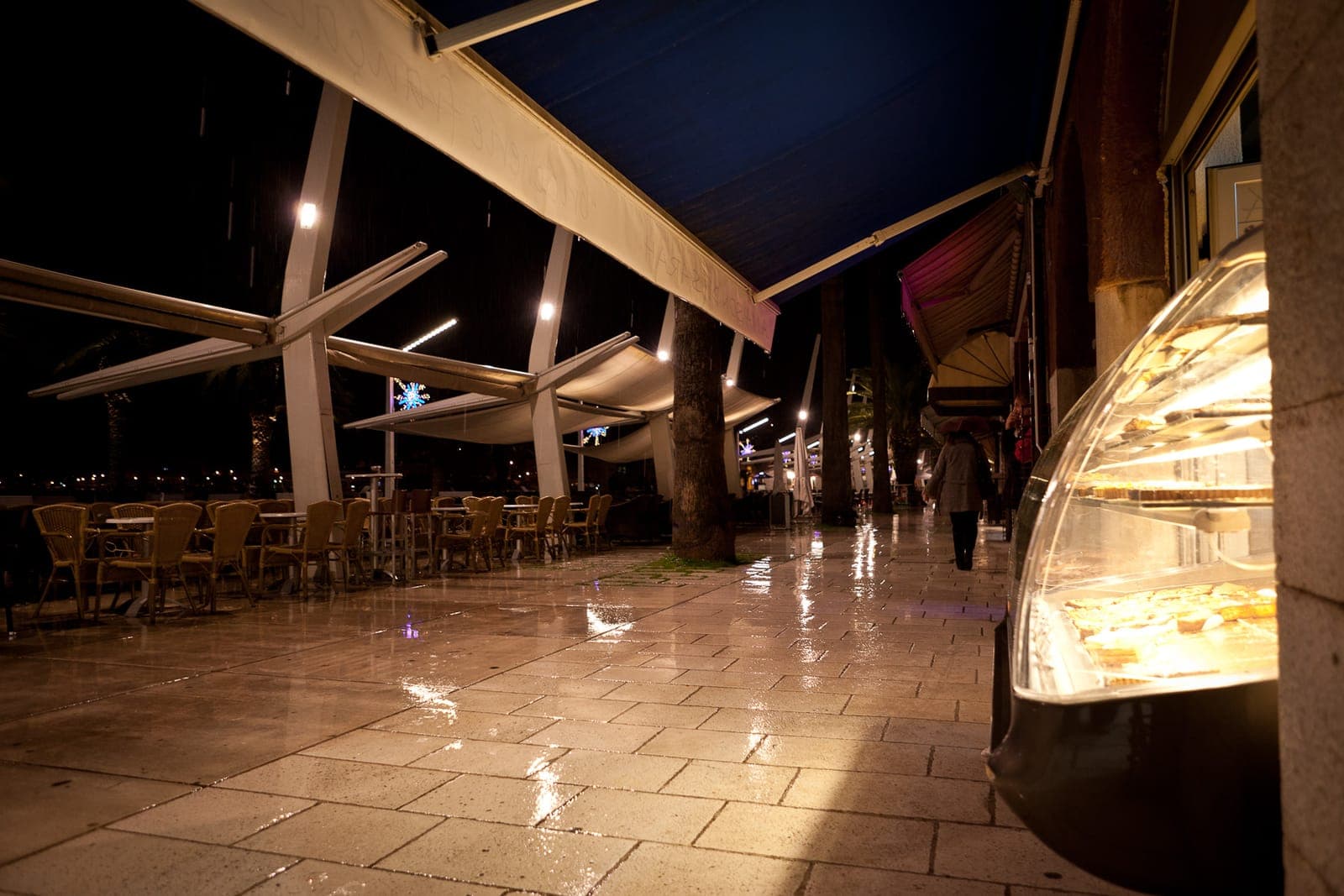
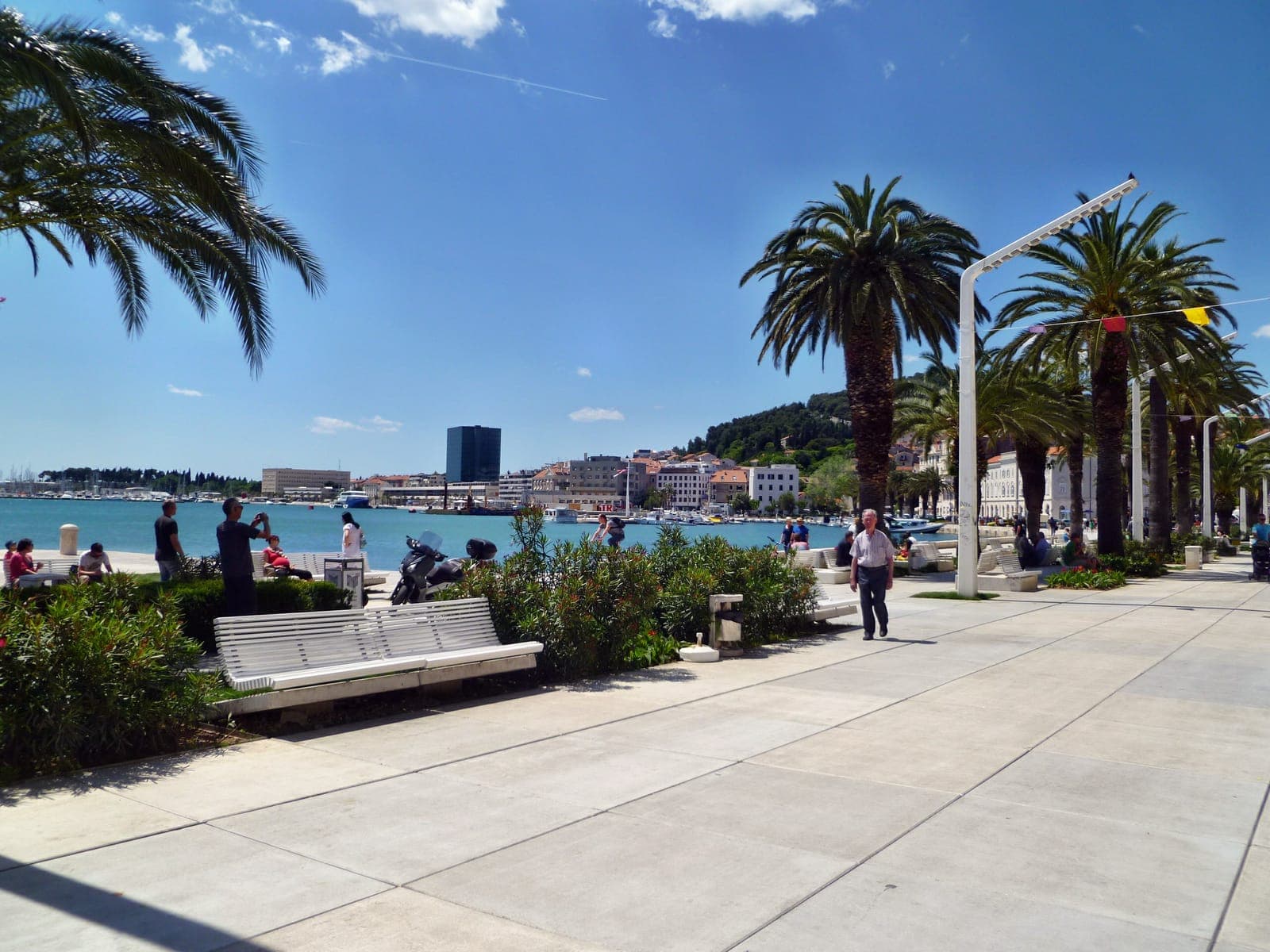
Smaller and less commercial than Zagreb's Advent, and better for it. Wooden stalls along the Riva and in the Prokurative square, mulled wine and fritule, concerts most evenings, and an ice rink for the children. Everything outdoors, which in a 12 °C December is entirely comfortable — colder than a northern European market, but dry, and you are drinking wine next to the sea rather than in a square hemmed in by department stores.
The stalls line the Riva, Split's seafront promenade.
What to actually do
Walk the Riva stalls after dark, when the lights are on and the crowds are out. It is at its best between six and nine.
Eat fritule from any stall with a queue of locals — they are the small fried dough balls, somewhere between a donut and a pancake, and a paper cone of them costs a couple of euros.
Skate on the rink at Prokurative if you do not mind an audience. It is small, cheap and mostly full of children.
Catch a klapa concert in one of the churches or on the open stage. Klapa is Dalmatian a cappella singing, and it is the thing here that you cannot get at a German Christmas market.
Climb the Marjan stairs on a clear morning when the stalls are closed and the city is still asleep. The view is the same one as in summer, with nobody else in it.
Practical
Everything on the Riva is free to wander and the concerts are free to watch; you pay for food and drink at the stalls, and for the ice rink. Most stalls take cards but a few are cash only. The old town restaurants stay open throughout, and a proper konoba dinner after the stalls is the move — you will not be the only table still there at ten.
For the season as a whole, see Split in winter.
Split in December covers the weather and the sea that month.
What's on in Split
Things to do in Split at night
The best time to visit Split