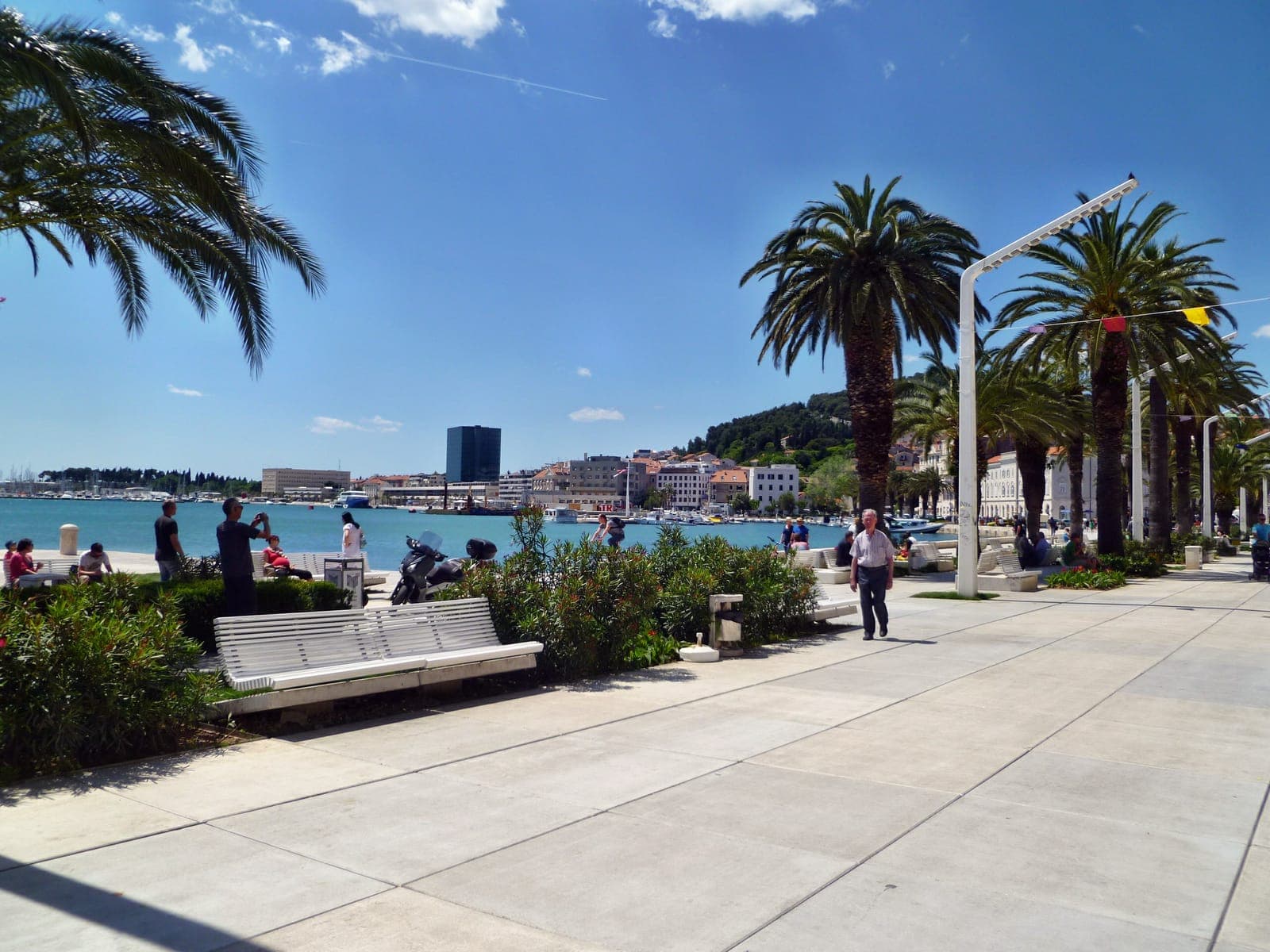
Split's staging area, not its destination. The seafront cafés turn into bars after eight, and you are paying for the seat and the view of the palace wall going gold — a fair trade for one round while the group assembles, a poor one for a whole evening. Move inside the walls by half ten.
The Riva does two shifts. The first is the assembling hour, eight to half nine, when a mixed group can put someone with a cocktail next to someone with an ice cream and nobody has to agree on anything. The second is later, from about half ten, when the promenade becomes the corridor you walk between one palace bar and the next, water on one side and lit stone on the other. What it is not, at either hour, is a destination. One round, then move.
The move is inland, into the palace wine bars, two minutes through the nearest gate. They are open from late afternoon and at their best between nine and midnight, and they are where the good part of the evening happens.
What you are paying for
The seat, the table, the view, and not having to go looking. A beer is €5–6, a glass of wine €4–5, a coffee €3–3.50. The same round inside the palace is nearer €3.50 for the beer and €3 for the wine. The Riva is the most expensive place to drink in Split, and it is still about the price of a coffee in London, which is the honest framing. Sit at the back tables rather than the front row: the same view without the front-row premium, and a menu in fewer languages.
Who it is wrong for
Anyone who came to dance. There is no floor on the Riva, the music is background, and a group that wants a proper night will be restless by eleven. It is the wrong place for a quiet conversation in August, when the promenade is a moving crowd and every table is within earshot of the next. And it is wrong on every evening after the first: the view does not change, the price does not change, and by the third night the trade has stopped making sense. Do it once, properly, then drink two streets back with the people who live here.
If the night is going to run late, it ends east of here at the Bačvice beach clubs, which fill from about midnight and do not properly get going until one.
The same stretch by daylight — ferries, palms and the palace facade — is covered in the Riva waterfront guide.
They are the priciest in Split, roughly a third more than a bar two streets inland. A beer is €5–6, a glass of wine €4–5, a coffee €3–3.50. You are paying for the seafront table and the view of the palace wall, which is worth doing once and rarely worth doing twice.
What time do the Riva bars get busy?
They fill from about eight, once dinner service starts, and stay busy through the evening as people pass along the promenade. The Riva is a transition rather than a destination: most groups take a round here and then move inland to the palace bars, or east towards Bačvice later on.
Where do you go after the Riva?
Two minutes inland to the wine and cocktail bars inside Diocletian's Palace, which run from about nine until midnight. After that, either home or east to the Bačvice beach clubs, which do not properly fill until one. Everything is inside a twenty-minute walk.
Split's palm-lined seafront promenade, and the city's actual living room. Locals walk it at seven every evening, coffee lasts an hour, and nobody is in a hurry. Free, always open, and the correct place to watch the light go orange on the palace wall.
Croatian law lets anyone drive a boat under 5 kW without a licence, which is enough to potter round a bay at walking pace and reach coves the buses do not. Around €57 a day out of season and €88 in August, and nobody will ask you anything except for a deposit.
The vaulted basement halls that held up the emperor's apartments, preserved because they were filled with rubbish for a thousand years. The best-surviving Roman substructure anywhere, ten degrees cooler than the street, and the one part of the palace that looks like a ruin.
Two hours out of the city harbour towards Čiovo and back as the light goes, with a drink in your hand and Split's waterfront lit from the water. The single easiest good decision on a first evening in the city.
Two hours around the palace cellars, the Peristyle and the Klis-facing viewpoints where Meereen was filmed. Honest verdict: worth it if you love the show, skippable if you merely watched it — a standard palace tour covers the same stones with more history.
Ninety minutes through the palace with someone who can explain what you are looking at. Worth it on your first morning: the palace makes far more sense with a guide, and everything you do afterwards is better for it.
The nine-until-midnight part of a Split night, and the best of it. Small cellars and side rooms inside Diocletian's Palace pour Dalmatian wine by the glass with no music you have to shout over. Arrive before nine if you want a table, and leave around midnight when the lanes empty.
Where a Split night ends rather than starts. The row of clubs behind the sand fills from about midnight, runs to three or four in summer, and sits a ten-minute walk east of the Riva, so nobody needs a taxi home. Loud, young and pop-driven — arrive before one and it will feel empty.
The layer between the Riva and the clubs: small cocktail rooms, jazz corners, hostel bars and neighbourhood cafés that turn into bars after nine. This is where the local crowd drinks, it costs about a third less than the seafront, and it is the part of Split nightlife that still works in February.
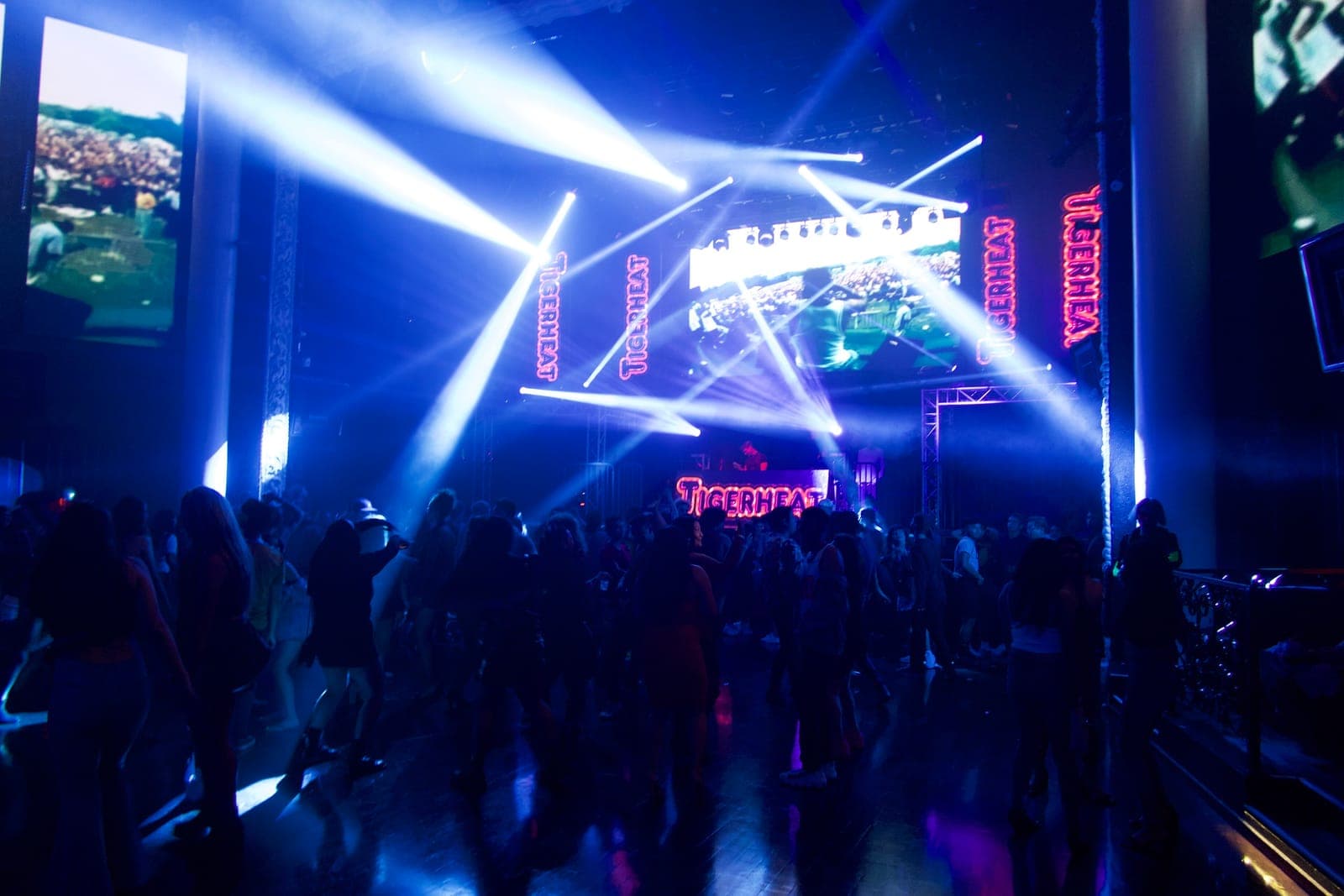
Central is the closest thing Split has to a conventional big-room European nightclub, centrally placed and built for larger DJ nights. It does not get going until after midnight. Arrive at 22:30 and you will find a half-empty room and conclude the city is dead; come back at one and it is unrecognisable.
The hour before the Riva. A pine-shaded headland fifteen minutes west of the harbour, on the site of an old cemetery, where you sit on the wall with a bottle from the shop and watch the sun drop behind Čiovo. Free, no bar, no music — then walk back down for dinner.
Vanilla is Split's big summer party venue, out by Poljud rather than in the old town, which makes it a destination for a planned night rather than a stop on a bar crawl. Go if you want a large room, a late finish and holiday energy; skip it if you came to find Split's own bars.
Split nightlife is not one club district but a progression through zones, and the hour matters more than the venue. Dinner, then the palace lanes, then the Riva, then a decision at half past midnight: Bačvice for the beach party, or a central club for the dance floor. Timing is what visitors get wrong.