Food & drink
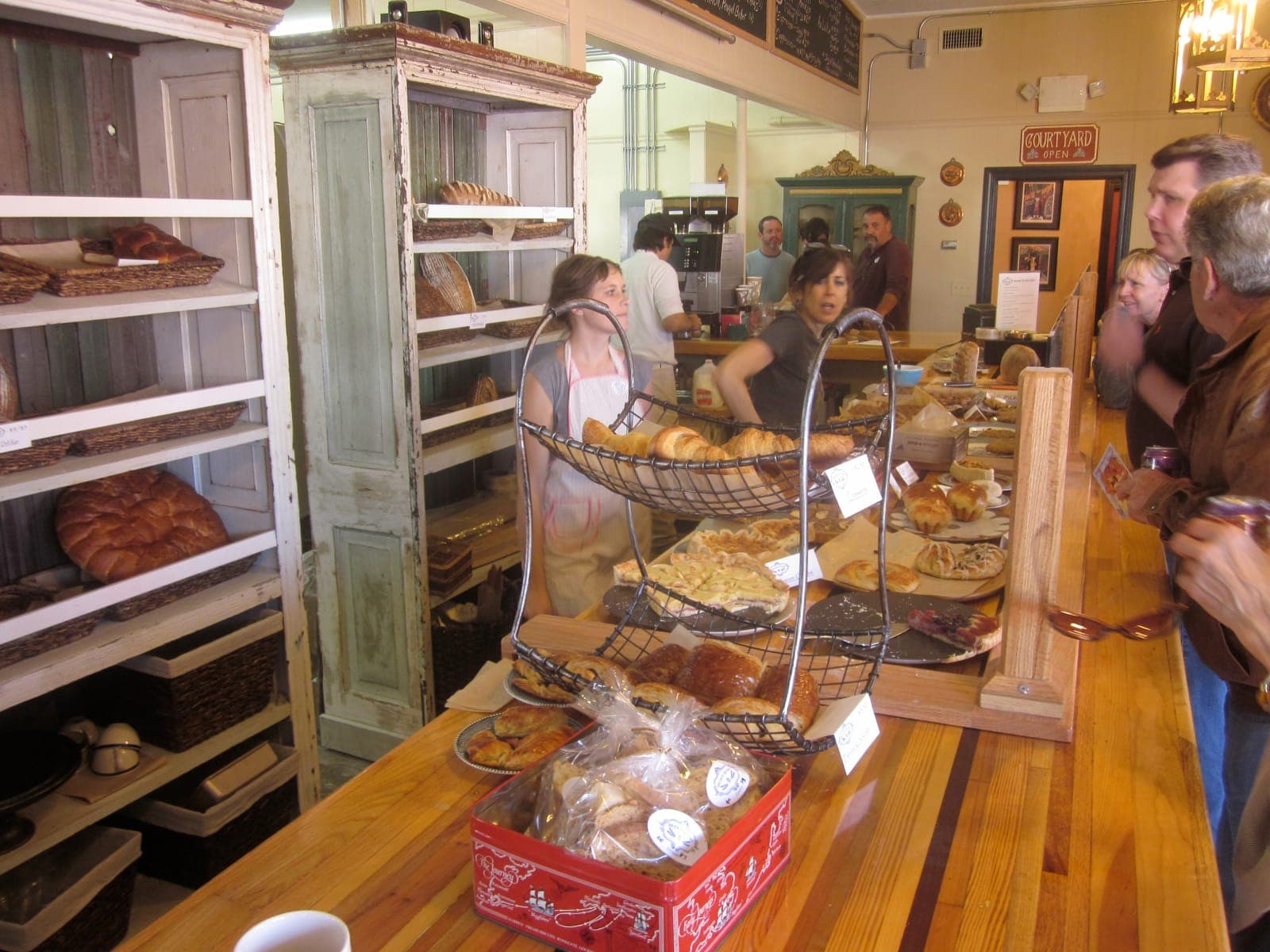
Kruščić Bakery
A tiny sourdough bakery near the Golden Gate that sells out by early afternoon. Proper bread, burek, and the best breakfast pastry in Split for under three euros.
27 m away
Operated by Bura Adriatic
Ninety minutes through the palace with a guide who lives inside it: the Golden Gate, the cellars, the Peristyle, the cathedral and the streets in between. Small group, no flag, and a proper explanation of why a Roman emperor retired to a cabbage patch in Dalmatia.
By Marin Perić


The palace is confusing on purpose — a Roman military plan under fourteen hundred years of alteration — and the difference between wandering it and reading it is one guided hour and a half. Everything else you do in Split is better afterwards, because you know which gate is which, why the cathedral is an octagon, and where the emperor slept.
For the palace itself, read the Diocletian's Palace guide.
Diocletian is the only Roman emperor who abdicated voluntarily and retired. When asked to come back and sort out the empire, he is supposed to have replied that if his colleagues could see the cabbages he had grown with his own hands, they would not ask. He built this to grow them in, and the palace is the size it is because a Roman emperor's retirement required a garrison, a temple, a mausoleum and a sea gate, not because he needed the bedrooms.
His mausoleum is now the Cathedral of St Domnius.
The guide lives inside the palace and knows which stones are Roman, which are medieval and which are twentieth-century reconstruction — and on a walk through the lanes you would not be able to tell them apart without being told. The sphinx at the Peristyle is 3,500 years old, the bell tower is Romanesque, and the cafe on the steps sits where the imperial guard once stood. A guidebook tells you this; a guide points at the stone and lets you put your hand on it, which is a different thing.
Afterwards, walk up Marjan Hill for the view that puts the whole plan in context.
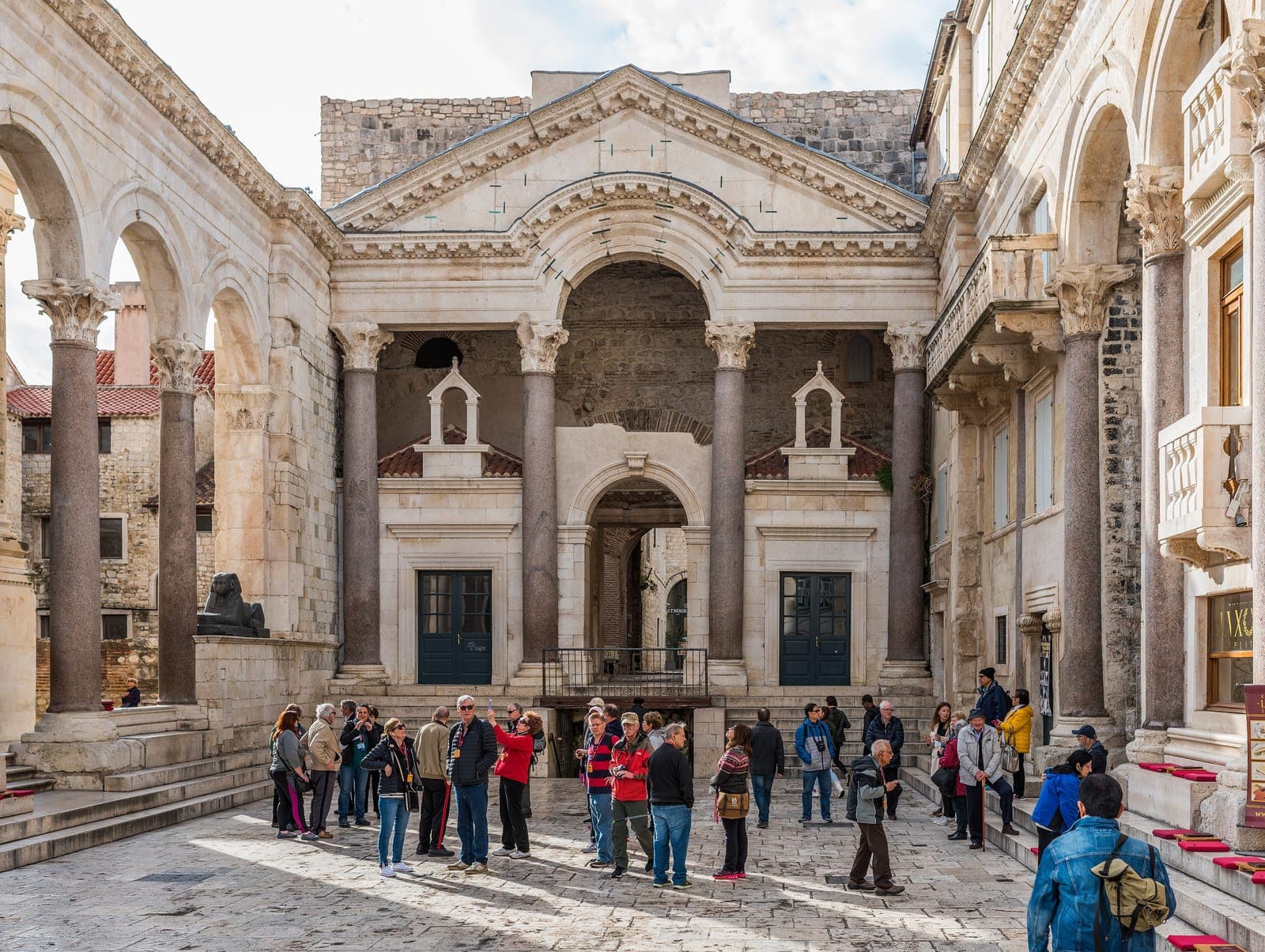
The steps are the Peristyle, where Split now drinks wine in the evening.
Gregory of Nin, the north wall, and how the palace was built.
The Roman street grid and the medieval city that grew inside it.
The ceremonial heart, the sphinx, and the acoustics under the dome.
The vaults that preserved the plan of the emperor's apartments.
Out to the sea front, and where to go next.
The operator cancels free up to 12 hours before the tour. It runs in light rain; in a storm they refund. Check the current terms when you book.
Under the Golden Gate on the north side of the palace, beside the Gregory of Nin statue. We start from outside the walls so you walk in the way the palace was meant to be entered.
Right now · Autumn
Runs all year and is at its best now: no queue at the cellars, comfortable walking weather, and the cruise season thinning out from mid-October.
Within a short walk.
Food & drink
A tiny sourdough bakery near the Golden Gate that sells out by early afternoon. Proper bread, burek, and the best breakfast pastry in Split for under three euros.

History
An eight-metre Meštrović bronze just outside the Golden Gate, of the bishop who fought to keep the liturgy in Croatian. Everyone rubs his big toe for luck, which is why it is the only polished part of him. Free, and takes five minutes.
Food & drink
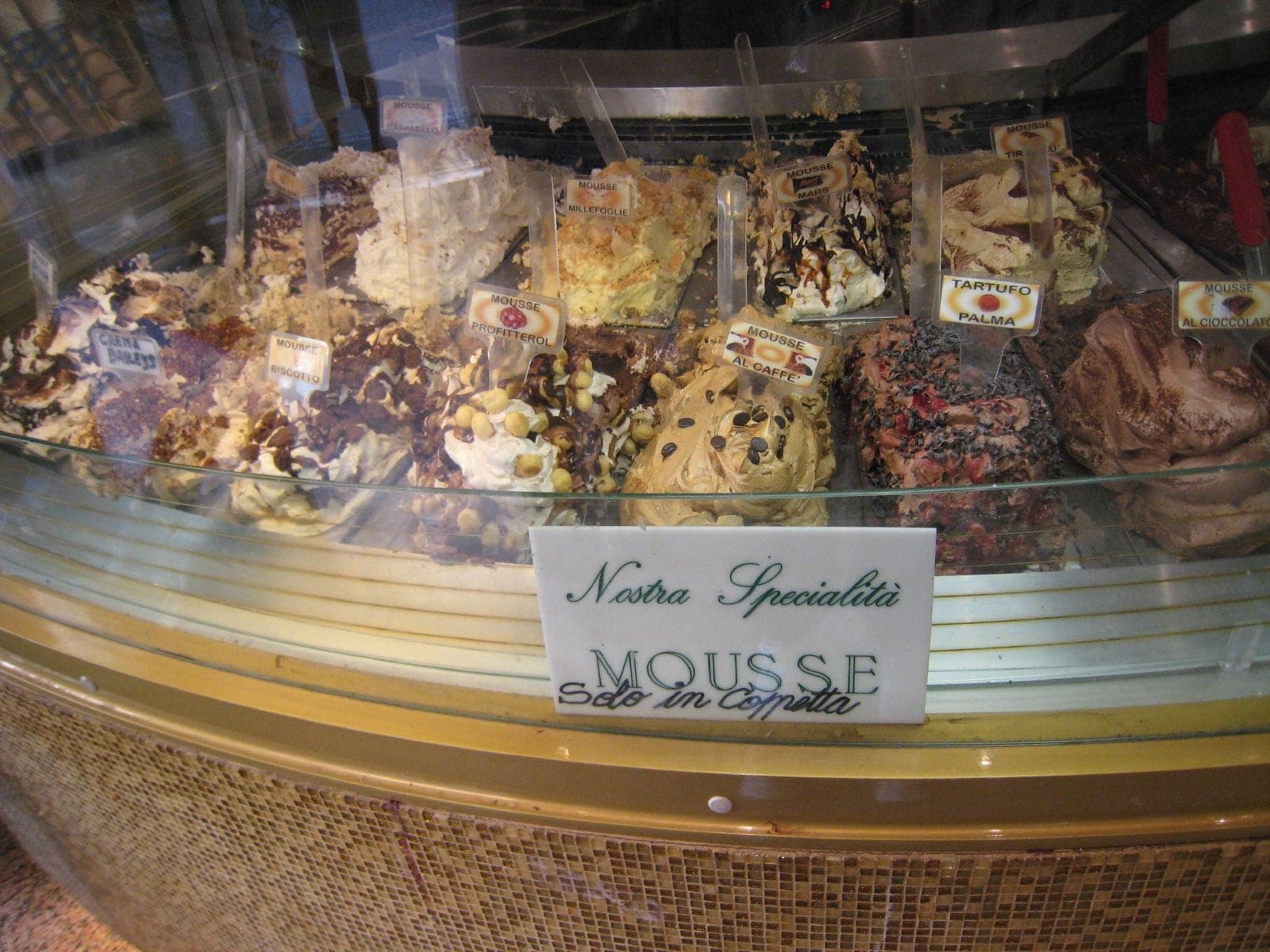
The best ice cream in Split, made in small batches with real fruit and no artificial colours — which is why the pistachio is dull green and the strawberry is pale. Two euros a scoop and a queue that moves.
Food & drink
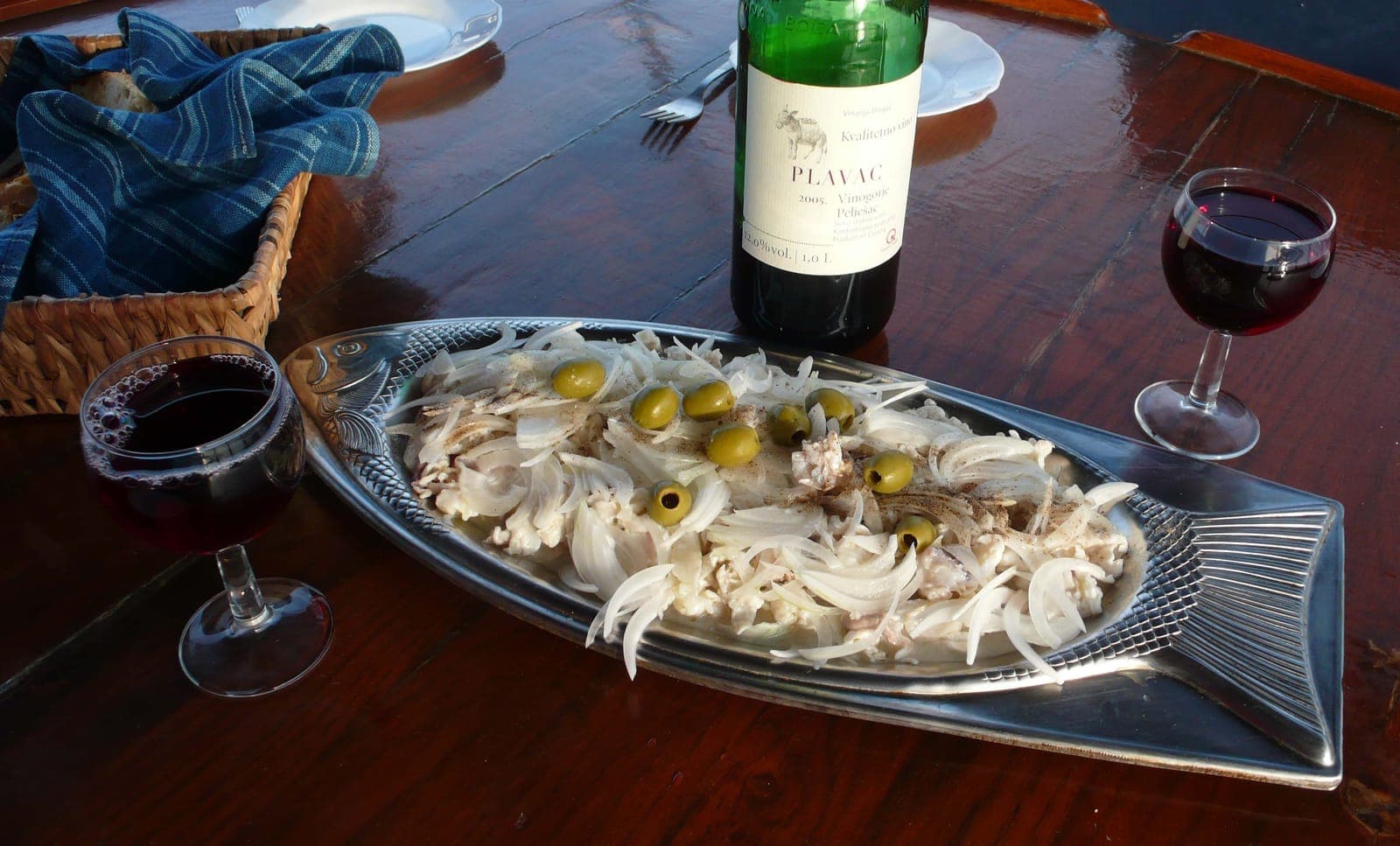
An hour and a half through Dalmatia's own grapes: plavac mali from Hvar and Pelješac, pošip and grk from Korčula, and the debit and maraština nobody exports. Most tastings run in palace cellars, which is a good place to be at three in the afternoon.

Adventure
Three hours that get you round the palace, up Marjan and out along the coast without the climb. The electric assist is not laziness — it is the difference between seeing the top of the hill and reading about it.

Nightlife
Central is the closest thing Split has to a conventional big-room European nightclub, centrally placed and built for larger DJ nights. It does not get going until after midnight. Arrive at 22:30 and you will find a half-empty room and conclude the city is dead; come back at one and it is unrecognisable.

History
Diocletian's Palace is free: its lanes, the Peristyle, the domed Vestibule and the central passage through the cellars are open at all hours with no gate. You pay only for interiors — the side halls of the cellars (€10 for adults as of October 2026) and the cathedral, bell tower, crypt, treasury and Temple of Jupiter, ticketed separately. Built around AD 305, it is still full of homes, bars and shops.

History
The oldest cathedral building in the world still in use, and it started life as the mausoleum of the emperor who persecuted the man it is now named after. The bell tower beside it gives you the best view in Split for the price of 183 steps.
Culture
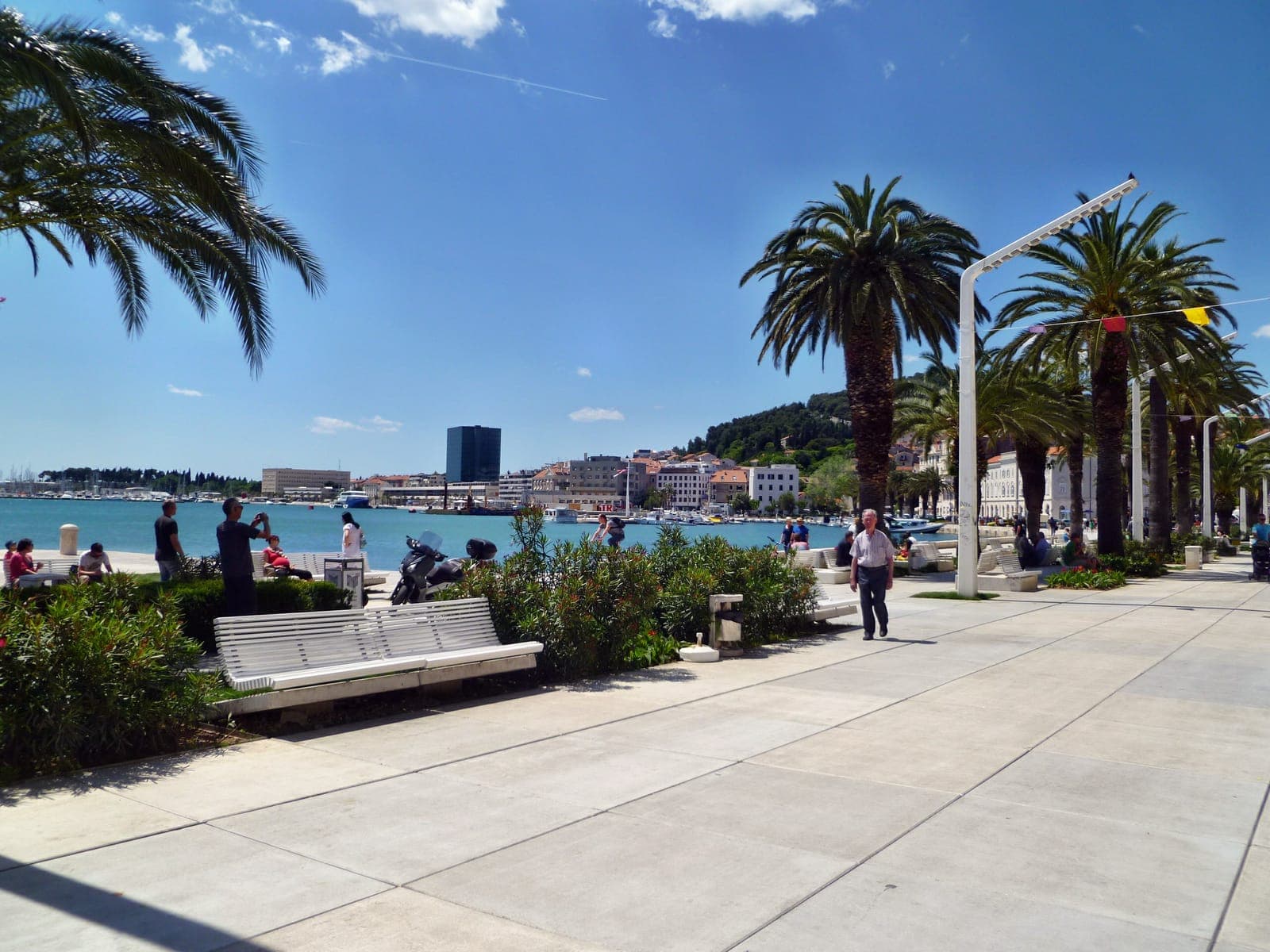
Split's palm-lined seafront promenade, and the city's actual living room. Locals walk it at seven every evening, coffee lasts an hour, and nobody is in a hurry. Free, always open, and the correct place to watch the light go orange on the palace wall.
Food & drink
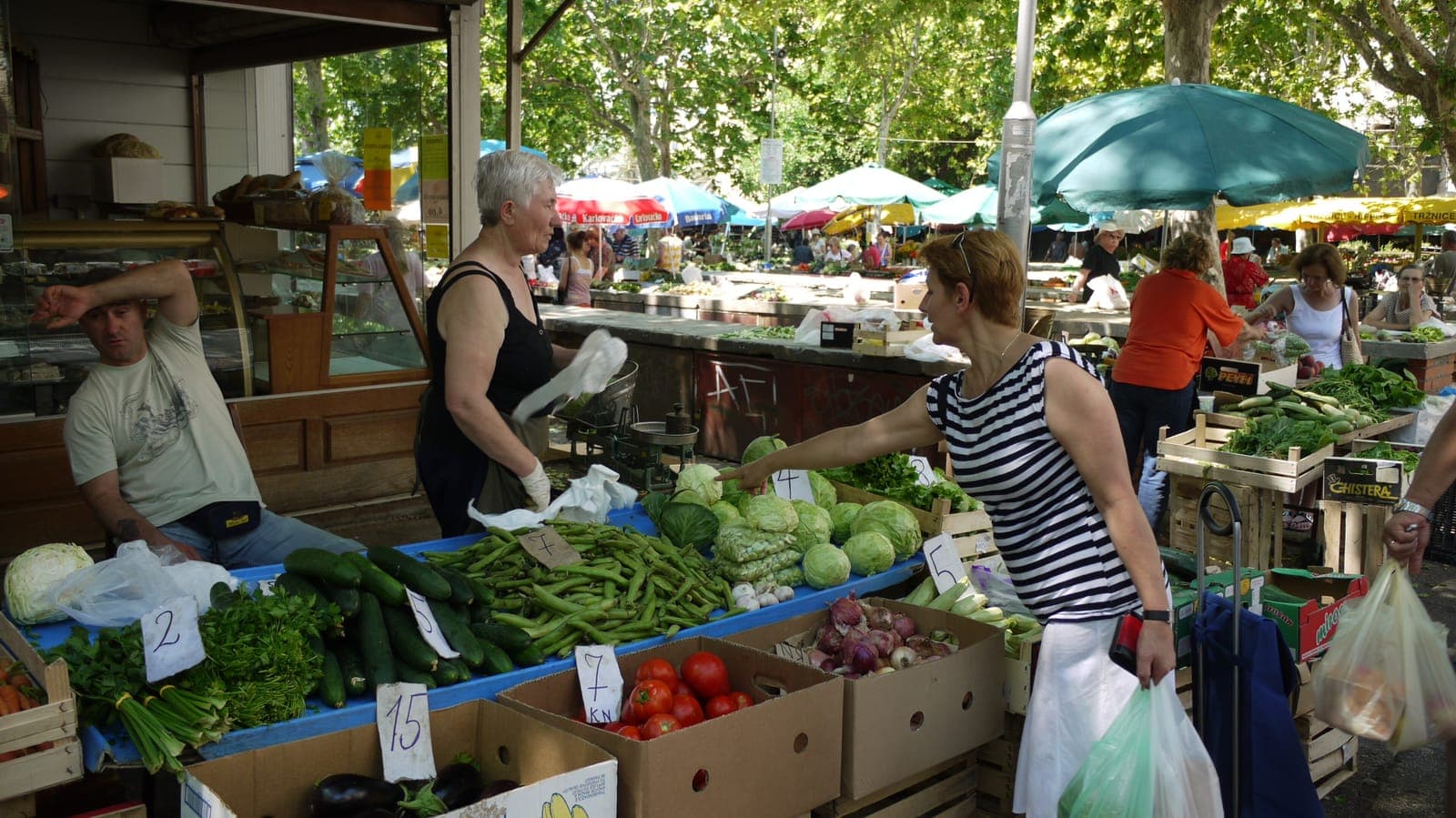
Three and a half hours through the green market, the fish market and four family-run places inside the palace, eating soparnik, pršut, Pag cheese, fresh anchovies and rožata. Enough food to replace lunch, with the context that makes Dalmatian cooking make sense.

Family
The most Split thing you can do for ten euros. Poljud is a listed 1979 shell of a stadium, the Torcida have been going since 1950, and a mid-table league game on a Saturday night tells you more about this city than any walking tour will.
History
The colonnaded courtyard at the centre of Diocletian's Palace, where the emperor appeared to his subjects and where Split now drinks wine on the steps. Free, roofless, and the best-preserved Roman square you can sit down in.
Culture
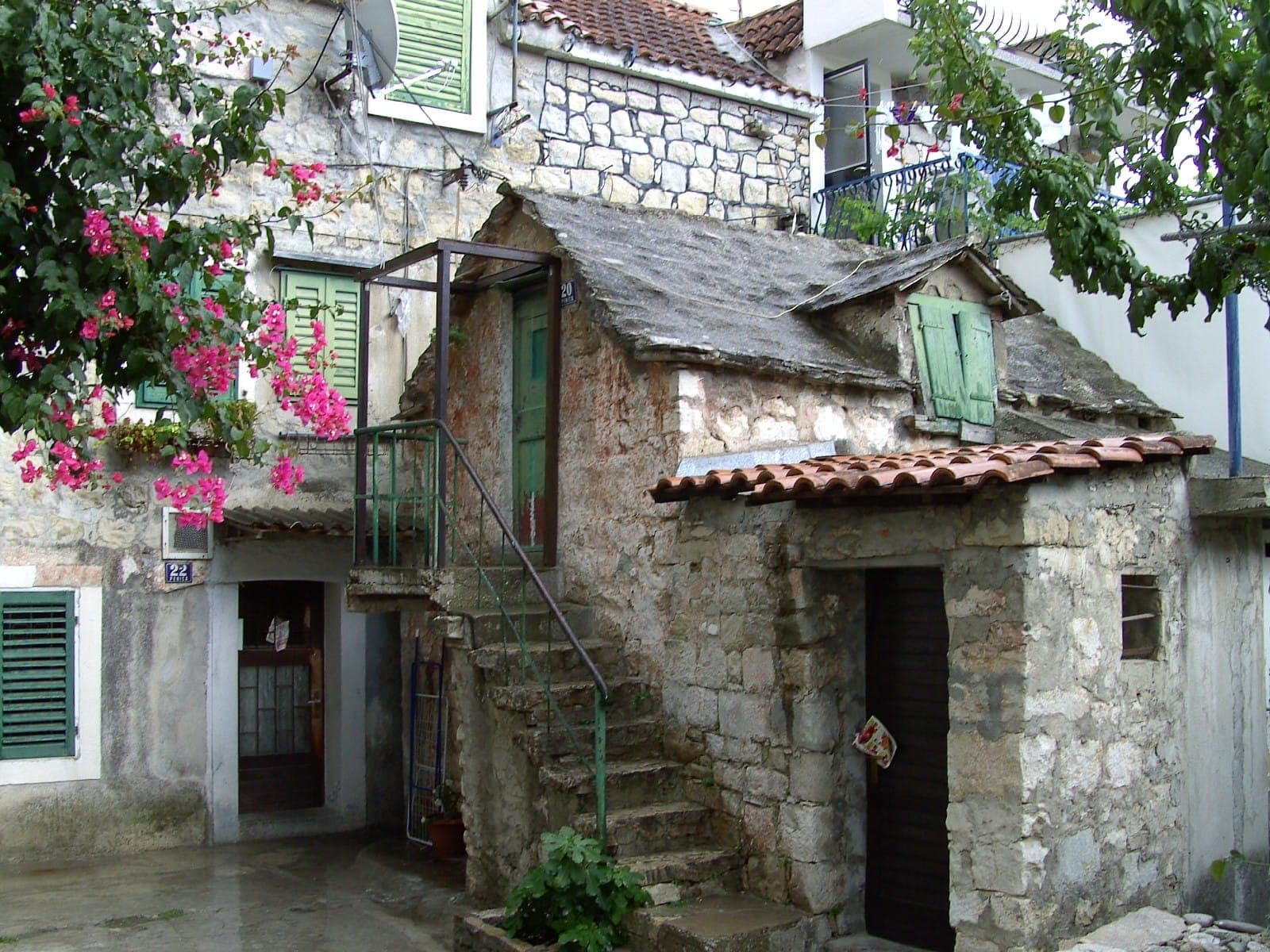
Inside the palace for atmosphere and noise, Varoš for stone lanes and quiet, Bačvice for the beach and the nightlife, Meje for calm and views, Žnjan for space and value. Split is small enough that none of them is a bad choice — they are just different holidays.
Culture
Yes, for two to five days, and most of all in June or September. Split is a Roman palace that people still live in, with beaches in town and the islands an hour away by boat. It is not worth it for a party-free week in mid-August, or for anyone who wants sand and silence.
Culture
Base yourself in Split if you want islands, day trips, beaches and a city that is still a city. Choose Dubrovnik for two or three nights of the most complete walled town on the Adriatic. For a week, Split; for a long weekend, either; with ten days, both — four to five hours apart.
History
You do not need a shore excursion in Split. The cruise berths and the tender landing are a five-to-fifteen-minute walk from Diocletian's Palace, and the whole old town is walkable. Four hours covers the palace; six adds Marjan or a swim; eight lets you add Trogir or Klis by local bus.