Why they survived
The people who moved into the palace used the cellars as a dump for roughly a millennium. That fill protected the vaults and preserved the exact floor plan of the imperial apartments above, which had otherwise been rebuilt beyond recognition. The excavation only began seriously in the 1950s, and what came out was a Roman substructure in better condition than anything above ground — because it had been buried, and everything above had been lived in for a thousand years.
The cellars were Daenerys's throne room — see the Game of Thrones walking tour.
What you see
A grid of barrel-vaulted corridors and chambers, running the full depth of the palace from the Bronze Gate on the Riva up to the Peristyle. The vaulting is Roman brick and concrete, the arches are the same ones that held up the emperor's apartments, and the floor plan is a mirror of what was above — so by walking the cellars you are walking the plan of the imperial residence, which no longer exists. The central corridor is free and lined with souvenir stalls; the side halls are ticketed and mostly empty, which is the better experience.
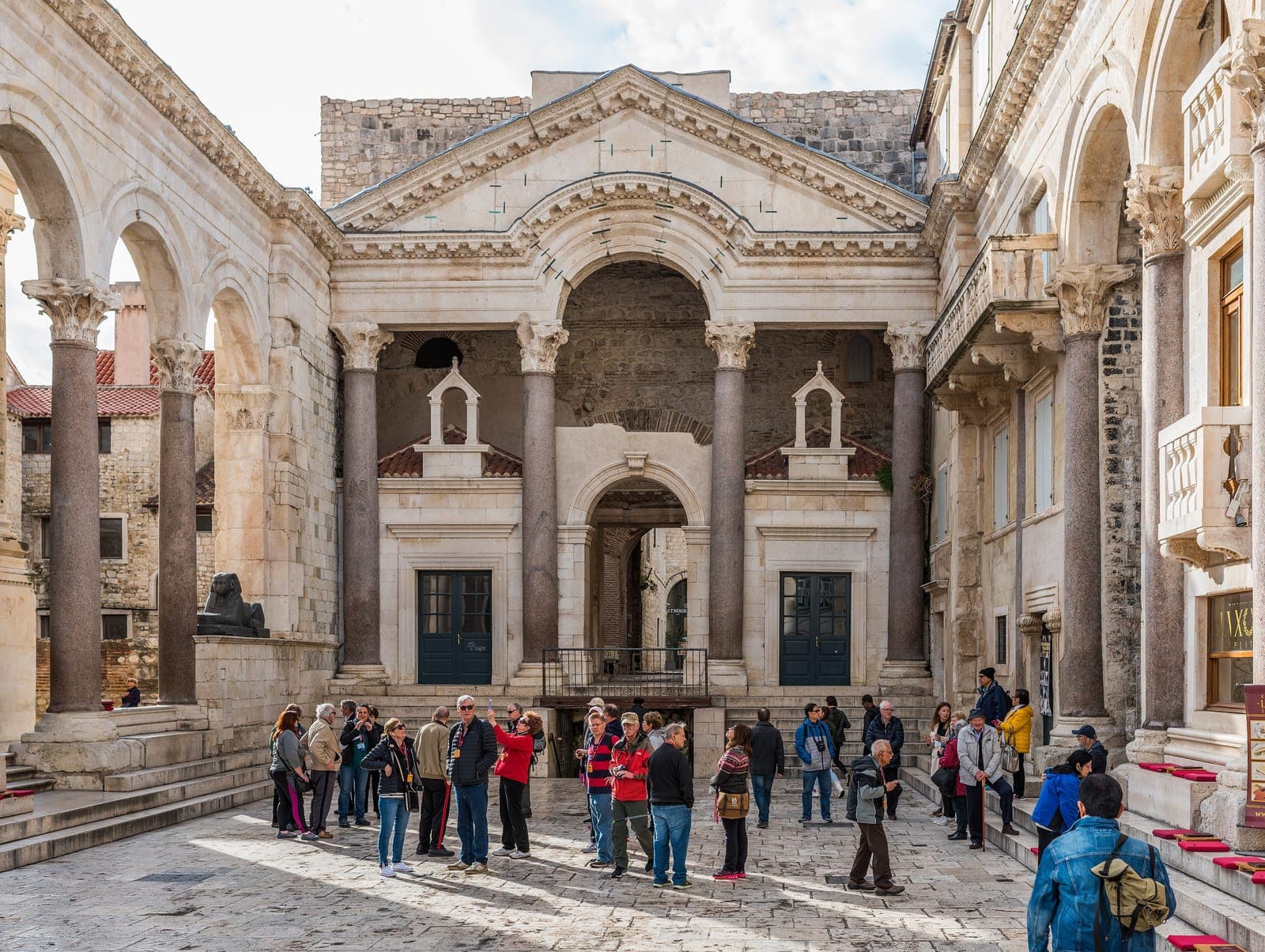
The corridor comes out on the Peristyle, the palace's colonnaded courtyard.
The Bronze Gate end opens on to the Riva.
Practical
The central corridor is free and open — it is the passage from the Bronze Gate up to the Peristyle, lined with stalls. The ticketed halls are on either side, and a combined ticket covers them plus the cathedral and the bell tower. Forty-five minutes is plenty for the cellars alone. In August this is the coolest place in Split, ten degrees below the street, and worth remembering at three in the afternoon when the stone above is too hot to touch.
The combined ticket also covers the bell tower of the Cathedral of St Domnius.
Things to do in Split
Split in one day
Boat trips and tours from Split