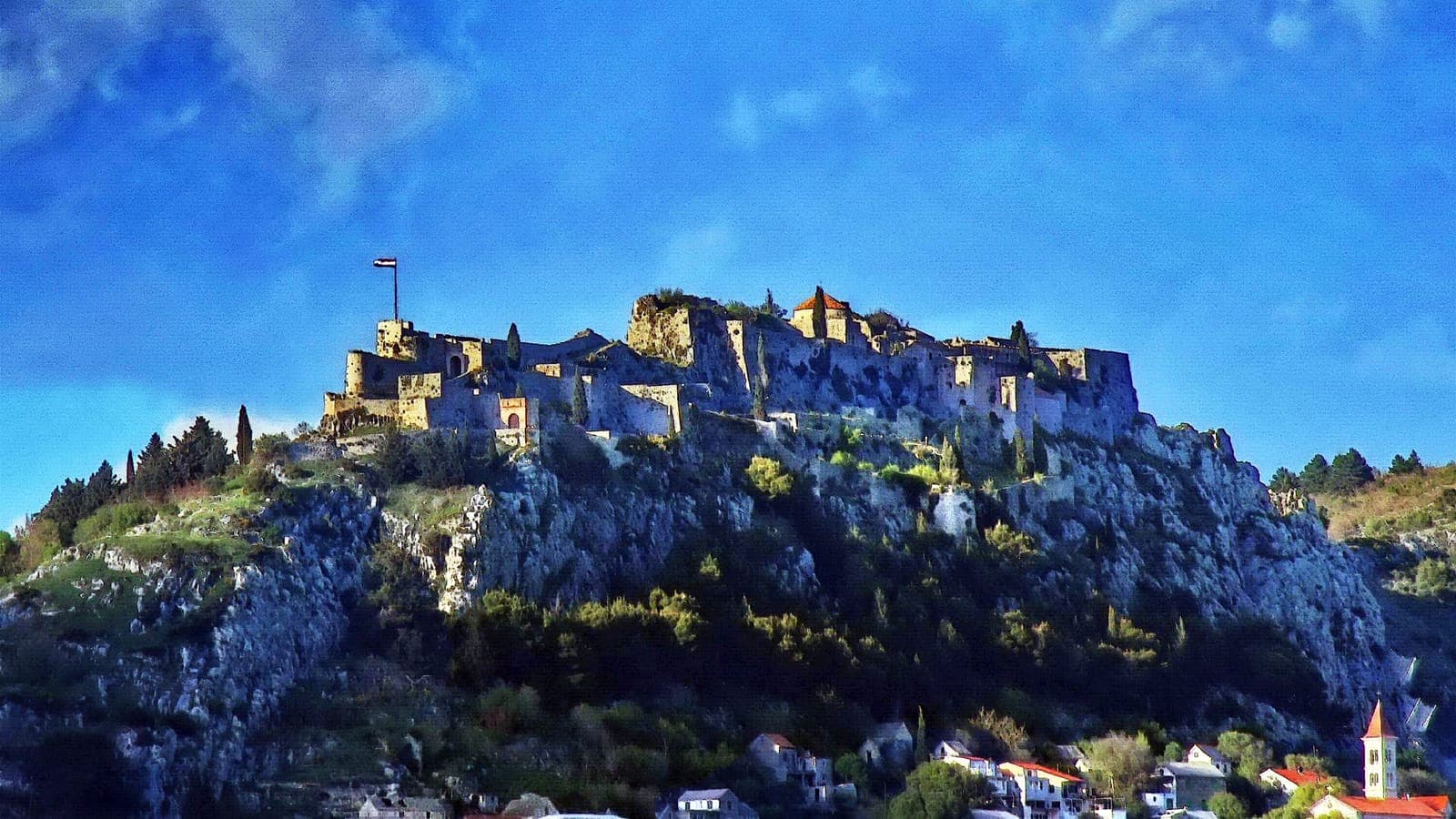
A fortress wedged into a mountain pass above Split, held by Romans, Croatian kings, Ottomans and Habsburgs in turn — and used as Meereen in Game of Thrones. Twenty minutes on the bus, and the view down to the coast explains a thousand years of fighting over it.
Klis sits on the only easy pass between the coast and the Dalmatian interior. Whoever held it controlled Split's back door, which is why the fortress changed hands so many times and why it was worth rebuilding after each one. The view from the top — the whole of Split, the sea, Brač and Šolta in the distance — is the reason a thousand years of fighting happened here, and it is still the reason to come.
What is up there
The fortress is a chain of defensive walls and towers climbing the ridge, with the best-preserved section at the top. There is a small museum at the entrance with weapons and uniforms, a chapel, and a handful of interpretive signs. The real exhibit is the fortress itself — the walls, the cisterns, the views down to the coast on one side and the interior on the other. Give it ninety minutes and climb to the top tower, because that is where the view is.
Bus 22 from the HNK theatre stop, about 25 minutes, running roughly hourly — check the schedule, because the last bus back is early. By car it is fifteen minutes and there is free parking below the entrance. The fortress opens daily and the ticket is €12 for adults and €4 for children up to 15, which also covers the interpretation centre down in Klis and the olive museum. Winter hours are shorter than summer, so check before making the trip out of season. Wear real shoes: the fortress is uneven stone throughout and there are no railings in places, which is part of the appeal and all of the danger.
Pair it with Salona, the Roman ruins in Solin, for a full morning.
How to not feel like a tourist here
Go in the morning, not the afternoon — the fortress faces south and the sun is brutal on the walls after midday, and the locals go before ten. The bus 22 is the one locals take, and it fills with commuters at eight; take it at nine and you will have the fortress to yourself for an hour before the tour groups arrive. Check the last bus back before you go, because it is early, and a taxi back to Split from Klis is €25 and not always available.
Do not take the Game of Thrones tour. The fortress is the location, the guides on site will point out the terraces for free, and the tour adds a minibus and a script. Walk it yourself, climb to the top tower, and look at the view — the reason the fortress is here is the view, and the reason a thousand years of fighting happened over this pass is the view. You can see Split, the sea, Brač and Šolta from the top, and the interior mountains behind, which is why it was held by Romans, Croatian kings, Ottomans and Venetians in turn.
Eat at the konoba below the fortress entrance, which is the one the bus drivers use. It is not fancy — grilled meat, blitva, a glass of wine — and it is the right lunch after climbing the walls. Do not eat at the places on the main road in Klis village that have menus in six languages; the one at the fortress entrance has a menu in Croatian and one in English, and the food is the same food the locals eat.
There is no shade anywhere on the walls and the stone is uneven with few railings. Go on the first bus of the morning; by two in the afternoon in August this is genuinely unpleasant.
The pass Klis guards is a wind tunnel, which is rather the point of it historically. On a bura day it is properly cold up there; dress for a mountain rather than a coast.
Frequently asked questions
How do you get from Split to Klis Fortress?
Bus 22 from the HNK stop takes about 25 minutes and runs roughly hourly. By car it is fifteen minutes with free parking at the entrance. Check the last bus back before you go, because it is early.
Is Klis Fortress worth visiting?
Yes, if you have a spare half-day and any interest in history or views. It is twenty minutes from Split, costs about €10, and the view down to the coast explains why a thousand years of fighting happened over this one pass.
Get out there
Tours that go here
Guided trips that include this stop, with live availability.
Ninety minutes through the palace with a guide who lives inside it: the Golden Gate, the cellars, the Peristyle, the cathedral and the streets in between. Small group, no flag, and a proper explanation of why a Roman emperor retired to a cabbage patch in Dalmatia.
Diocletian's Palace is free: its lanes, the Peristyle, the domed Vestibule and the central passage through the cellars are open at all hours with no gate. You pay only for interiors — the side halls of the cellars (€10 for adults as of October 2026) and the cathedral, bell tower, crypt, treasury and Temple of Jupiter, ticketed separately. Built around AD 305, it is still full of homes, bars and shops.
The oldest cathedral building in the world still in use, and it started life as the mausoleum of the emperor who persecuted the man it is now named after. The bell tower beside it gives you the best view in Split for the price of 183 steps.
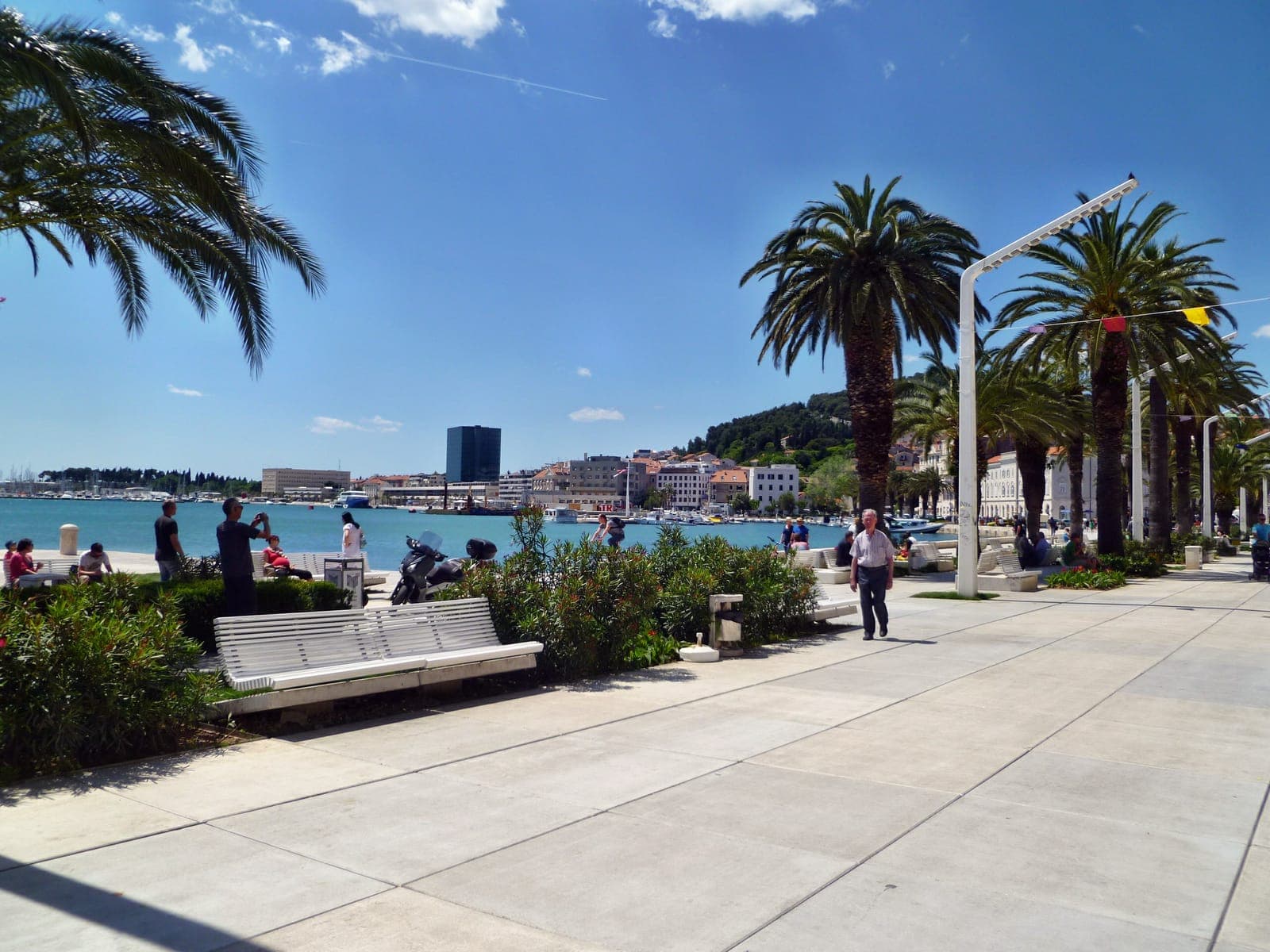
Split's palm-lined seafront promenade, and the city's actual living room. Locals walk it at seven every evening, coffee lasts an hour, and nobody is in a hurry. Free, always open, and the correct place to watch the light go orange on the palace wall.
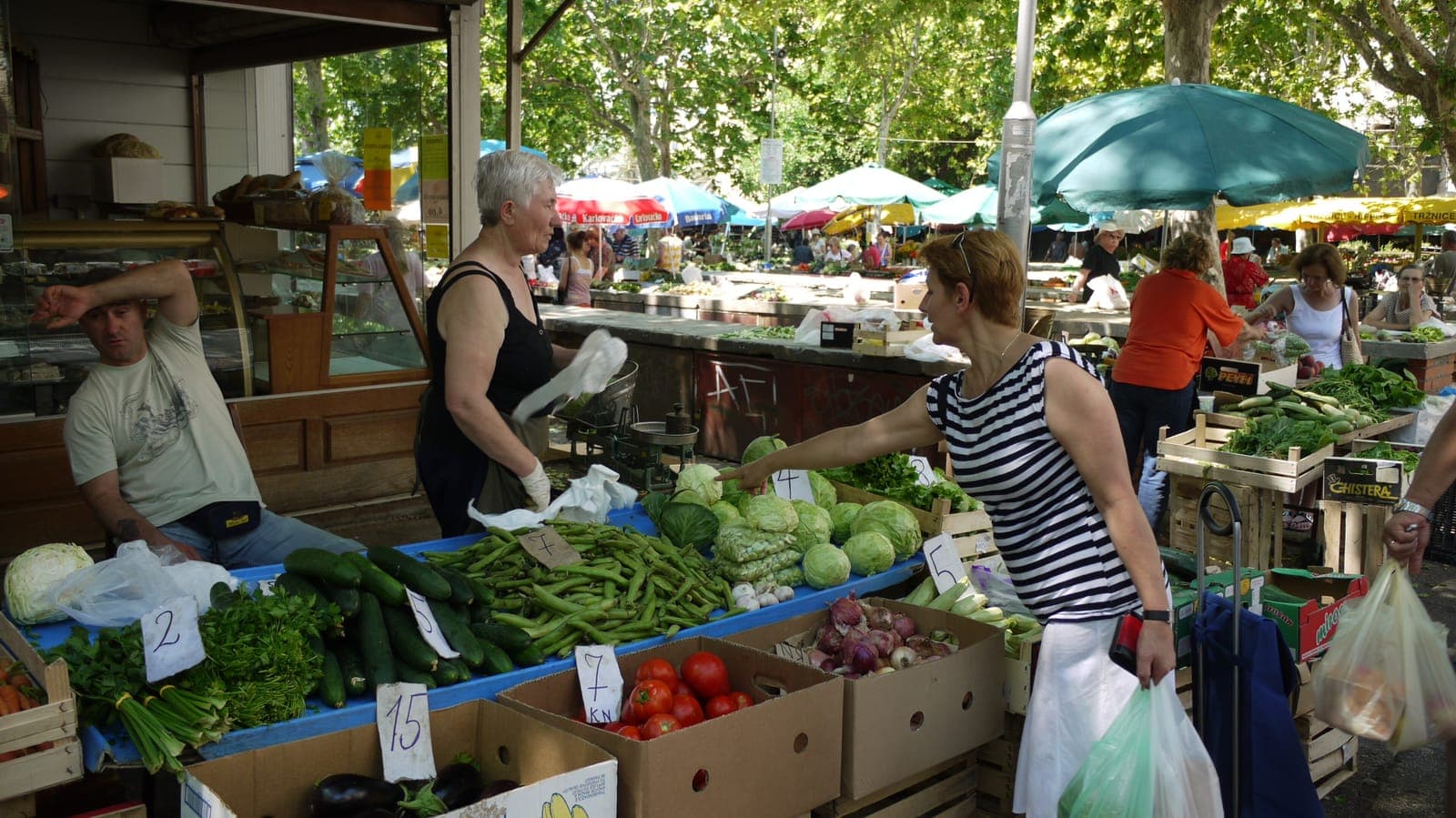
Three and a half hours through the green market, the fish market and four family-run places inside the palace, eating soparnik, pršut, Pag cheese, fresh anchovies and rožata. Enough food to replace lunch, with the context that makes Dalmatian cooking make sense.
The most Split thing you can do for ten euros. Poljud is a listed 1979 shell of a stadium, the Torcida have been going since 1950, and a mid-table league game on a Saturday night tells you more about this city than any walking tour will.
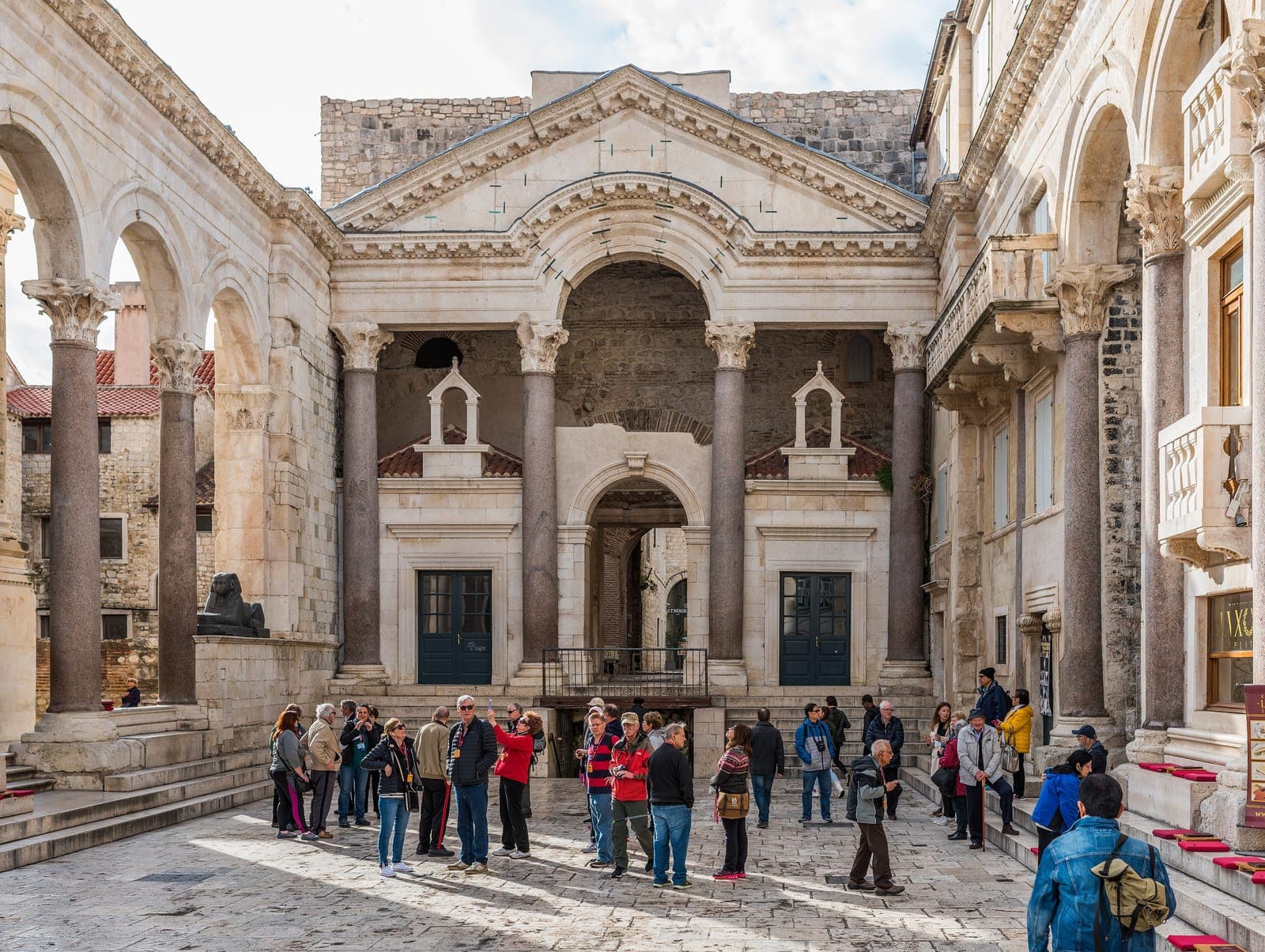
The colonnaded courtyard at the centre of Diocletian's Palace, where the emperor appeared to his subjects and where Split now drinks wine on the steps. Free, roofless, and the best-preserved Roman square you can sit down in.
Inside the palace for atmosphere and noise, Varoš for stone lanes and quiet, Bačvice for the beach and the nightlife, Meje for calm and views, Žnjan for space and value. Split is small enough that none of them is a bad choice — they are just different holidays.
Yes, for two to five days, and most of all in June or September. Split is a Roman palace that people still live in, with beaches in town and the islands an hour away by boat. It is not worth it for a party-free week in mid-August, or for anyone who wants sand and silence.
Base yourself in Split if you want islands, day trips, beaches and a city that is still a city. Choose Dubrovnik for two or three nights of the most complete walled town on the Adriatic. For a week, Split; for a long weekend, either; with ten days, both — four to five hours apart.
You do not need a shore excursion in Split. The cruise berths and the tender landing are a five-to-fifteen-minute walk from Diocletian's Palace, and the whole old town is walkable. Four hours covers the palace; six adds Marjan or a swim; eight lets you add Trogir or Klis by local bus.