You do not need a shore excursion in Split. The cruise berths and the tender landing are a five-to-fifteen-minute walk from Diocletian's Palace, and the whole old town is walkable. Four hours covers the palace; six adds Marjan or a swim; eight lets you add Trogir or Klis by local bus.
Walk off the ship and into the palace. Split's cruise berths sit inside the city port, which wraps round the old town, and the Port of Split puts the walk at about five minutes from the nearest berths; from the newer berths on the outer breakwater allow ten to fifteen. Ships that anchor send passengers ashore by tender to the city quay by the Riva. Either way, everything worth doing in four hours is on foot, free or nearly free, and needs no tour. The one thing to plan around is everyone else: the port handled 487,377 cruise passengers in 2025, and they arrive in the palace at the same hour you do.
Four hours: the palace
Walk along the Riva to the Bronze Gate in the middle of the palace's sea wall.
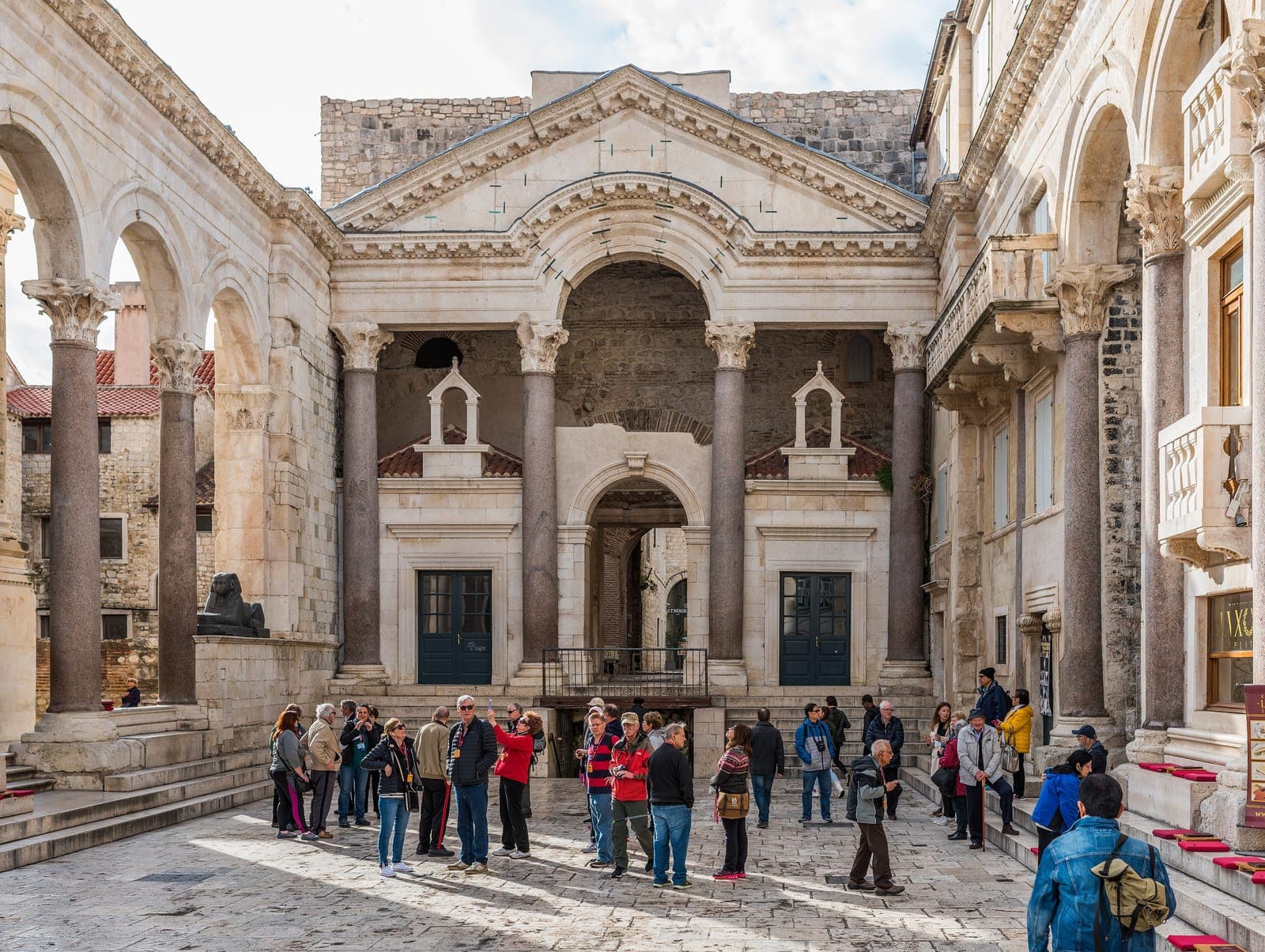
Go up through the central hall of the cellars — the passage itself is free — and into the Peristyle, the colonnaded square at the heart of the palace.
Look up through the open dome of the Vestibule, then cross to the cathedral, built into Diocletian's own mausoleum. It has its own tickets, sold on the Peristyle.
Walk north to the Golden Gate and the Gregory of Nin statue, then back through the lanes to the Riva for a coffee.
That is two and a half hours at an easy pace, with time left for the side halls of the cellars — €10 for adults as of October 2026, open daily 08:30–20:00 in summer and ten degrees cooler than the lanes above.
From the west end of the Riva, the stone steps up through Varoš reach the Vidilica viewpoint in about fifteen minutes — the view of the city, the port and probably your ship. Or swim: Bačvice is a short walk east of the port, and Kašjuni, the better beach, is reached by bus 12 or a long walk round Marjan. Bring a towel ashore and swim in the morning, before the palace, when the beaches are still empty.
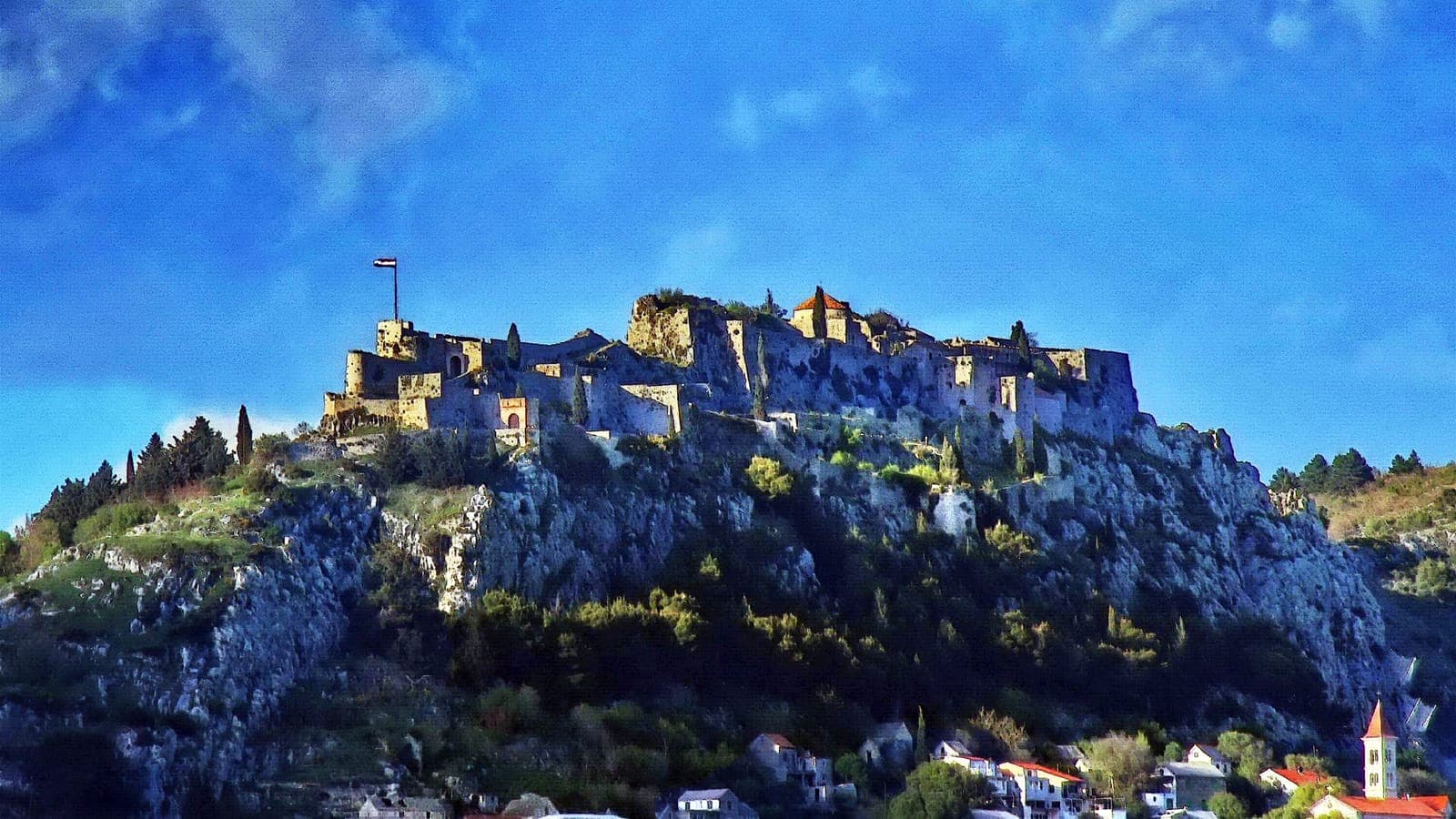
With eight hours you can leave the city, but stay on land and keep a margin. Trogir, a medieval island town, is an hour on city bus 37. Klis fortress, the cliff-top castle above Split, is on bus 22. Both buses leave from the suburban terminal rather than the port, so add twenty minutes' walk or a taxi each way, and be back in the old town two hours before all-aboard. Do not take a catamaran to an island: a missed or cancelled boat home is the one mistake here you cannot walk back from.
Can you walk from the cruise port to Split old town?
Yes. The cruise berths are inside the city port, about a five-minute walk from the old town from the nearest berths and ten to fifteen minutes from the outer breakwater. Tenders land on the city quay by the Riva.
Do you need a shore excursion in Split?
No. Diocletian's Palace, the Riva, Marjan and the nearest beaches are all walkable from the ship, and walking the palace is free. A guided walk is worth it only if you want the history explained.
What can you do in Split in four hours?
Walk the palace from the Bronze Gate through the Peristyle to the Golden Gate, see the cathedral, add the cellars, and have a coffee on the Riva. That takes about two and a half to three hours, leaving a margin for the walk back.
Can you visit Hvar from a cruise stop in Split?
It is possible but not wise. The catamaran takes about an hour each way, and a delayed or cancelled boat could leave you behind. Trogir or Klis by local bus are safer trips out with eight hours.
Get out there
Tours that go here
Guided trips that include this stop, with live availability.
Ninety minutes through the palace with a guide who lives inside it: the Golden Gate, the cellars, the Peristyle, the cathedral and the streets in between. Small group, no flag, and a proper explanation of why a Roman emperor retired to a cabbage patch in Dalmatia.
Diocletian's Palace is free: its lanes, the Peristyle, the domed Vestibule and the central passage through the cellars are open at all hours with no gate. You pay only for interiors — the side halls of the cellars (€10 for adults as of October 2026) and the cathedral, bell tower, crypt, treasury and Temple of Jupiter, ticketed separately. Built around AD 305, it is still full of homes, bars and shops.
The oldest cathedral building in the world still in use, and it started life as the mausoleum of the emperor who persecuted the man it is now named after. The bell tower beside it gives you the best view in Split for the price of 183 steps.
The colonnaded courtyard at the centre of Diocletian's Palace, where the emperor appeared to his subjects and where Split now drinks wine on the steps. Free, roofless, and the best-preserved Roman square you can sit down in.
The vaulted basement halls that held up the emperor's apartments, preserved because they were filled with rubbish for a thousand years. The best-surviving Roman substructure anywhere, ten degrees cooler than the street, and the one part of the palace that looks like a ruin.
A fortress wedged into a mountain pass above Split, held by Romans, Croatian kings, Ottomans and Habsburgs in turn — and used as Meereen in Game of Thrones. Twenty minutes on the bus, and the view down to the coast explains a thousand years of fighting over it.
Ninety minutes through the palace with someone who can explain what you are looking at. Worth it on your first morning: the palace makes far more sense with a guide, and everything you do afterwards is better for it.