Why go first, not last
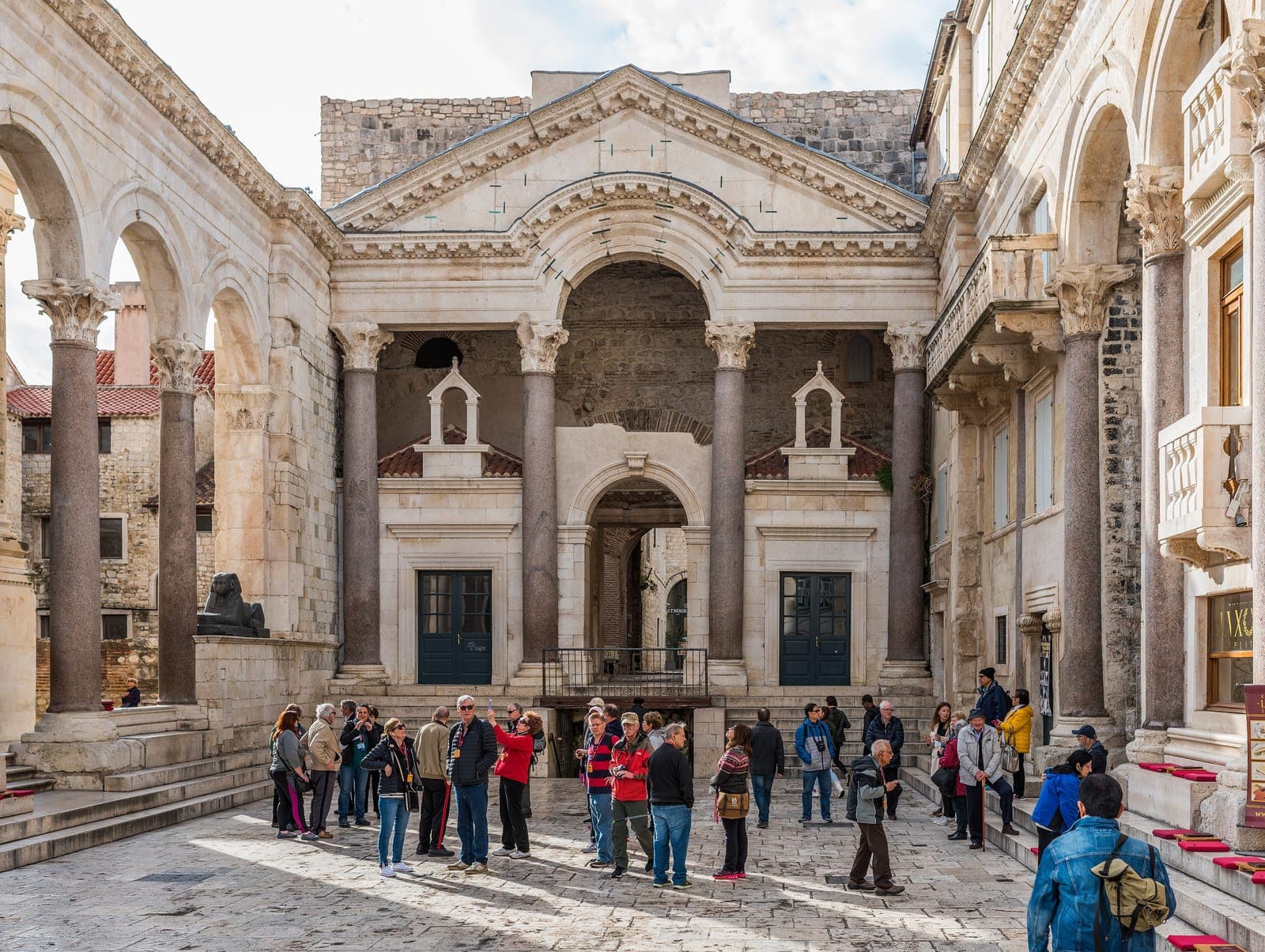
The palace is confusing on purpose — it is a Roman military plan buried under fourteen centuries of alterations, with streets that do not run straight and gates that do not face where you expect. An hour and a half with a guide on your first morning turns the rest of your stay from wandering into recognising, and every walk you do afterwards makes more sense because you know which gate is which and why the cathedral is an octagon.
Afterwards, climb the bell tower of the Cathedral of St Domnius for the view over the roofs you have just walked.
What it covers
The four gates, the Peristyle, the cellars, the cathedral exterior, the Vestibule, and the streets in between — the same stones you would see on your own, but with the story attached. A good guide explains why the palace is a city and not a ruin, which is the one fact that changes how you see Split.
For the palace itself — what to see and in which order — read the Diocletian's Palace guide.
The cellars are worth a second, slower visit on your own: Diocletian's cellars.
What it costs
Group tours are €25–35 per person; private ones start around €100 for the group. Free walking tours exist and run on tips — the good ones expect €10–15 a head, so the saving is smaller than it looks. The paid tours are better because the guide is paid, and the free tours cover the palace in less depth and the restaurant recommendations in more.
Things to do in Split
Boat trips and tours
Split in one day