The nine-until-midnight part of a Split night, and the best of it. Small cellars and side rooms inside Diocletian's Palace pour Dalmatian wine by the glass with no music you have to shout over. Arrive before nine if you want a table, and leave around midnight when the lanes empty.
Nine until midnight, and they are the strongest three hours Split has. Most open from late afternoon, but the rooms do not fill until the restaurants do. The palace bars are cellars, courtyards and side rooms off the lanes, the good ones with about eight tables, and the stone does the work a sound system does elsewhere — you can talk at normal volume. Arrive before nine if you want to sit. After that you stand, and in July you stand outside. Somewhere between midnight and one the lanes quieten and then empty quickly, which is not a fault of the bars. It is the signal to decide what kind of night you are having.
What to drink
Ask for plavac mali from Pelješac if you want the big red, pošip from Korčula if you want white, and grk if you want something you will not find at home. Dingač is the premium plavac, off the steep southern slopes of Pelješac, and the one to order if the list has it. Most places pour by the glass and will let you taste before you commit. A glass is €4–7, a cheese and prosciutto plate €12–18, and a bottle works out cheaper than three glasses almost everywhere. Blackboard lists change more often than printed ones.
Come to it from the Riva bars after dinner: the walk inland takes two minutes and the price of a round drops as soon as you are through the gate.
Who it is wrong for
A group that came to dance. There is no floor here, the rooms are small, and eight people who want a big night will spend an hour hunting tables and leave unsatisfied anyway. It is wrong if you want somewhere that carries you to four in the morning, because the palace does not do that, and expecting it to is how people end up standing in a stone lane at half twelve with nowhere to go. It is a poor choice for any large group: book a restaurant, then come here in twos and threes afterwards.
At about half twelve you choose — home, or east to the Bačvice beach clubs, which do not properly fill until one and run to three or four in summer.
From about nine, and the good ones only have eight or ten tables, so arrive before nine if you want to sit. They stay busy until midnight, later in summer, then the lanes quieten and empty quickly. That emptying is the cue to move east or to go home, not a sign the night has failed.
What wine should I drink in Split?
Plavac mali from Pelješac for red, pošip from Korčula for white, and grk if you want something you will not find at home. Dingač is the premium plavac, grown on the steep southern slopes of Pelješac, and the one to order if the list has it. Most bars will let you taste before you commit.
Where do you go after the palace bars close?
Either home or east to Bačvice, where the beach clubs run to three or four in summer. Do not go to a club at half ten expecting a crowd — serious dancing in Split develops between one and three. If you want a big night, treat the palace as the warm-up and leave around half twelve.
The layer between the Riva and the clubs: small cocktail rooms, jazz corners, hostel bars and neighbourhood cafés that turn into bars after nine. This is where the local crowd drinks, it costs about a third less than the seafront, and it is the part of Split nightlife that still works in February.
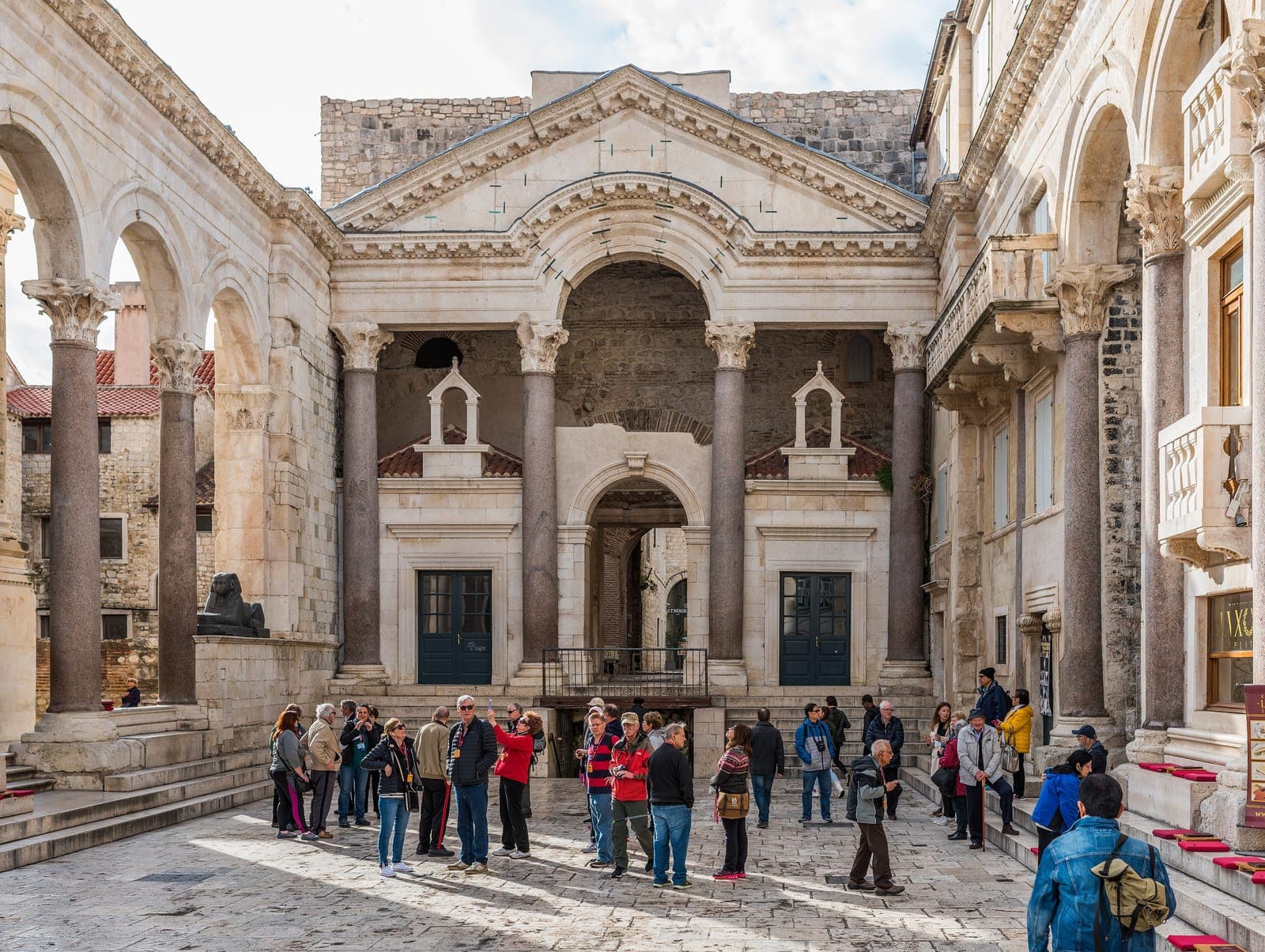
The colonnaded courtyard at the centre of Diocletian's Palace, where the emperor appeared to his subjects and where Split now drinks wine on the steps. Free, roofless, and the best-preserved Roman square you can sit down in.
The oldest cathedral building in the world still in use, and it started life as the mausoleum of the emperor who persecuted the man it is now named after. The bell tower beside it gives you the best view in Split for the price of 183 steps.
Ninety minutes through the palace with someone who can explain what you are looking at. Worth it on your first morning: the palace makes far more sense with a guide, and everything you do afterwards is better for it.
Diocletian's Palace is free: its lanes, the Peristyle, the domed Vestibule and the central passage through the cellars are open at all hours with no gate. You pay only for interiors — the side halls of the cellars (€10 for adults as of October 2026) and the cathedral, bell tower, crypt, treasury and Temple of Jupiter, ticketed separately. Built around AD 305, it is still full of homes, bars and shops.
The vaulted basement halls that held up the emperor's apartments, preserved because they were filled with rubbish for a thousand years. The best-surviving Roman substructure anywhere, ten degrees cooler than the street, and the one part of the palace that looks like a ruin.
Twelve seats at a counter, a blackboard that changes daily, and cooking that is better than places charging three times as much. No reservations, no table service, and a queue outside from seven. Worth the wait.
A small konoba on a Varoš side street doing exactly four things well: grilled fish by the kilo, black risotto, octopus salad and house wine from a jug. No view, no English menu board outside, and a queue by eight in July.
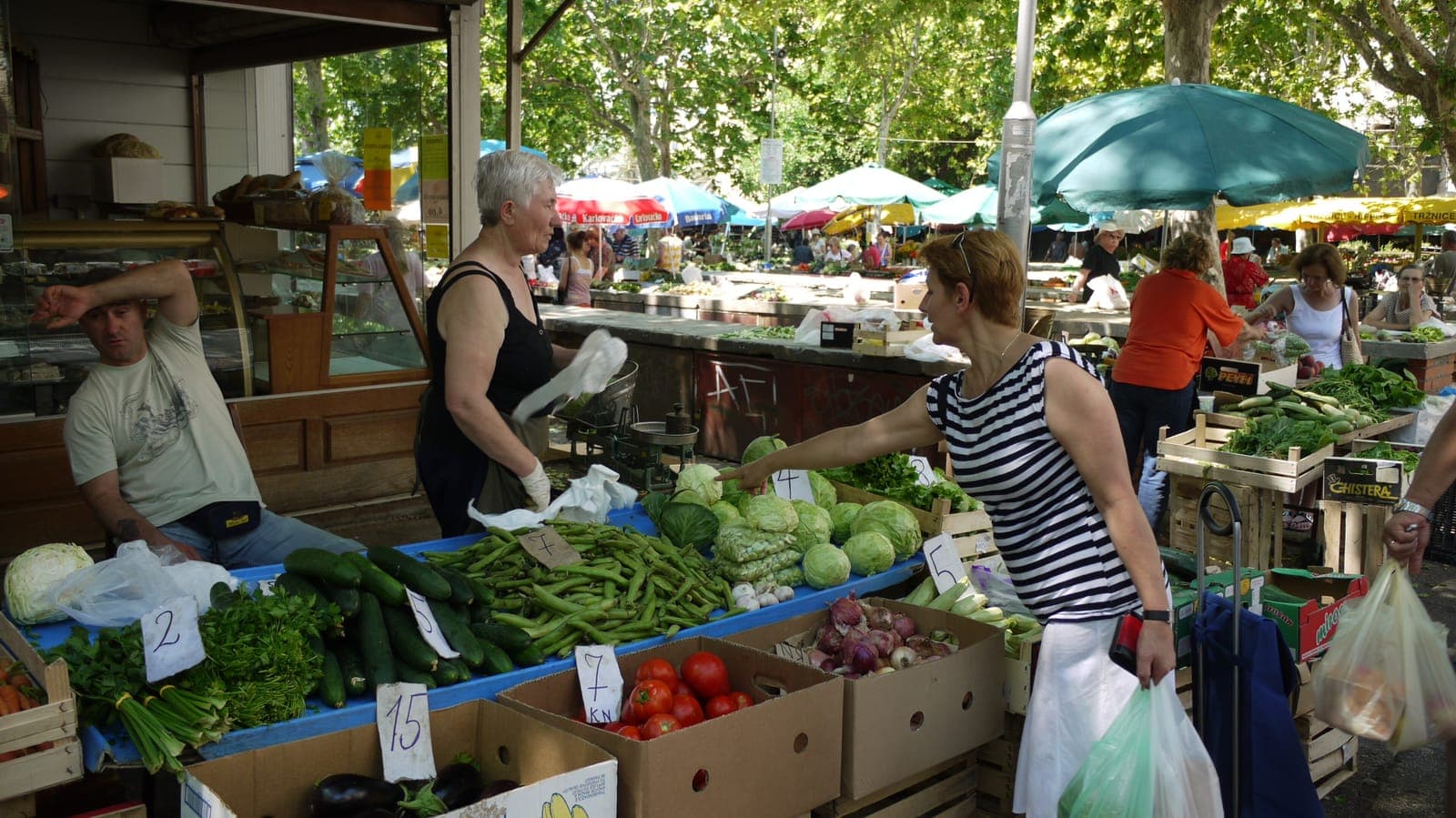
Three and a half hours through the green market, the fish market and four family-run places inside the palace, eating soparnik, pršut, Pag cheese, fresh anchovies and rožata. Enough food to replace lunch, with the context that makes Dalmatian cooking make sense.
A stone-walled konoba in an alley behind the Matejuška fishing harbour, doing straight Dalmatian seafood without a single flourish. Small, warm and consistently very good.
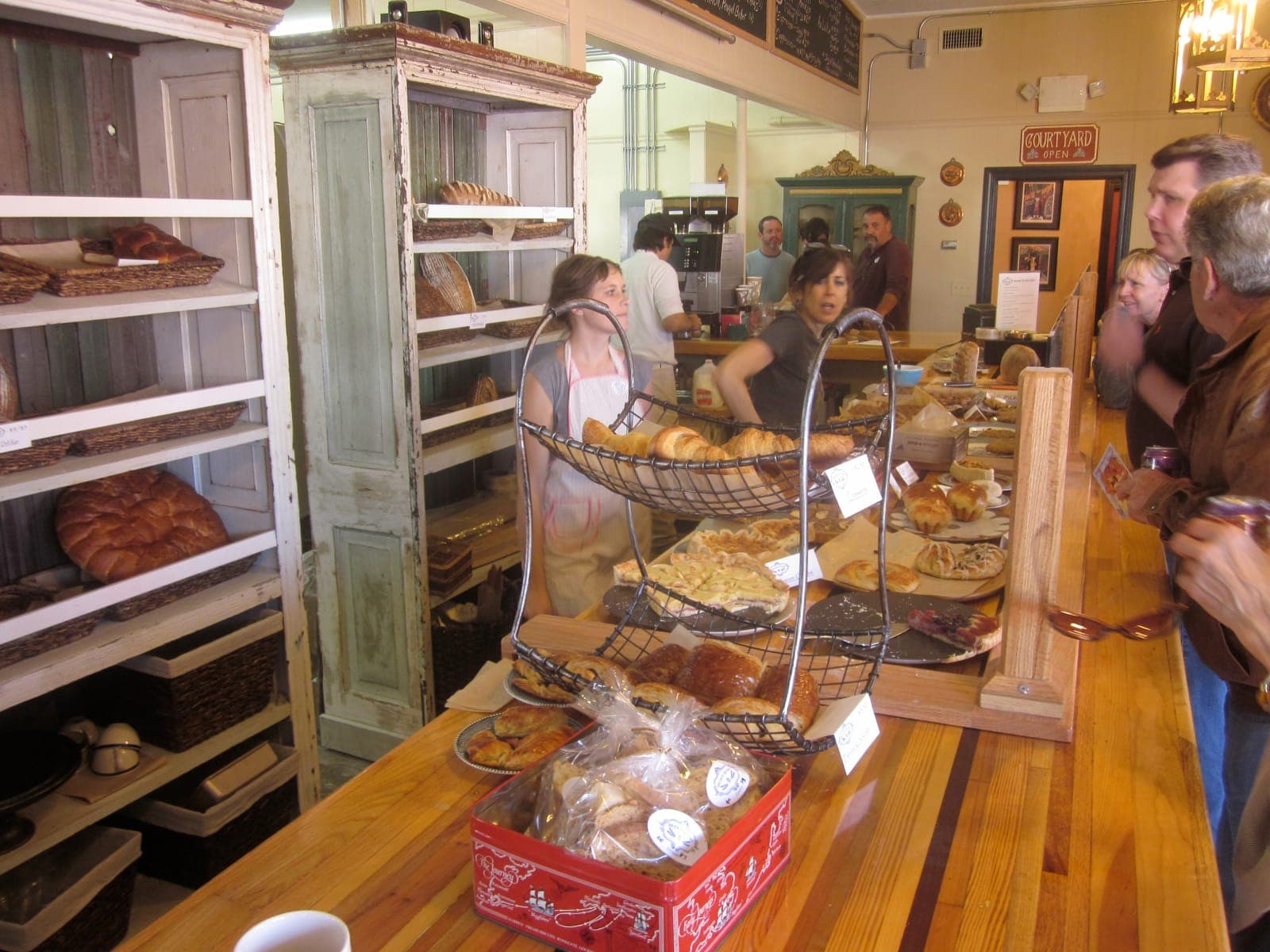
A tiny sourdough bakery near the Golden Gate that sells out by early afternoon. Proper bread, burek, and the best breakfast pastry in Split for under three euros.
Split's best-known fine-dining seafood restaurant, on the first floor of the ACI marina with the whole harbour in front of it. Expensive, precise, and the view genuinely earns part of the bill.
Split nightlife is not one club district but a progression through zones, and the hour matters more than the venue. Dinner, then the palace lanes, then the Riva, then a decision at half past midnight: Bačvice for the beach party, or a central club for the dance floor. Timing is what visitors get wrong.