The capital of Roman Dalmatia and a city of 60,000 people before Split existed. What is left is a wide field of foundations, an amphitheatre and early Christian basilicas, twenty minutes out in Solin — quiet, uncrowded and almost entirely yours.
Do not expect Pompeii. Salona was quarried for centuries and what survives is at ankle height: street grids, the amphitheatre's lower ring, basilica floors, a necropolis with early Christian sarcophagi. Bring imagination or a guide. What you get in exchange is space and silence, twenty minutes from a city that has neither in August, and the knowledge that you are standing in the capital of Roman Dalmatia — a city of 60,000 people before Split existed, and the place Diocletian was born.
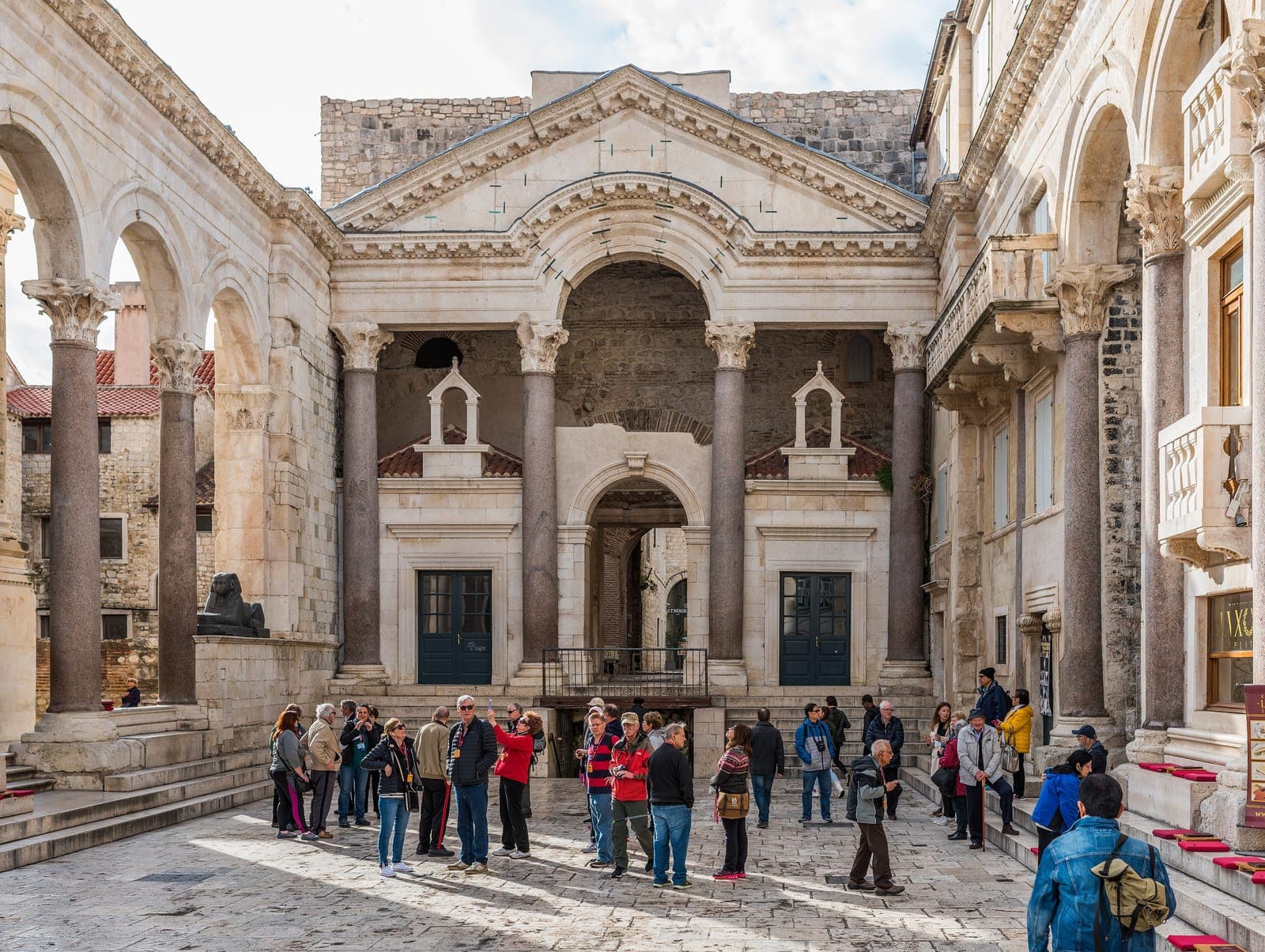
For a Roman building that is still standing and still lived in, see Diocletian's Palace.
The amphitheatre
The most recognisable surviving structure is the amphitheatre, which held about 18,000 spectators. It was partly destroyed in the seventeenth century by the Venetians, who did not want a usable fortress near the city they were defending, and what is left is the lower ring of arches and the arena floor. It is the one part of Salona where the scale is obvious, and it is the part to head for if you are short on time.
Bus 1 from Split to Solin, then a ten-minute walk. There is little shade, so mornings only in summer, and the ground is uneven grass and stone throughout. Entry is about €6 and the site is rarely busy — you will often have it to yourself, which is the point of coming.
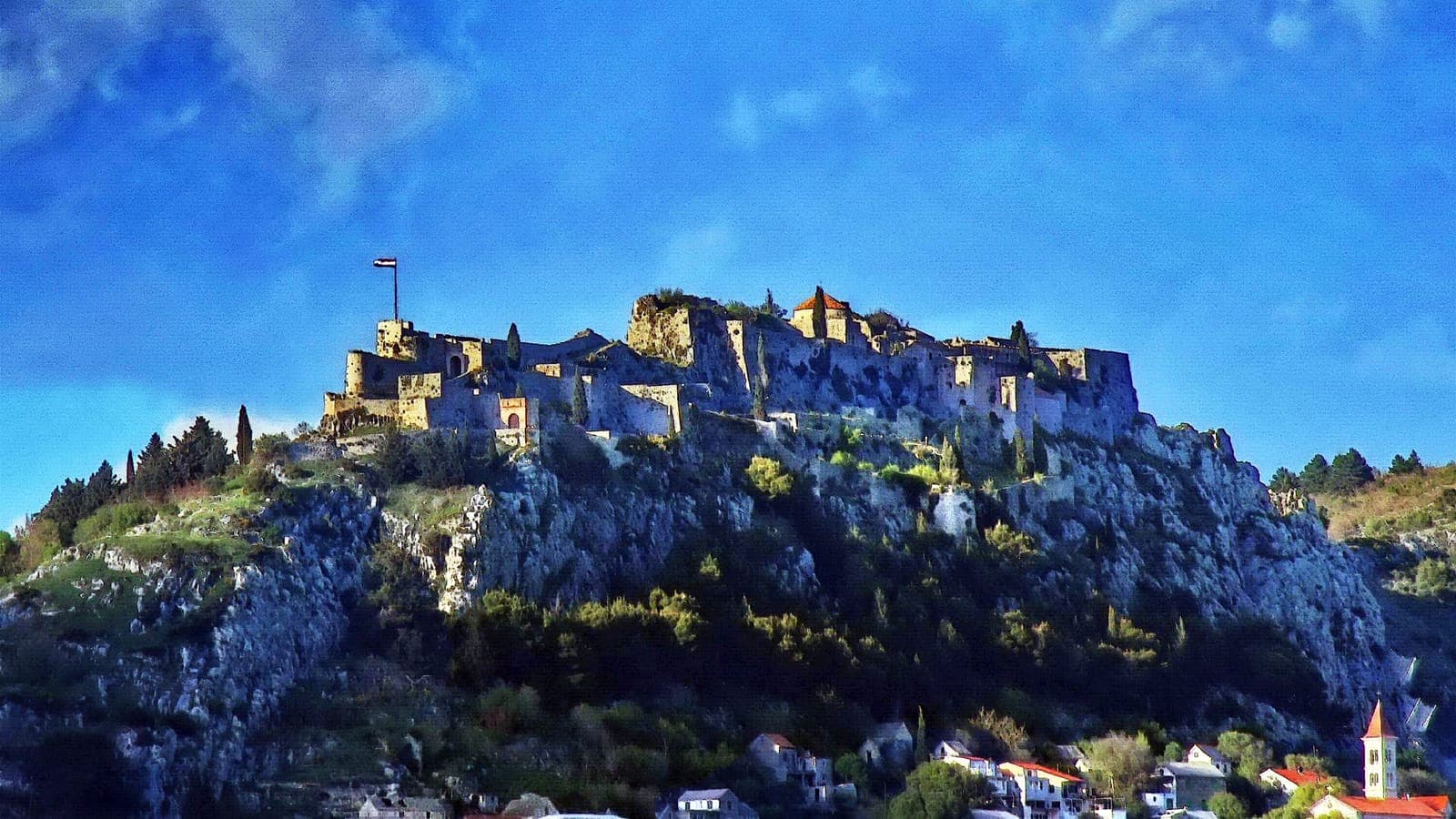
Klis Fortress is the other half of the same morning.
Open and free of visitors, but the grass turns to mud after the November and December rain. Boots rather than trainers.
Frequently asked questions
Is Salona worth visiting?
If you like Roman history and quiet, yes — it is the largest archaeological site in Croatia and you will often have it to yourself. If you want standing buildings and reconstructions, you will be disappointed; Diocletian's Palace is the better use of your time.
How do you get to Salona from Split?
Bus 1 from Split to Solin, then a ten-minute walk. The site is open year-round, but mornings are the only sensible time in summer because there is no shade.
Get out there
Tours that go here
Guided trips that include this stop, with live availability.
Ninety minutes through the palace with a guide who lives inside it: the Golden Gate, the cellars, the Peristyle, the cathedral and the streets in between. Small group, no flag, and a proper explanation of why a Roman emperor retired to a cabbage patch in Dalmatia.
Diocletian's Palace is free: its lanes, the Peristyle, the domed Vestibule and the central passage through the cellars are open at all hours with no gate. You pay only for interiors — the side halls of the cellars (€10 for adults as of October 2026) and the cathedral, bell tower, crypt, treasury and Temple of Jupiter, ticketed separately. Built around AD 305, it is still full of homes, bars and shops.
The oldest cathedral building in the world still in use, and it started life as the mausoleum of the emperor who persecuted the man it is now named after. The bell tower beside it gives you the best view in Split for the price of 183 steps.
The colonnaded courtyard at the centre of Diocletian's Palace, where the emperor appeared to his subjects and where Split now drinks wine on the steps. Free, roofless, and the best-preserved Roman square you can sit down in.
The vaulted basement halls that held up the emperor's apartments, preserved because they were filled with rubbish for a thousand years. The best-surviving Roman substructure anywhere, ten degrees cooler than the street, and the one part of the palace that looks like a ruin.
A fortress wedged into a mountain pass above Split, held by Romans, Croatian kings, Ottomans and Habsburgs in turn — and used as Meereen in Game of Thrones. Twenty minutes on the bus, and the view down to the coast explains a thousand years of fighting over it.
Ninety minutes through the palace with someone who can explain what you are looking at. Worth it on your first morning: the palace makes far more sense with a guide, and everything you do afterwards is better for it.
You do not need a shore excursion in Split. The cruise berths and the tender landing are a five-to-fifteen-minute walk from Diocletian's Palace, and the whole old town is walkable. Four hours covers the palace; six adds Marjan or a swim; eight lets you add Trogir or Klis by local bus.