What happens
Mass and a procession from the cathedral in the morning, a street fair along the Riva all day, concerts in the evening, and traditional boat races in the harbour. Shops close; the city does not. It is the one day of the year when Split is entirely for the people who live here, and the few visitors who happen to be in town get to watch rather than be the point.
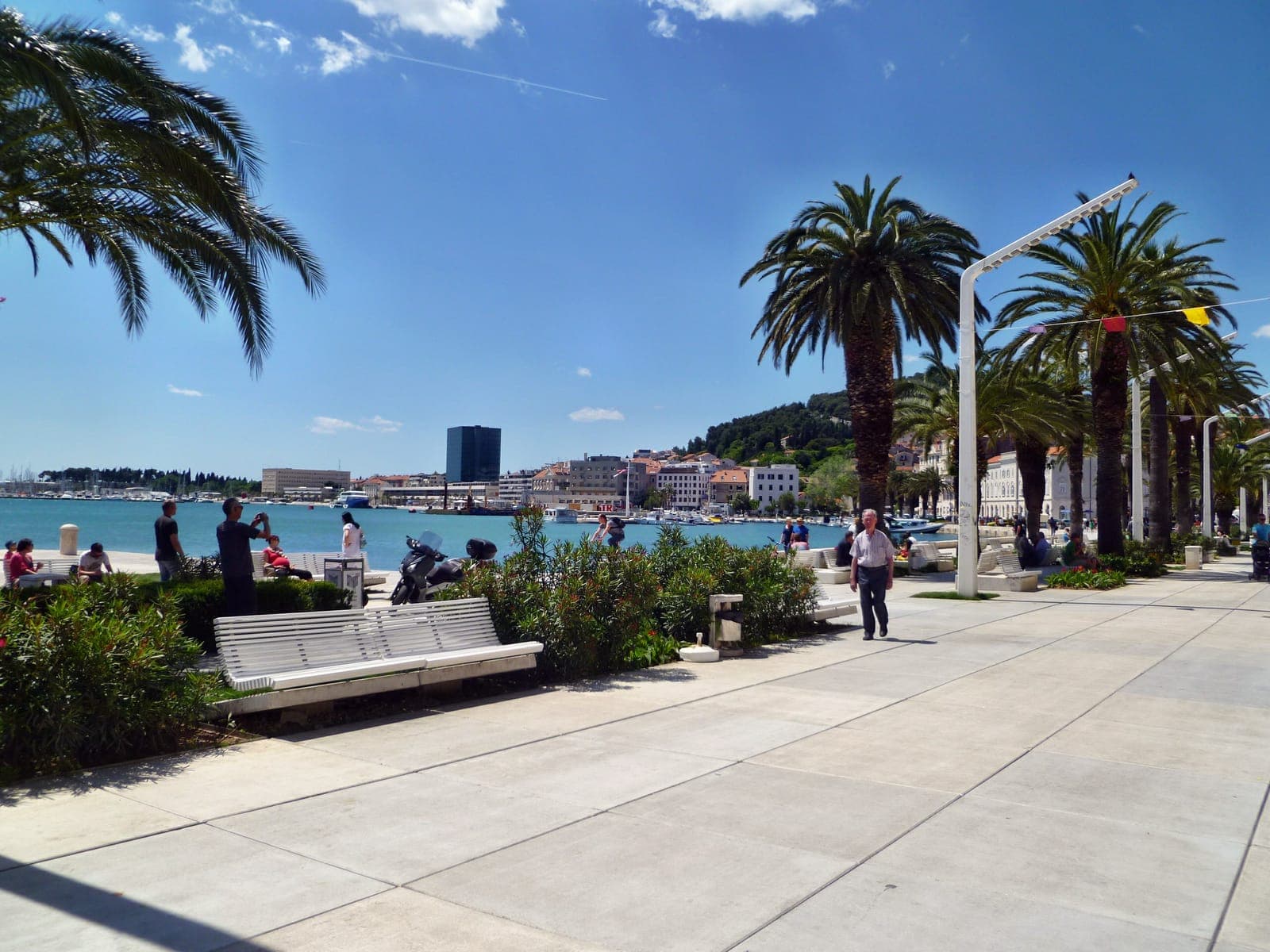
The fair fills the Riva from mid-morning.
The day in order
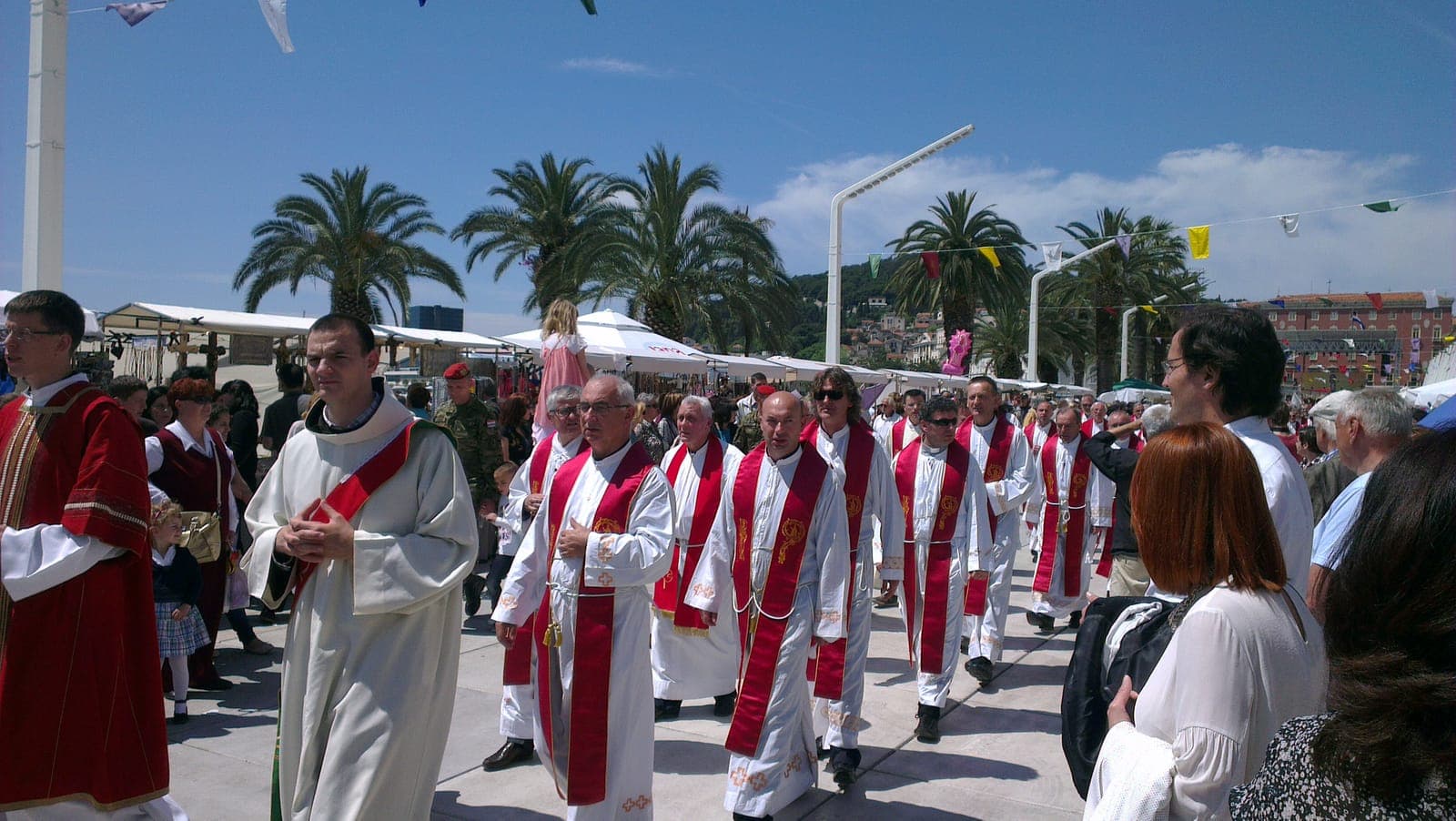
Early morning — the cathedral fills for the Pontifical Mass celebrated by the Archbishop of Split, followed by the procession with the relics of St Domnius through the streets around the Peristyle. Solemn, crowded, and the most photographed part of the day.
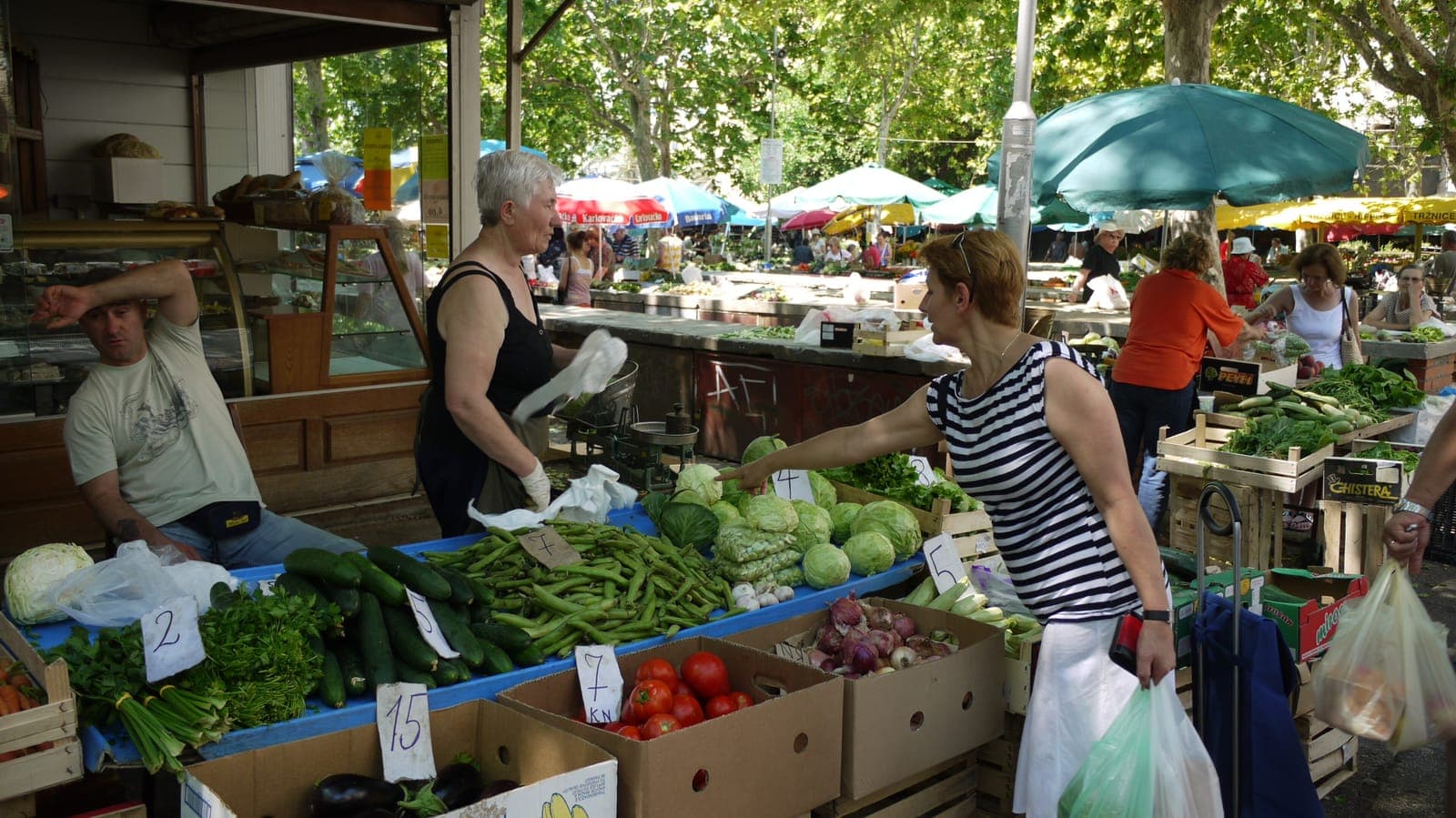
Mid-morning onwards — the Riva fills with stalls selling traditional fritule, cviteta (the dried-flower decorations), and local honey and rakija. A brass band plays through the afternoon.
Afternoon — the regatta. Wooden leut boats, the traditional Dalmatian fishing rowboats, race in the harbour. It is the one time all year you see them in the water together.
Evening — concerts on the Riva, usually a klapa group and then something more modern. The fair stays open late.
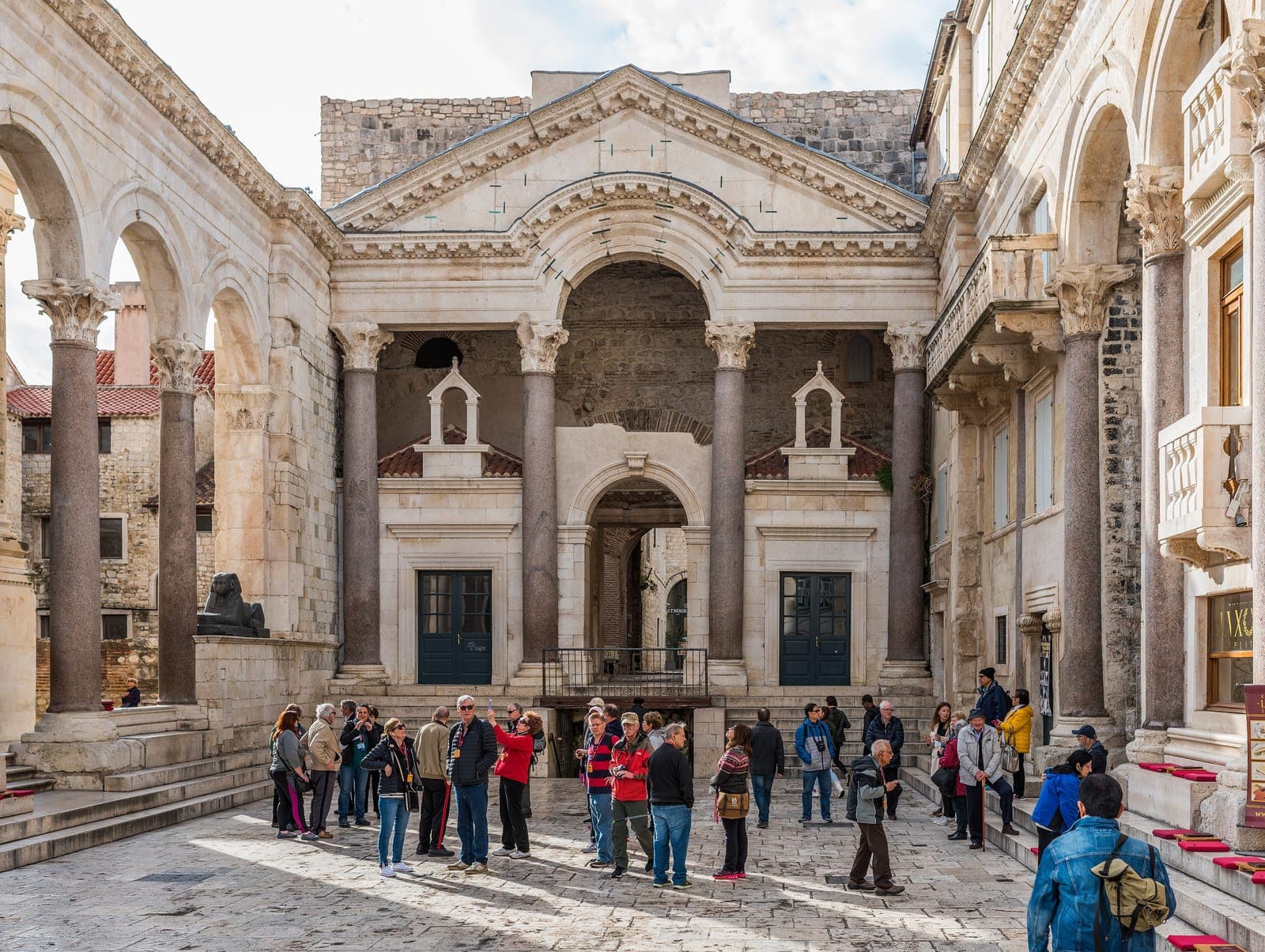
The procession starts at the Cathedral of St Domnius, once Diocletian's mausoleum.
Why Domnius
Domnius was the bishop of nearby Salona in the early fourth century, martyred under Diocletian's persecution of Christians — the same emperor whose mausoleum is now the cathedral dedicated to Domnius. The irony is not lost on anyone, and it is part of why the day matters here: Split celebrates the man the emperor killed, in the building the emperor built for himself.
What is left of his city is Salona, twenty minutes away in Solin.
For the rest of the month, see Split in May.
What's on in Split
Things to do in Split at night
The best time to visit Split