The grapes worth knowing
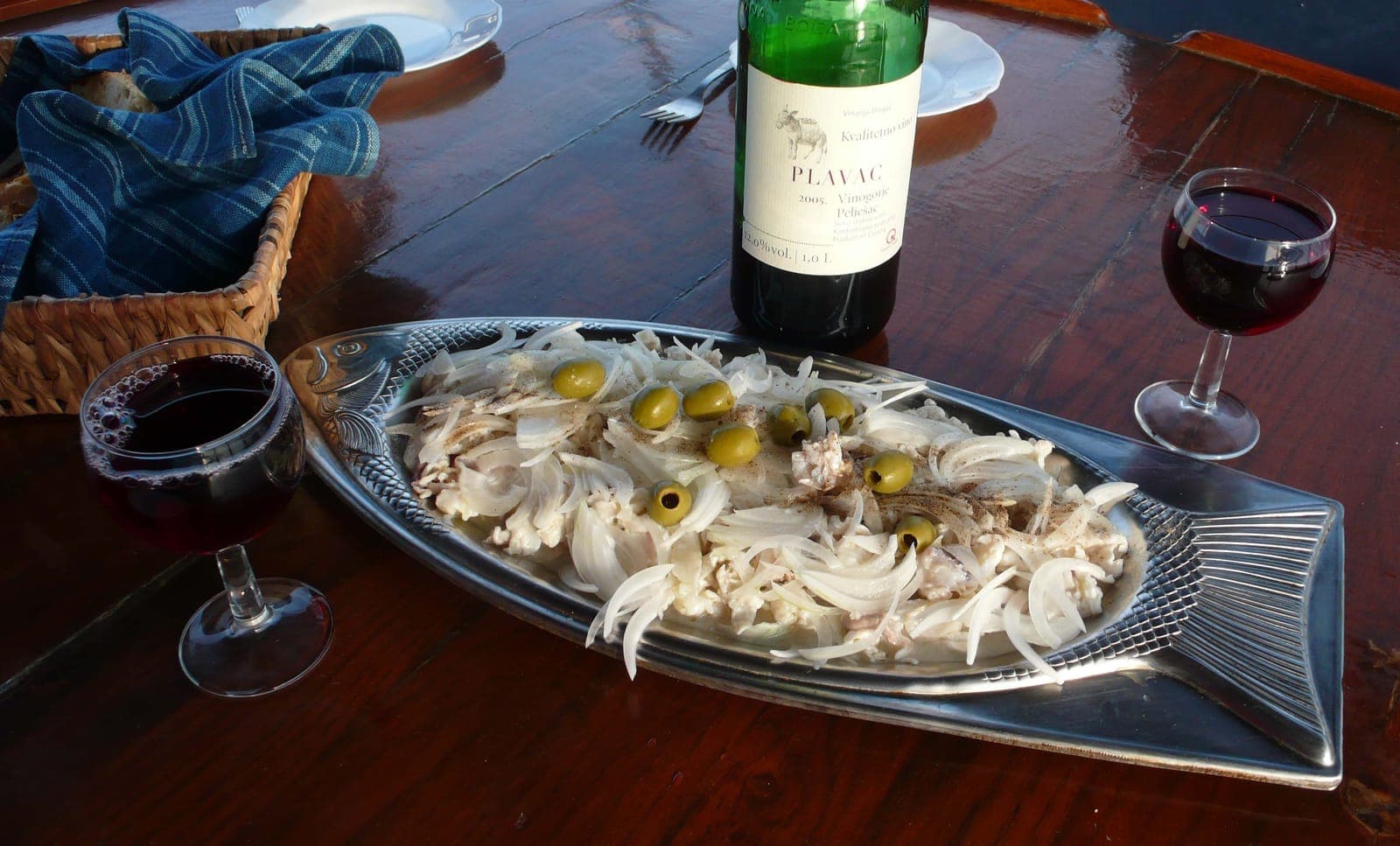
Plavac mali — the big red, a descendant of zinfandel, at its best from Dingač and Postup on Pelješac. The Dingač slopes are steep enough that the grapes were traditionally hauled up by donkey.
Pošip — Korčula's white, full-bodied and increasingly good. The best examples are from Smokvica and Čara on the interior of the island.
Grk — grown almost only around Lumbarda on Korčula, a different white that is genuinely rare and worth seeking out.
Debit and maraština — the everyday whites you will drink in konobas without noticing. Maraština is the one used for prošek, the sweet dessert wine, not to be confused with the Italian prosecco.
What the tasting is like
Most run in a palace cellar, which is a stone-vaulted room with eight tables and a host who knows the wines. You get five or six pours, a plate of pršut and cheese, and a explanation of what you are drinking and where it came from. The good ones let you taste before you pour, and the good ones are honest about which wines are worth buying and which are not.
For a glass in the evening rather than a tasting, see the palace wine bars.
Pršut and Pag cheese come up again on the Split food tour, which ends inside the palace.
Practical
Expect €30–45 for five or six wines with cheese and pršut. Book ahead in season; the good cellars are small and fill up. Tastings last about ninety minutes and are a good thing to do at three in the afternoon when the beach is too hot and dinner is not for three hours.
Tastings are indoors, which puts them on the list for a wet day in Split.
Things to do in Split
Boat trips and tours
Split in one day