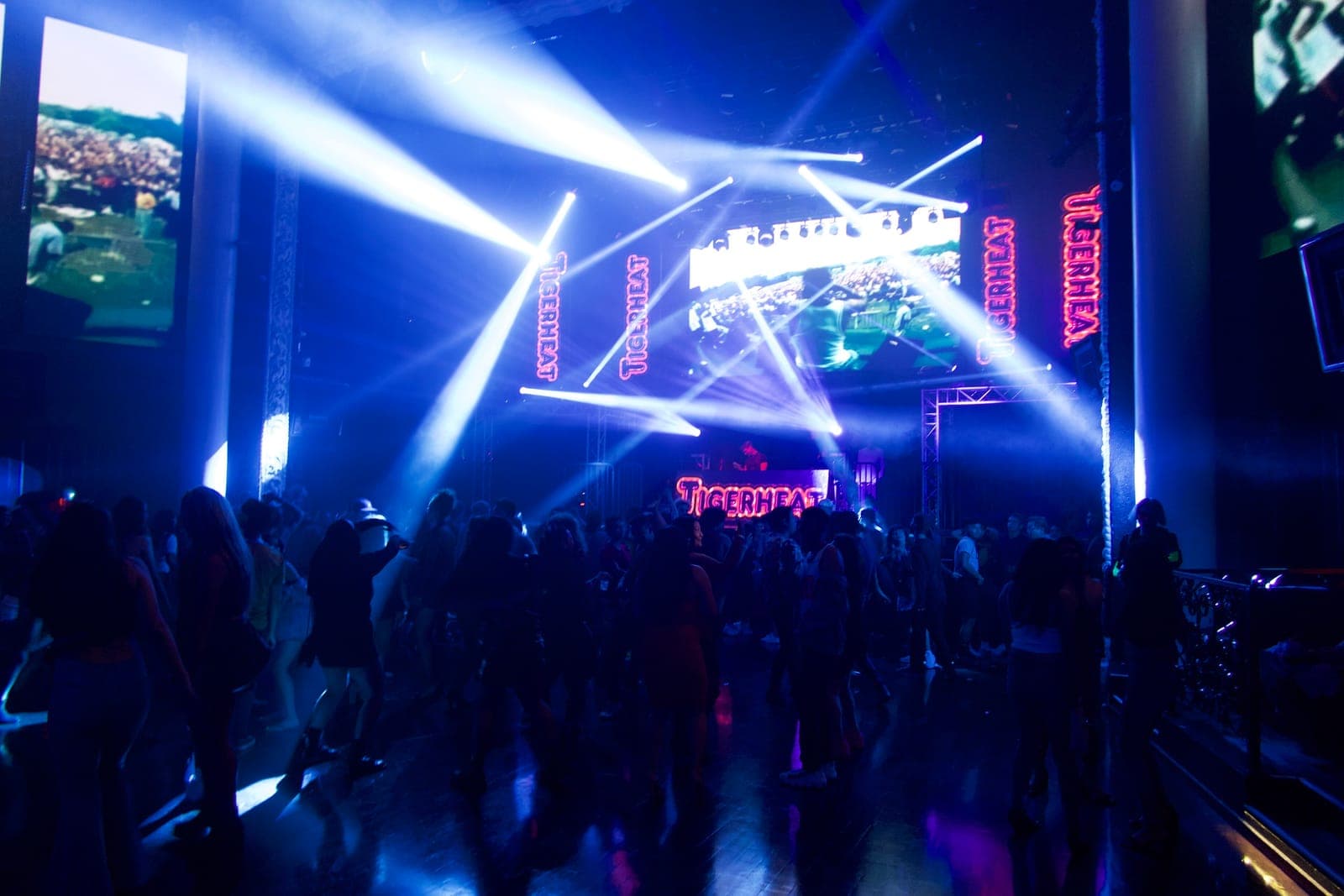
Central is the closest thing Split has to a conventional big-room European nightclub, centrally placed and built for larger DJ nights. It does not get going until after midnight. Arrive at 22:30 and you will find a half-empty room and conclude the city is dead; come back at one and it is unrecognisable.
You finish dinner at ten, walk over at half past, and find a room that has barely started — a scattering of people and a DJ playing to the bar staff. So you leave, and you tell people Split has no nightlife. Go back to the same room at one in the morning and you would not recognise it. Nothing about the venue changed — dinner here runs late, the bars inside the walls hold everybody until midnight, and the club is the last stop of the night rather than the first.
What kind of club it is
Central is the closest thing Split has to a conventional big-room European nightclub: a real dance floor, larger club nights, booked DJs, and a scale that the bars inside Diocletian's Palace do not have and do not want. That is the whole case for it. The cellars and the lanes are where you talk — this is where you go once you have stopped wanting to. Being in the centre matters more than it sounds: you can leave a wine bar and be on the dance floor without crossing the city, and walk home afterwards without arranging anything.
Central is one zone of several, and the best place at eight is not the best place at one — the Split nightlife guide runs through them in order.
The hours before it
Nobody here goes straight to a club, and if you do you will spend the good part of the evening in an empty room. The night has a shape and the club is the end of it.
19:30–21:00 — dinner. Late by northern European habits, ordinary by Croatian ones.
21:00–22:30 — a cocktail or a glass of plavac mali in the palace lanes, while you can still hear each other.
22:30–00:30 — the Riva for the walk and the water, then one more bar inside the walls. This is where you decide what kind of night you actually want.
00:30 onwards — the club, if that turns out to be the answer.
Start with the palace wine bars and treat the seafront as the bridge between dinner and the dance floor rather than the evening itself.
Who it is wrong for
Skip it if you want a night you could only have in Split. A big room with a good DJ travels — it is a fine night out, but Manchester has one too, and the seventeen-hundred-year-old courtyard in the middle of this city does not exist anywhere else. Skip it if anyone in the group flags before midnight, because you would be committing to the one part of the evening you are too tired to use. And if what you want is a conversation you can hear, the small bars inside the walls do that better than any club can. Out of season the whole calculation shifts: fewer people are out, the crowd is more local, and the night depends on whether there is a specific event on rather than on the doors being open.
For the same late hours with sand, a louder room and a younger crowd, read the Bačvice beach clubs.
After midnight, and properly from about one. A central club is filling rather than full before half twelve, and in summer the dancing runs until roughly half three. Turning up at 22:30 and deciding the city is dead is the most common mistake visitors make.
Is there a proper nightclub in Split?
Yes. Central is the closest thing the city has to a conventional big-room European club — a real dance floor, larger club nights and booked DJs — and it is in the centre rather than out at the beach. Most of Split's other drinking is small bars in the palace lanes and the beach clubs at Bačvice.
Where should I go before a club in Split?
The bars inside Diocletian's Palace from about nine until half eleven, then the Riva as the transition. Dinner runs late here, so little happens anywhere before eleven. Going straight to a club at ten means spending the good hours in an empty room.
Three hours that get you round the palace, up Marjan and out along the coast without the climb. The electric assist is not laziness — it is the difference between seeing the top of the hill and reading about it.
A high-ceilinged former shop turned bistro, doing modern Mediterranean plates and a serious wine list. The most reliable smart dinner in the centre, and the room is genuinely lovely.
Four or five hours that start at the green market and the fish hall and end with you eating what you bought. The good ones shop first, which is the half that teaches you something: how to tell this morning's fish from yesterday's, and what is actually in season.
The best ice cream in Split, made in small batches with real fruit and no artificial colours — which is why the pistachio is dull green and the strawberry is pale. Two euros a scoop and a queue that moves.
Ninety minutes through the palace with someone who can explain what you are looking at. Worth it on your first morning: the palace makes far more sense with a guide, and everything you do afterwards is better for it.
Diocletian's Palace is free: its lanes, the Peristyle, the domed Vestibule and the central passage through the cellars are open at all hours with no gate. You pay only for interiors — the side halls of the cellars (€10 for adults as of October 2026) and the cathedral, bell tower, crypt, treasury and Temple of Jupiter, ticketed separately. Built around AD 305, it is still full of homes, bars and shops.
The nine-until-midnight part of a Split night, and the best of it. Small cellars and side rooms inside Diocletian's Palace pour Dalmatian wine by the glass with no music you have to shout over. Arrive before nine if you want a table, and leave around midnight when the lanes empty.
Where a Split night ends rather than starts. The row of clubs behind the sand fills from about midnight, runs to three or four in summer, and sits a ten-minute walk east of the Riva, so nobody needs a taxi home. Loud, young and pop-driven — arrive before one and it will feel empty.
The layer between the Riva and the clubs: small cocktail rooms, jazz corners, hostel bars and neighbourhood cafés that turn into bars after nine. This is where the local crowd drinks, it costs about a third less than the seafront, and it is the part of Split nightlife that still works in February.
The hour before the Riva. A pine-shaded headland fifteen minutes west of the harbour, on the site of an old cemetery, where you sit on the wall with a bottle from the shop and watch the sun drop behind Čiovo. Free, no bar, no music — then walk back down for dinner.
Split's staging area, not its destination. The seafront cafés turn into bars after eight, and you are paying for the seat and the view of the palace wall going gold — a fair trade for one round while the group assembles, a poor one for a whole evening. Move inside the walls by half ten.
Vanilla is Split's big summer party venue, out by Poljud rather than in the old town, which makes it a destination for a planned night rather than a stop on a bar crawl. Go if you want a large room, a late finish and holiday energy; skip it if you came to find Split's own bars.
Split nightlife is not one club district but a progression through zones, and the hour matters more than the venue. Dinner, then the palace lanes, then the Riva, then a decision at half past midnight: Bačvice for the beach party, or a central club for the dance floor. Timing is what visitors get wrong.