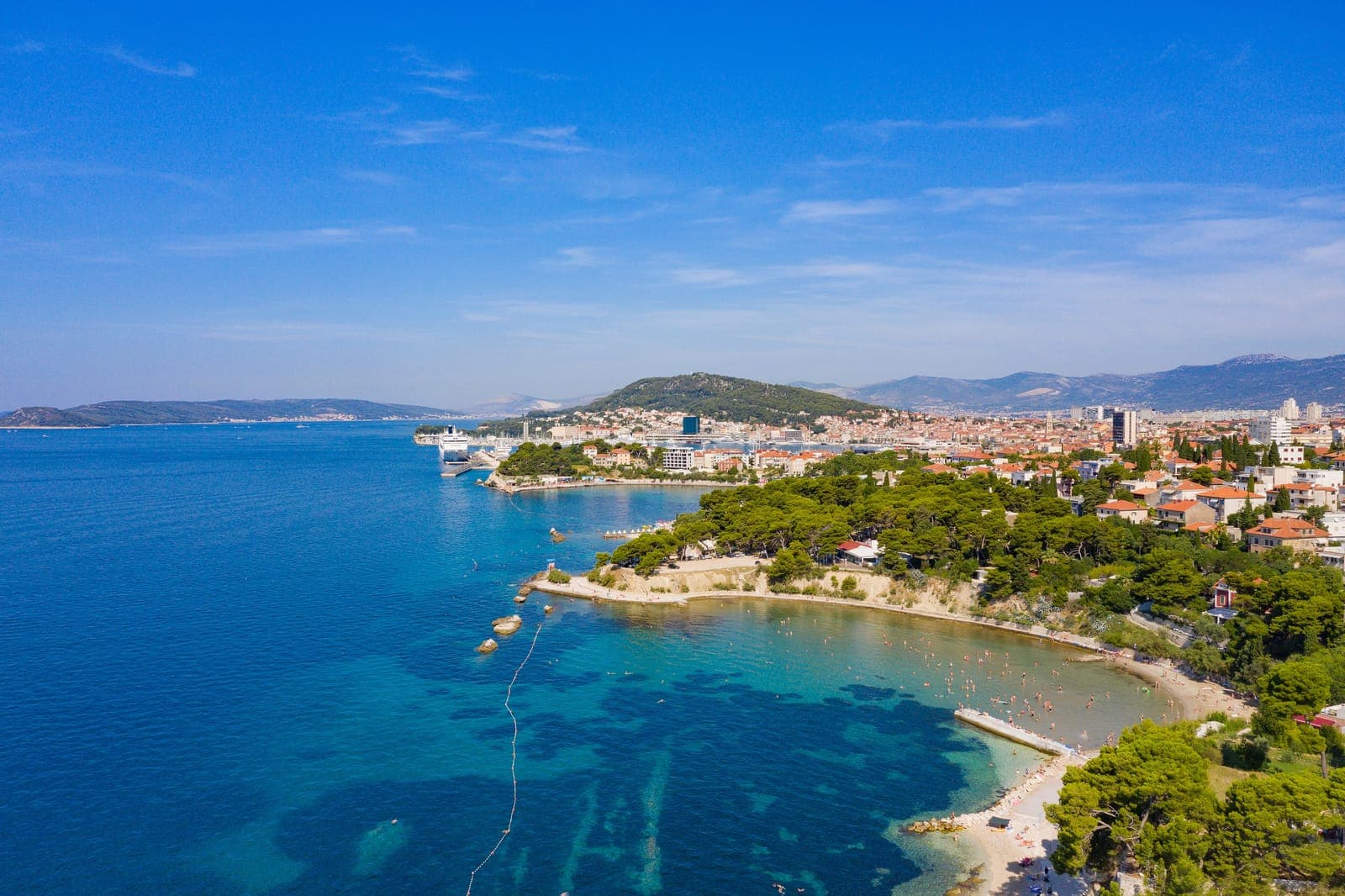
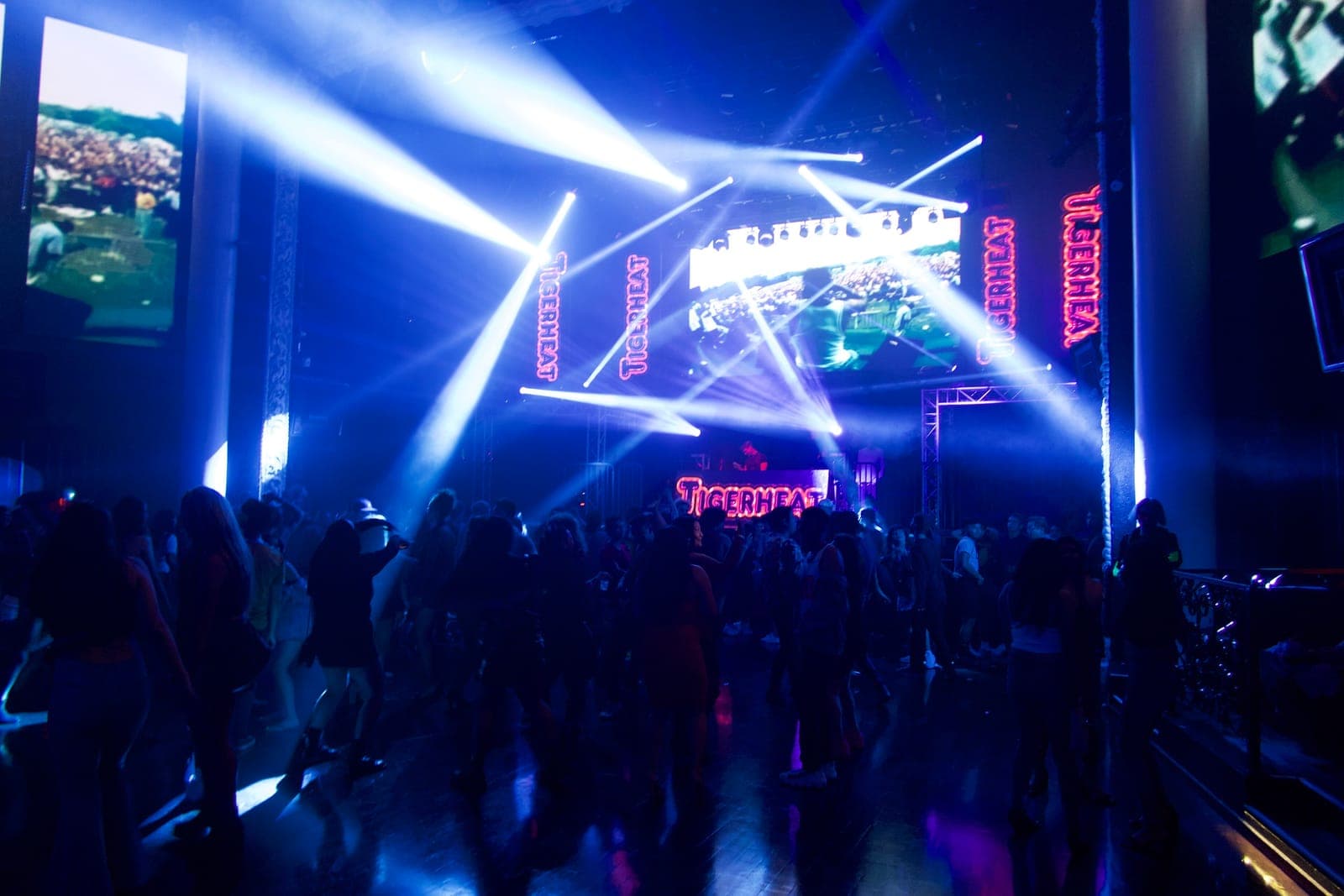
Where a Split night ends rather than starts. The row of clubs behind the sand fills from about midnight, runs to three or four in summer, and sits a ten-minute walk east of the Riva, so nobody needs a taxi home. Loud, young and pop-driven — arrive before one and it will feel empty.
One in the morning, give or take. Dinner is at nine, the palace bars run to midnight, and the beach clubs only become themselves once the old town empties into them. The common mistake is arriving at half eleven, finding a near-empty room, and concluding that Split nightlife is overrated. The same room at one is a different place with a different crowd. If you get here early, walk the sand, eat something, and come back.
Come late, after the palace wine bars have thinned out. It is ten minutes east of the Riva and about twenty from the far side of the palace, through the tunnel under the railway.
What kind of night it is
Loud, pop and electronic, and aimed at people who came to dance rather than talk. These are proper venues with a DJ and a sound system, not beach bars running a playlist, and the crowd is younger and more international than inside the walls. Drinks run a euro or two above old-town prices. Most places have no cover charge; where there is one it tends to be for a specific DJ night. In summer it goes until three or four and the walk home happens in grey light. In shoulder season it closes earlier, and by November most of the row is shut and the night moves back inside the palace.
Who it is wrong for
Anyone who wants a conversation. This is fun rather than refined and does not pretend otherwise — no serious cocktail culture, no local atmosphere, no Roman stone. If what you wanted was a proper drink at a table, you had it two hours ago inside the walls and you should have stayed. It is the wrong call out of season, when much of the row is closed and what is open is thin, and the wrong call for anyone who has to be functional before eleven the next morning.
They fill from about midnight and are properly busy from one, which is when the old-town bars have emptied. Arrive at half eleven and you will find a thin room and assume the night is a write-off. In summer they run until three or four, and the walk home happens in grey light.
Do you have to pay to get into the Bačvice clubs?
Most of them have no cover charge and you can walk in. Where there is one, it is usually for a specific DJ night rather than a standard evening. Drinks cost a euro or two more than the same round in the old town, which is the real difference in the bill.
How do you get back to the old town from Bačvice?
You walk. It is ten minutes to the Riva and about twenty to the far side of the palace, through the tunnel under the railway, and at three in the morning there is a steady stream of people doing exactly that. No taxi and no last bus is the reason Bačvice works as the end of the night.
Split's own barefoot ball game, invented at Bačvice in 1908 and played in ankle-deep water with no points and no winner. Free, faintly ridiculous, and the single most Split thing you can do. Locals will let you join if you ask.
Split's city beach, and the only proper sand within walking distance of the palace. Shallow for fifty metres, which makes it excellent for small children and the reason picigin — Split's own barefoot ball game — was invented here.
Split's best-known fine-dining seafood restaurant, on the first floor of the ACI marina with the whole harbour in front of it. Expensive, precise, and the view genuinely earns part of the bill.
A small sandy bay just past Bačvice, in front of the tennis club where Goran Ivanišević learned to play. Shallow, calm and mostly families — the quieter alternative when Bačvice is a wall of people.
Wrecks, walls and caves within an hour of the city, on water that is warm from June to October and clear most of the year. A try dive needs no experience and no certificate; a certified single dive is the cheapest way to get wet if you already have a card.
The noisy end of the Split waterfront, and the only place near the city with the full concession: parasail, jet ski, banana, tube, pedalo. Nobody will pretend it is authentic. It is, however, exactly what a bored eleven-year-old wants at four in the afternoon.
The nine-until-midnight part of a Split night, and the best of it. Small cellars and side rooms inside Diocletian's Palace pour Dalmatian wine by the glass with no music you have to shout over. Arrive before nine if you want a table, and leave around midnight when the lanes empty.
The layer between the Riva and the clubs: small cocktail rooms, jazz corners, hostel bars and neighbourhood cafés that turn into bars after nine. This is where the local crowd drinks, it costs about a third less than the seafront, and it is the part of Split nightlife that still works in February.
Central is the closest thing Split has to a conventional big-room European nightclub, centrally placed and built for larger DJ nights. It does not get going until after midnight. Arrive at 22:30 and you will find a half-empty room and conclude the city is dead; come back at one and it is unrecognisable.
The hour before the Riva. A pine-shaded headland fifteen minutes west of the harbour, on the site of an old cemetery, where you sit on the wall with a bottle from the shop and watch the sun drop behind Čiovo. Free, no bar, no music — then walk back down for dinner.
Split's staging area, not its destination. The seafront cafés turn into bars after eight, and you are paying for the seat and the view of the palace wall going gold — a fair trade for one round while the group assembles, a poor one for a whole evening. Move inside the walls by half ten.
Vanilla is Split's big summer party venue, out by Poljud rather than in the old town, which makes it a destination for a planned night rather than a stop on a bar crawl. Go if you want a large room, a late finish and holiday energy; skip it if you came to find Split's own bars.
Split nightlife is not one club district but a progression through zones, and the hour matters more than the venue. Dinner, then the palace lanes, then the Riva, then a decision at half past midnight: Bačvice for the beach party, or a central club for the dance floor. Timing is what visitors get wrong.