September is the local favourite: a sea that has been warming since May, softer light and half of August's crowd. October is swimmable to mid-month and the best walking of the year. November is wet, quiet and cheap.
The sea does not cool at the pace the air does. By September it has been heating since May and sits around 24 °C, while the air drops to a comfortable 26 °C and the August crowd has gone home. Prices fall back, the light gets lower, and everything still runs.
What changes through the season
Boat timetables thin from mid-October and some island restaurants close for winter. November brings the year's heaviest rain — usually hard and brief rather than all day — and the city returns to the people who live in it. If a boat trip is why you are coming, come in September.
The sea holds 24 °C through September — warmer than June, with a fraction of the people.
The best beach within reach of the city: white pebbles, clear deep water and pine shade on the south side of Marjan. A beach club at one end, empty rock at the other, and a sunset that faces exactly the right way.
The heat has broken and the low light over the palace roofs is the best photograph in the city.
The pine-covered hill on Split's western edge, a fifteen-minute walk from the Riva and the reason the city feels liveable in August. Free, open always, with viewpoints, hermit chapels, swimming coves at the bottom and a proper trail network on top.
September is the best month of the year for this. From mid-October, check the forecast.
A full day on a fast twelve-seat boat: the Blue Cave on Biševo, the Monk Seal cave, Stiniva's famous cove, lunch on Vis and a swim off Budikovac's turquoise lagoon, finishing with a stop at Hvar town. Ten and a half hours, small group, no coach transfer.
Harvest season — the new olive oil reaches the market from late October.
Three and a half hours through the green market, the fish market and four family-run places inside the palace, eating soparnik, pršut, Pag cheese, fresh anchovies and rožata. Enough food to replace lunch, with the context that makes Dalmatian cooking make sense.
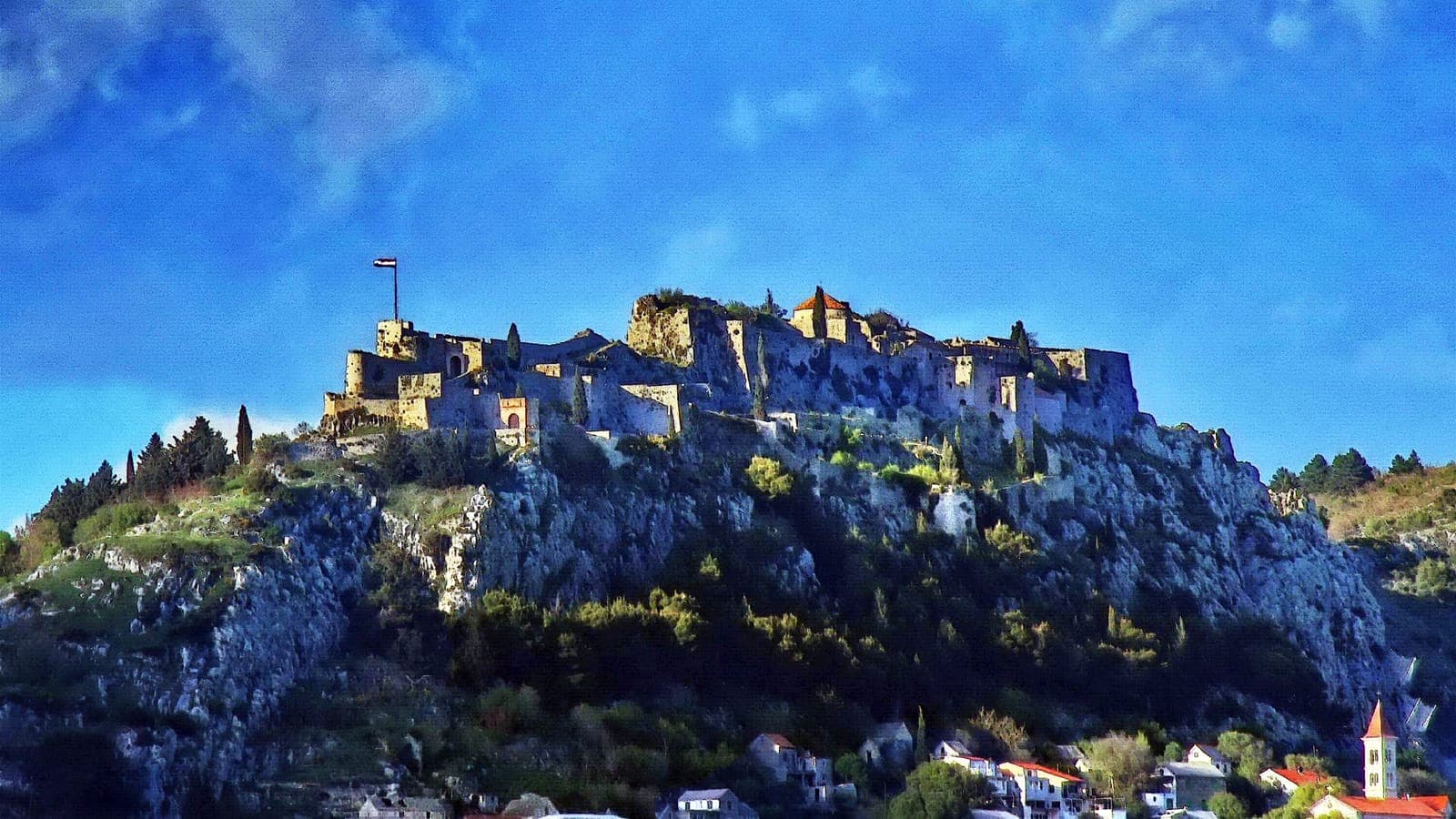
Clear air and comfortable walls, with the valley view at its sharpest.
A fortress wedged into a mountain pass above Split, held by Romans, Croatian kings, Ottomans and Habsburgs in turn — and used as Meereen in Game of Thrones. Twenty minutes on the bus, and the view down to the coast explains a thousand years of fighting over it.
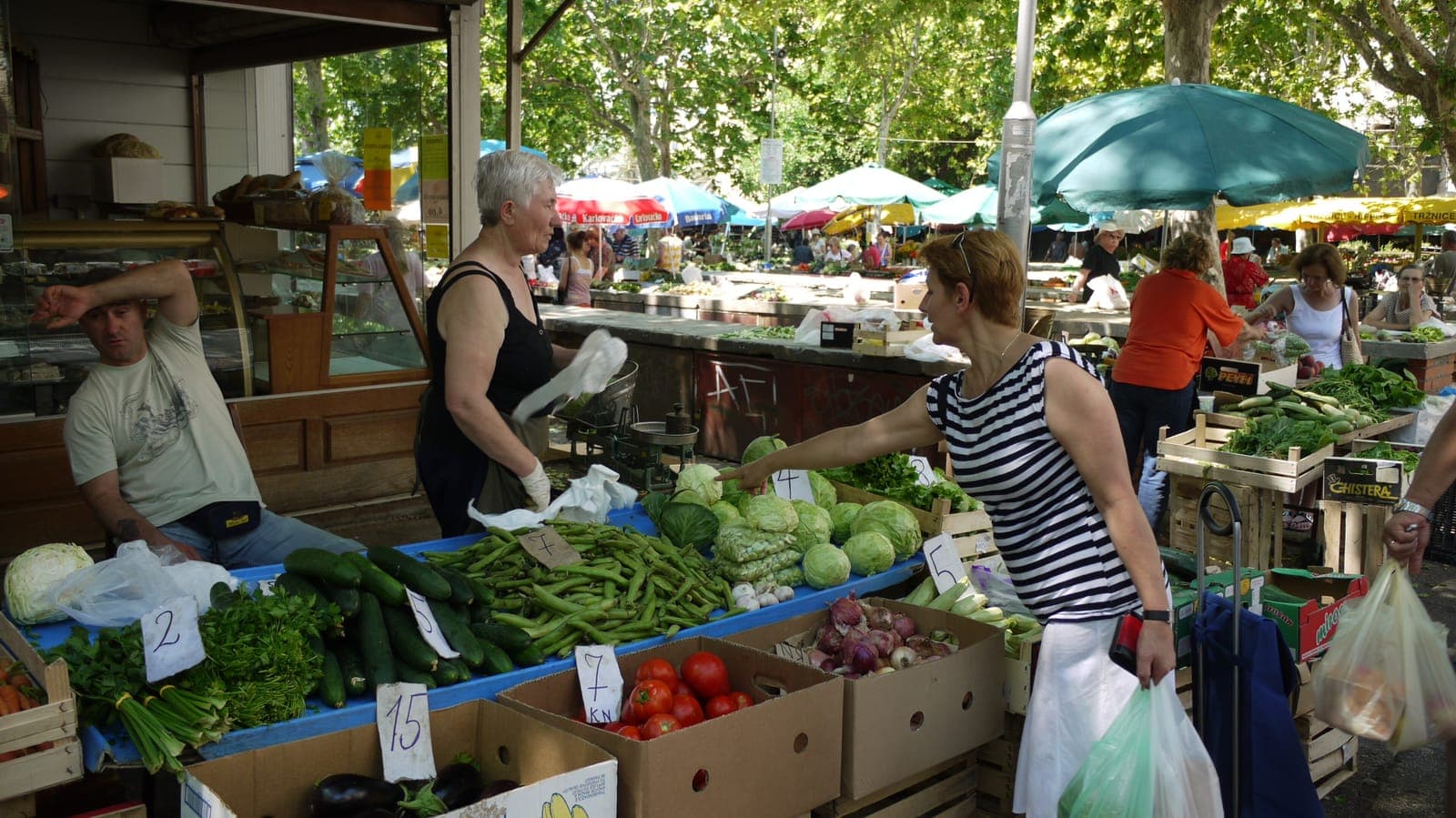
The open-air produce market against the palace's eastern wall, running every morning since forever. Figs, tomatoes, olive oil, cheese from Pag, and old women who will tell you your peaches are not ripe yet. Free to walk through, best before nine.
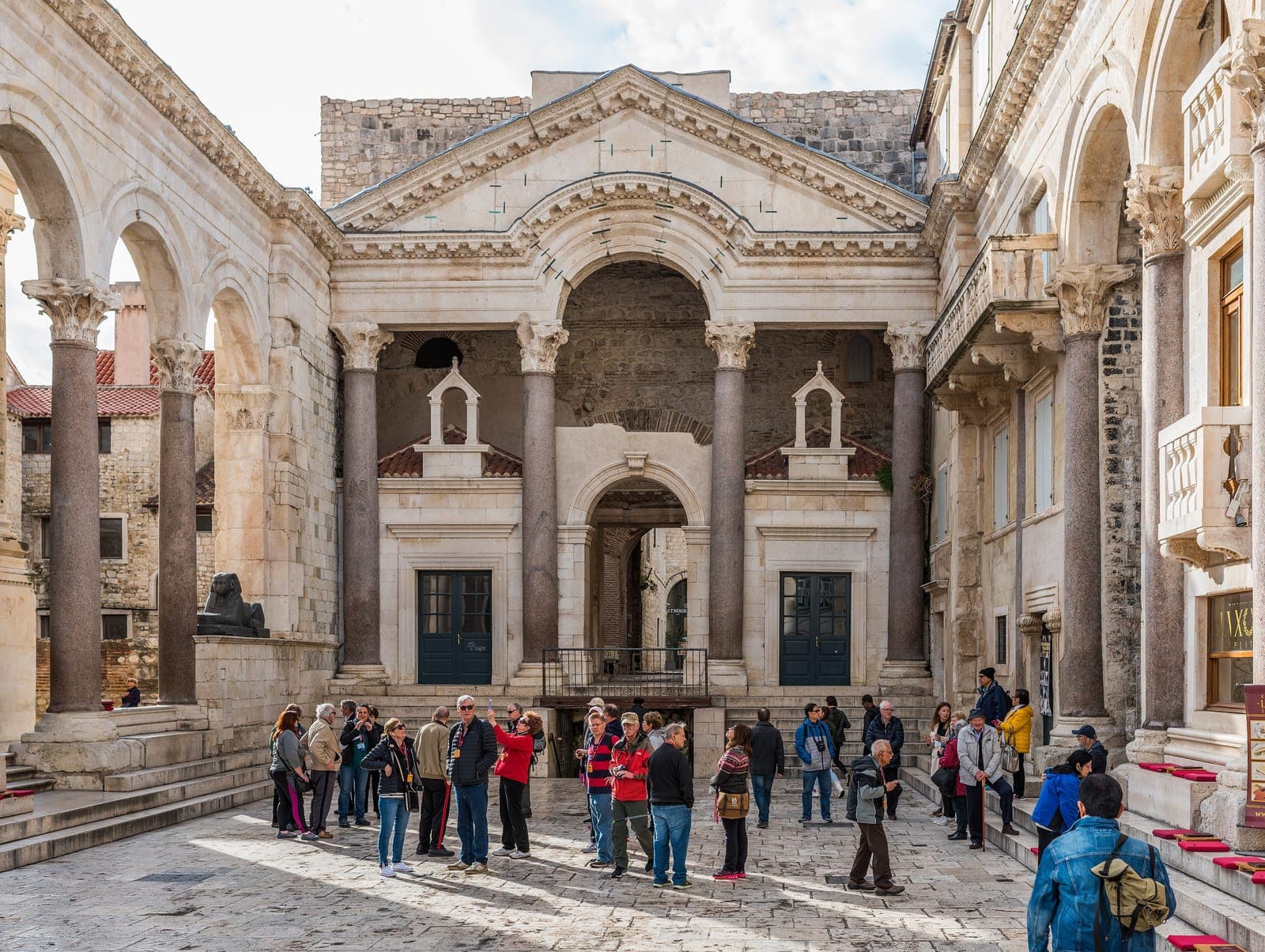
Diocletian's Palace is free: its lanes, the Peristyle, the domed Vestibule and the central passage through the cellars are open at all hours with no gate. You pay only for interiors — the side halls of the cellars (€10 for adults as of October 2026) and the cathedral, bell tower, crypt, treasury and Temple of Jupiter, ticketed separately. Built around AD 305, it is still full of homes, bars and shops.
The oldest cathedral building in the world still in use, and it started life as the mausoleum of the emperor who persecuted the man it is now named after. The bell tower beside it gives you the best view in Split for the price of 183 steps.
Ninety minutes through the palace with a guide who lives inside it: the Golden Gate, the cellars, the Peristyle, the cathedral and the streets in between. Small group, no flag, and a proper explanation of why a Roman emperor retired to a cabbage patch in Dalmatia.
Split's city beach, and the only proper sand within walking distance of the palace. Shallow for fifty metres, which makes it excellent for small children and the reason picigin — Split's own barefoot ball game — was invented here.
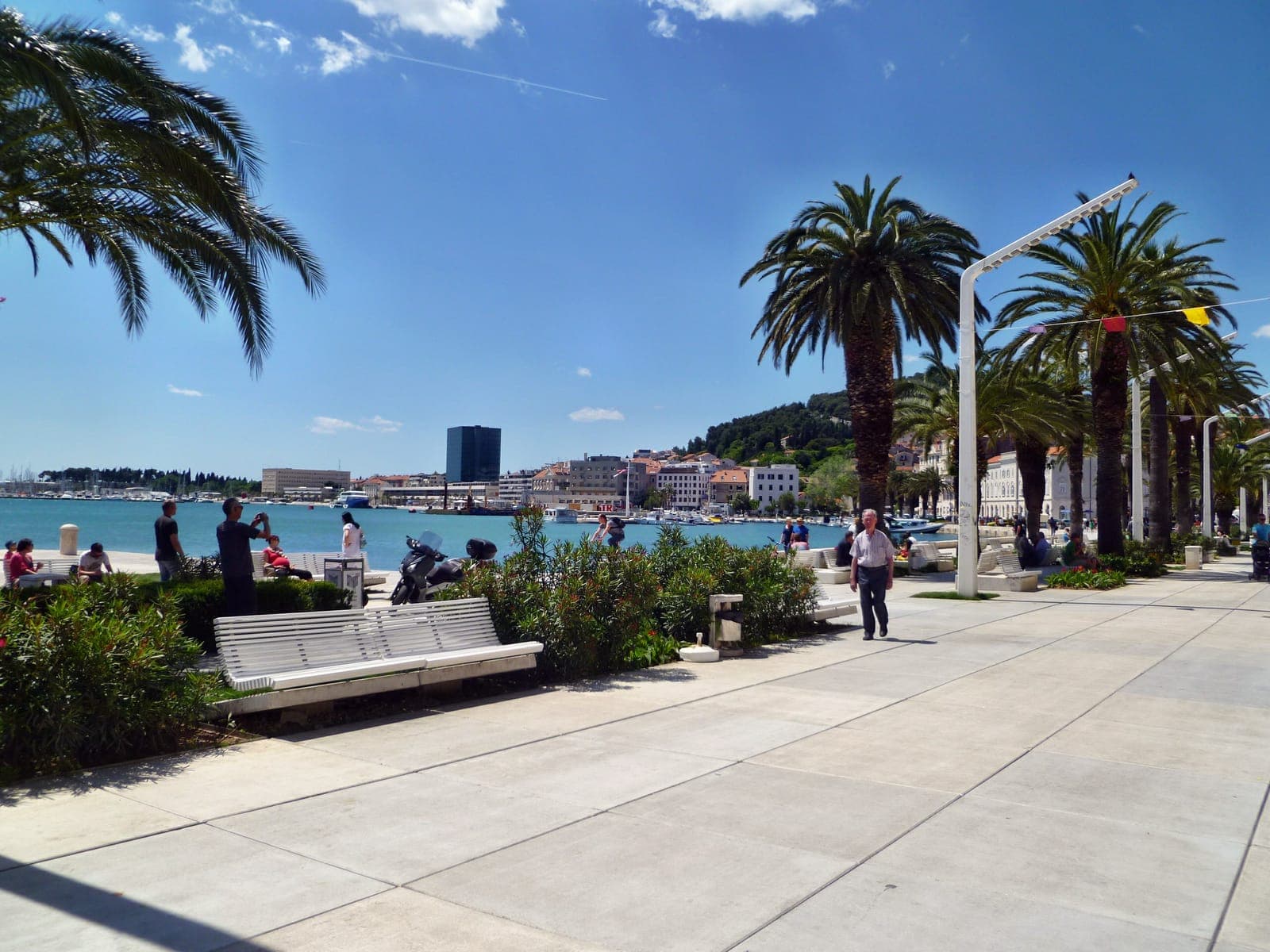
Split's palm-lined seafront promenade, and the city's actual living room. Locals walk it at seven every evening, coffee lasts an hour, and nobody is in a hurry. Free, always open, and the correct place to watch the light go orange on the palace wall.
Two hours on a board lit from underneath, pushing off Stobreč as the sun goes and paddling into the river mouth in the dark. The LEDs light the bottom through three metres of water, which is the whole point: you can see what is down there.
Five hours to Šolta and back on a ten-person boat: three swim stops in coves you cannot reach by road, an hour in Maslinica for dinner or a drink, and the run home across the channel as the sun goes down behind the island.
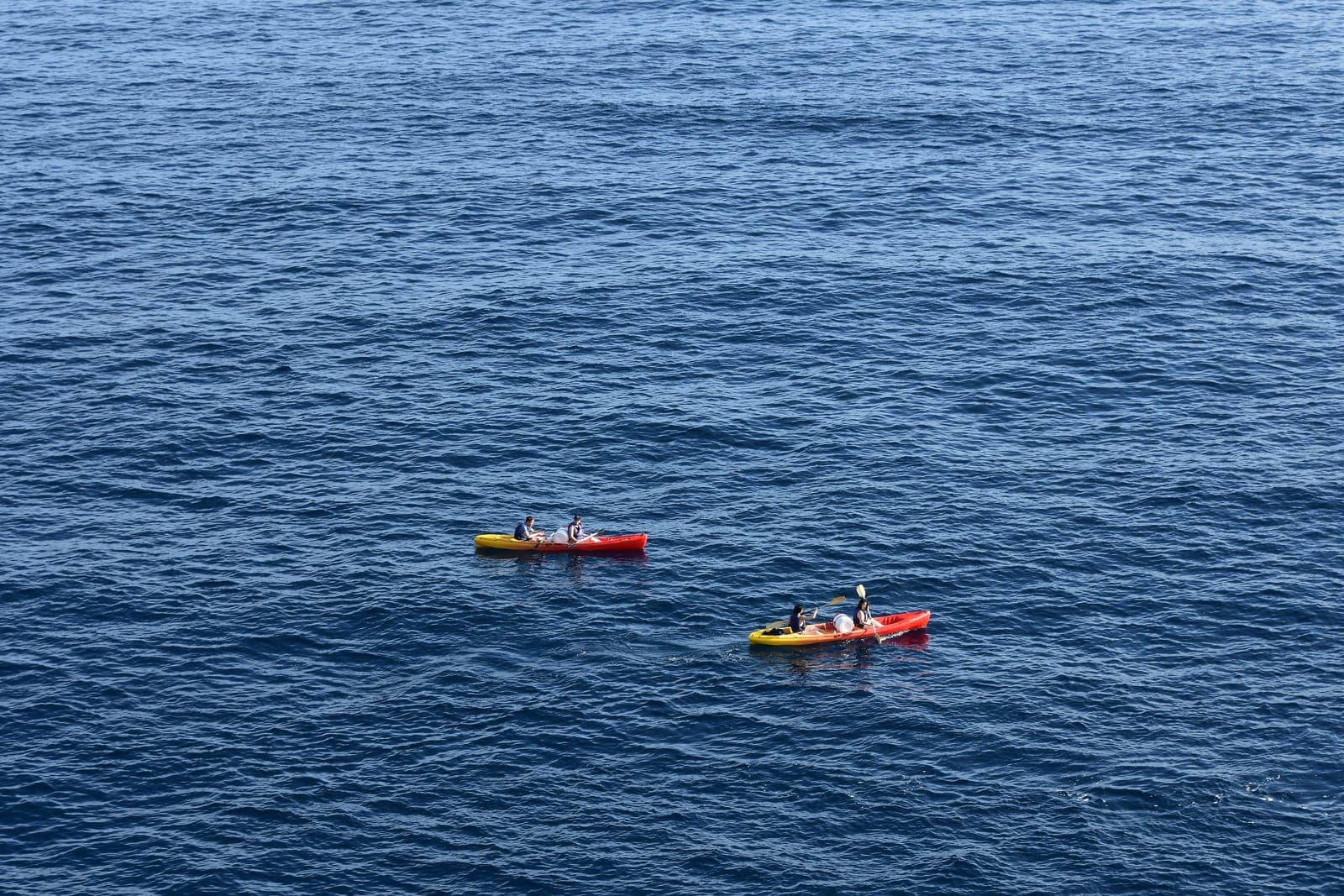
Three hours paddling the cliffs and hidden coves along Marjan's south shore, with two swim stops and a cave you can only reach by water. The best way to see Split from the side it was built to face, and easy enough for a complete beginner.
The most Split thing you can do for ten euros. Poljud is a listed 1979 shell of a stadium, the Torcida have been going since 1950, and a mid-table league game on a Saturday night tells you more about this city than any walking tour will.
The colonnaded courtyard at the centre of Diocletian's Palace, where the emperor appeared to his subjects and where Split now drinks wine on the steps. Free, roofless, and the best-preserved Roman square you can sit down in.
It is the best month for most people. The sea is about 24 °C after a whole summer of warming, the air is a comfortable 26 °C, and the August crowds have gone.
Can you swim in Split in October?
Yes, comfortably to about mid-month — the sea averages 21 °C in October, and locals swim well past that.
Get out there
Tours that go here
Guided trips that include this stop, with live availability.
A full day on a fast twelve-seat boat: the Blue Cave on Biševo, the Monk Seal cave, Stiniva's famous cove, lunch on Vis and a swim off Budikovac's turquoise lagoon, finishing with a stop at Hvar town. Ten and a half hours, small group, no coach transfer.
Ninety minutes through the palace with a guide who lives inside it: the Golden Gate, the cellars, the Peristyle, the cathedral and the streets in between. Small group, no flag, and a proper explanation of why a Roman emperor retired to a cabbage patch in Dalmatia.
Five hours to Šolta and back on a ten-person boat: three swim stops in coves you cannot reach by road, an hour in Maslinica for dinner or a drink, and the run home across the channel as the sun goes down behind the island.