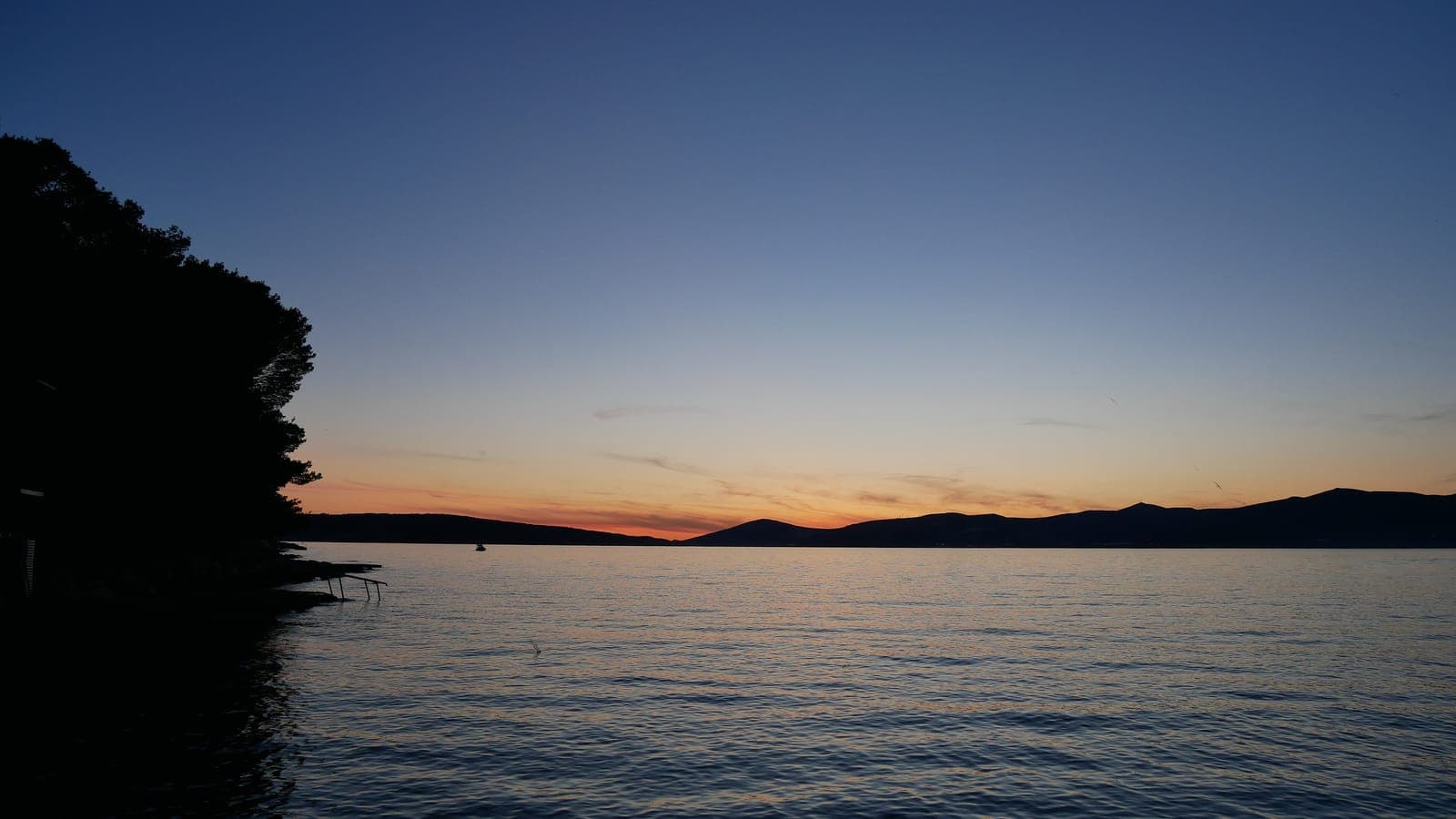
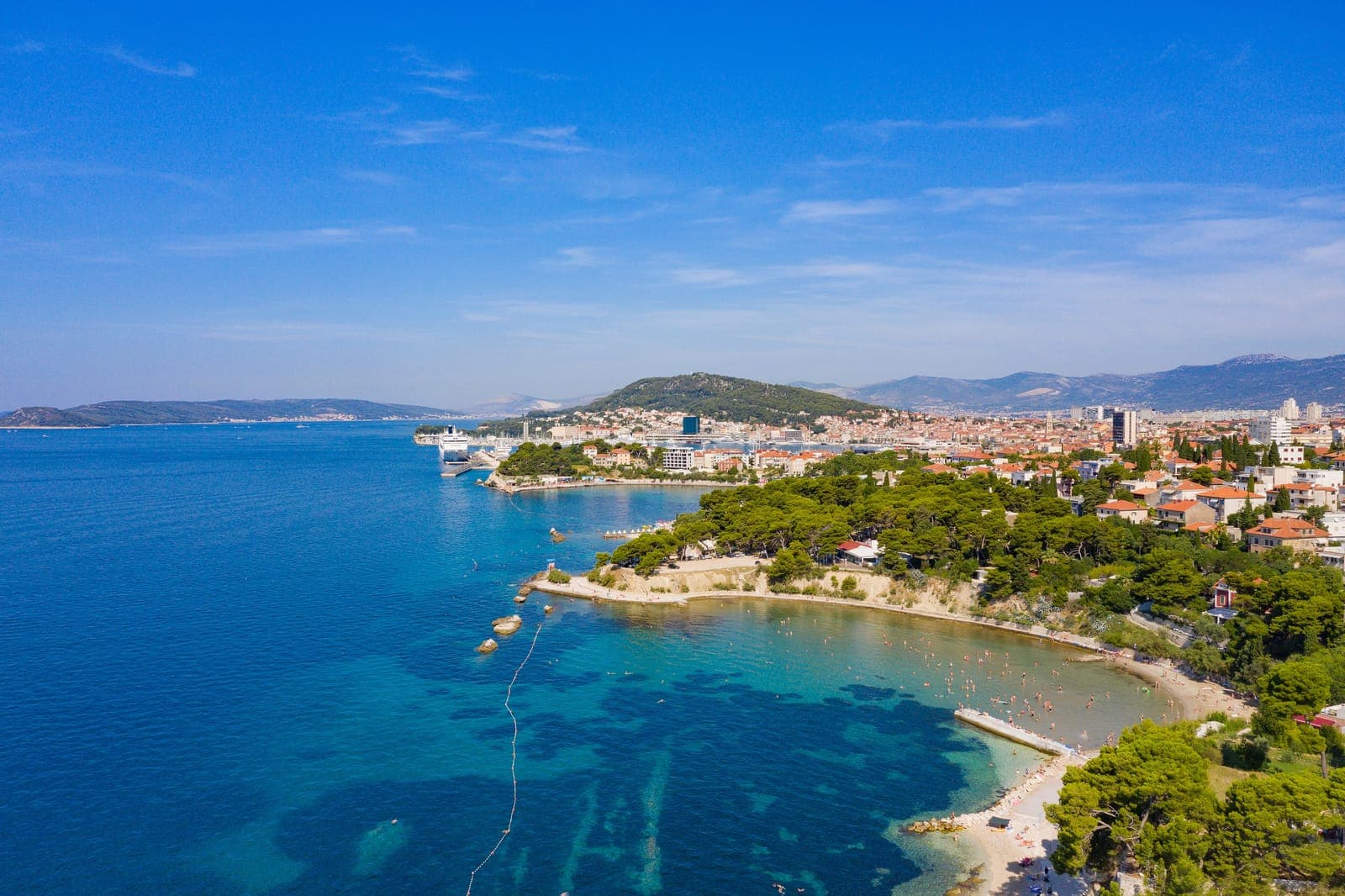
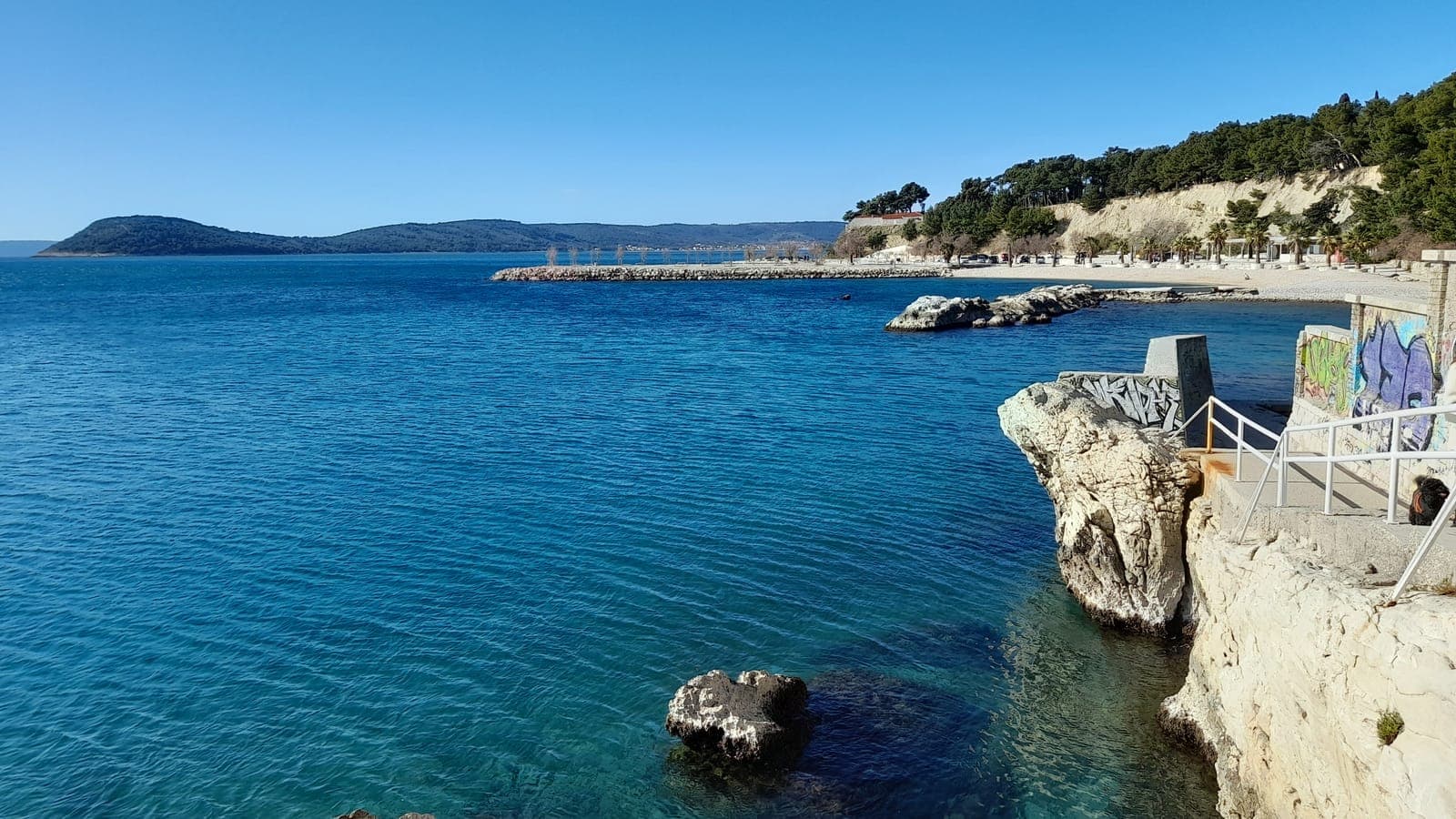
The best beach within reach of the city: white pebbles, clear deep water and pine shade on the south side of Marjan. A beach club at one end, empty rock at the other, and a sunset that faces exactly the right way.
The eastern end has Joe's Beach Lounge, sunbeds, cocktails and music. Walk two minutes west and it becomes ordinary pebble beach with pines behind it and nobody selling you anything. Both are fine; know which one you came for. The beach club is the one to go to if you want a sunbed and a drink brought to you; the west end is the one to go to if you want a towel on pebbles and a swim.
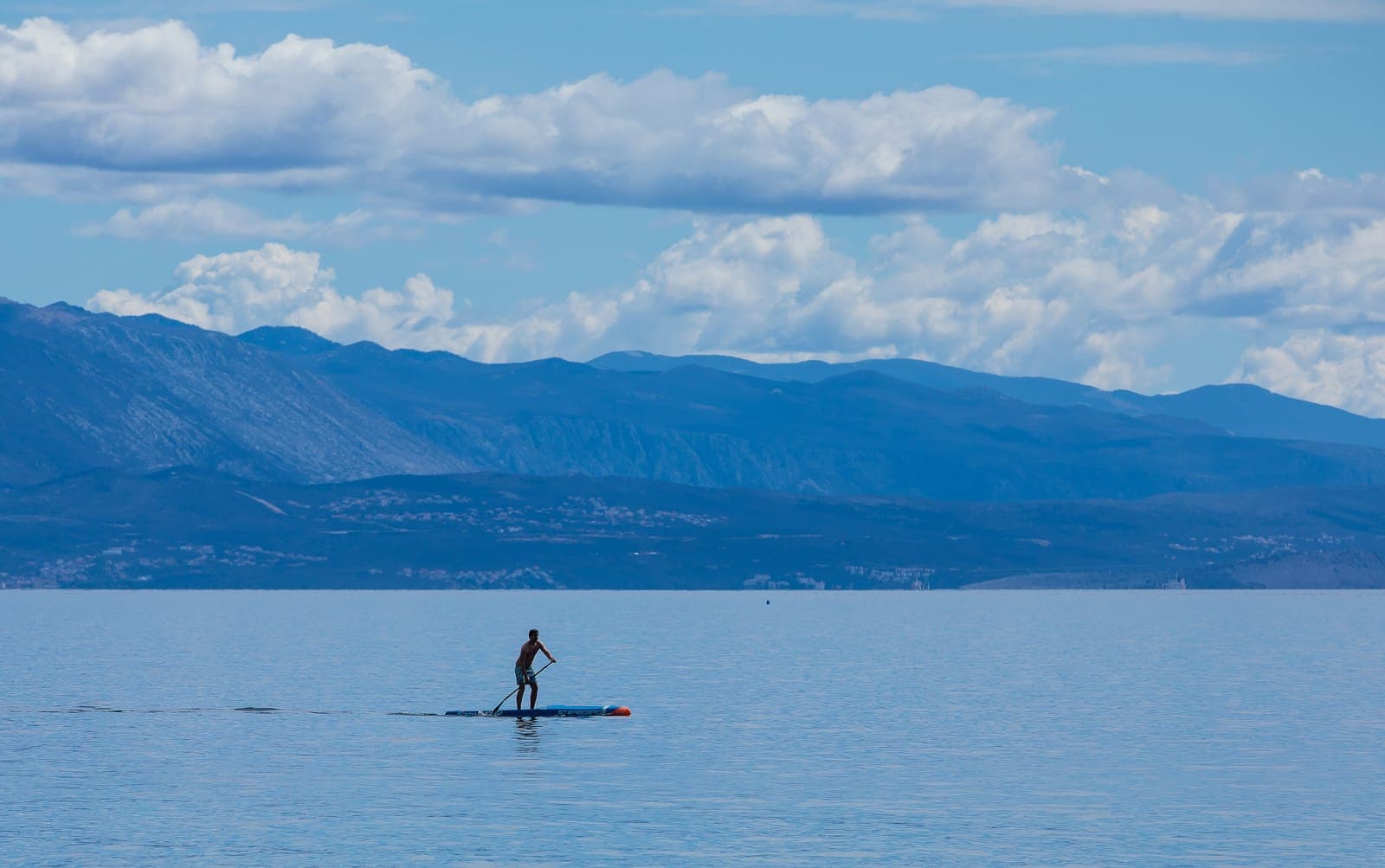
Board hire at the beach concession makes it the easiest launch for stand-up paddling.
Deeper than Bačvice and much clearer — it drops off within a few metres, which is good for swimming and less good for toddlers. Water shoes help; the pebbles are large and warm underfoot by noon, and the entry is steeper than the sand at Bačvice. The water is also colder, because it is on the south side of Marjan and gets the open-sea current rather than the shallow bay.
Free to access. Sunbeds at the beach club are €20–30 for a pair with an umbrella. The pine trees behind the west end give shade all day, which is the reason to come here rather than Bačvice in August. There is a cafe at the beach club and a kiosk at the car park. The sunset faces west over the channel, and the beach is the best place in Split to watch it from a towel rather than a bar.
How to not feel like a tourist here
Walk past the beach club. The west end of Kašjuni — two minutes past the last sunbed — is ordinary pebble beach with pines behind it, no music, no waiter, and the water is the same. The locals spread towels under the pine trees and bring a picnic, which is the thing to do, because the beach club food is expensive and not good. Buy a coffee and a burek at a kiosk on the way and you have lunch.
Go at six in the evening in summer, not at midday. The sand is cool, the sunbeds are empty, the water is warm from a full day of sun, and the light is the one you came for. Stay for the sunset — Kašjuni faces west over the channel to Čiovo, and the sun goes behind it. Walk back along the shore road in the dark; it is lit, and the bus 12 runs until late.
Do not drive. The parking is limited and fills by ten in July, and the bus 12 is fifteen minutes from the Riva and runs every twenty minutes. The people who drive are the people who cannot find the bus, and the bus is easier. If you must drive, go before nine or after five.
September here is as good as Split gets: warm clear water, pine shade, and the west-facing sunset arriving at a civilised hour. Swimmable to mid-October.
The beach bar opens around May; before that it is an empty pebble beach with pine shade and nobody on it, which some people prefer. The water is cold until late May.
The small car park fills by ten in July and August — take bus 12 or walk the shore road. The pebbles get hot by noon, so water shoes are worth the few euros.
The bar is closed and the sea is 13 °C, but the walk under Marjan to get here is one of the better winter hours in Split. Bring shoes with grip — the shore road is slick after rain.
Frequently asked questions
How do you get to Kašjuni beach from Split?
Bus 12 from the Riva takes about fifteen minutes, or it is a 35-minute walk along the coastal road beneath Marjan. Parking is limited and fills early in summer.
Is Kašjuni better than Bačvice?
For a quiet swim in a beautiful setting, yes. Kašjuni is pebble rather than sand, the water is deeper and clearer, and the pine trees give shade. Bačvice is better for small children and for sand, and closer to the centre.
Board hire from Kašjuni and Bene for about €15 an hour, or a guided paddle along the Marjan cliffs. Flat water most mornings and a shoreline with no boat traffic close in — one of the easier places to learn.
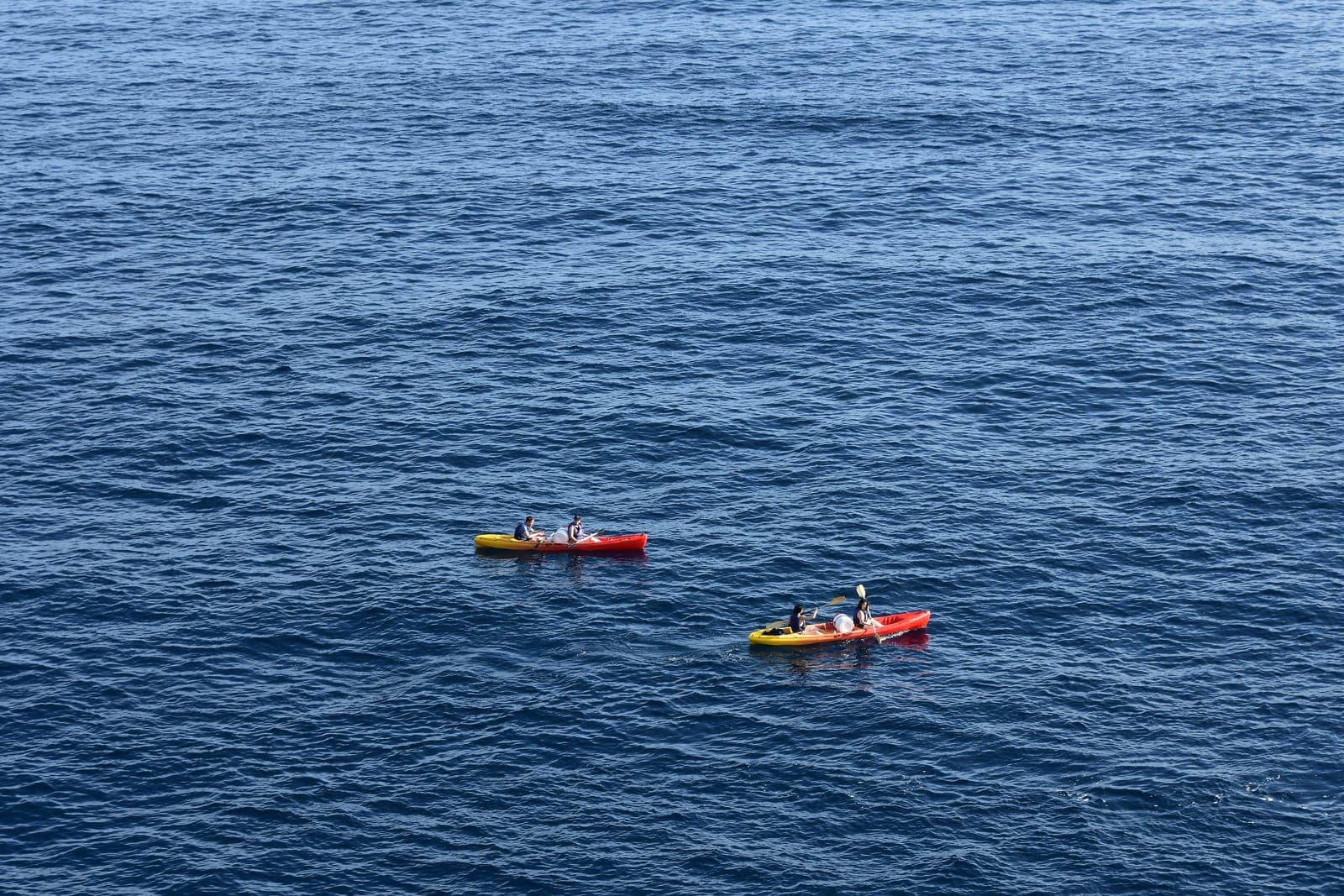
Three hours paddling the cliffs and hidden coves along Marjan's south shore, with two swim stops and a cave you can only reach by water. The best way to see Split from the side it was built to face, and easy enough for a complete beginner.
The south side of Marjan drops straight into clear water over rock rather than sand, which is exactly what you want and exactly what the city beaches are not. Bring a mask, walk in off the stones at Kašjuni or Bene, and it costs nothing.
The pine-covered hill on Split's western edge, a fifteen-minute walk from the Riva and the reason the city feels liveable in August. Free, open always, with viewpoints, hermit chapels, swimming coves at the bottom and a proper trail network on top.
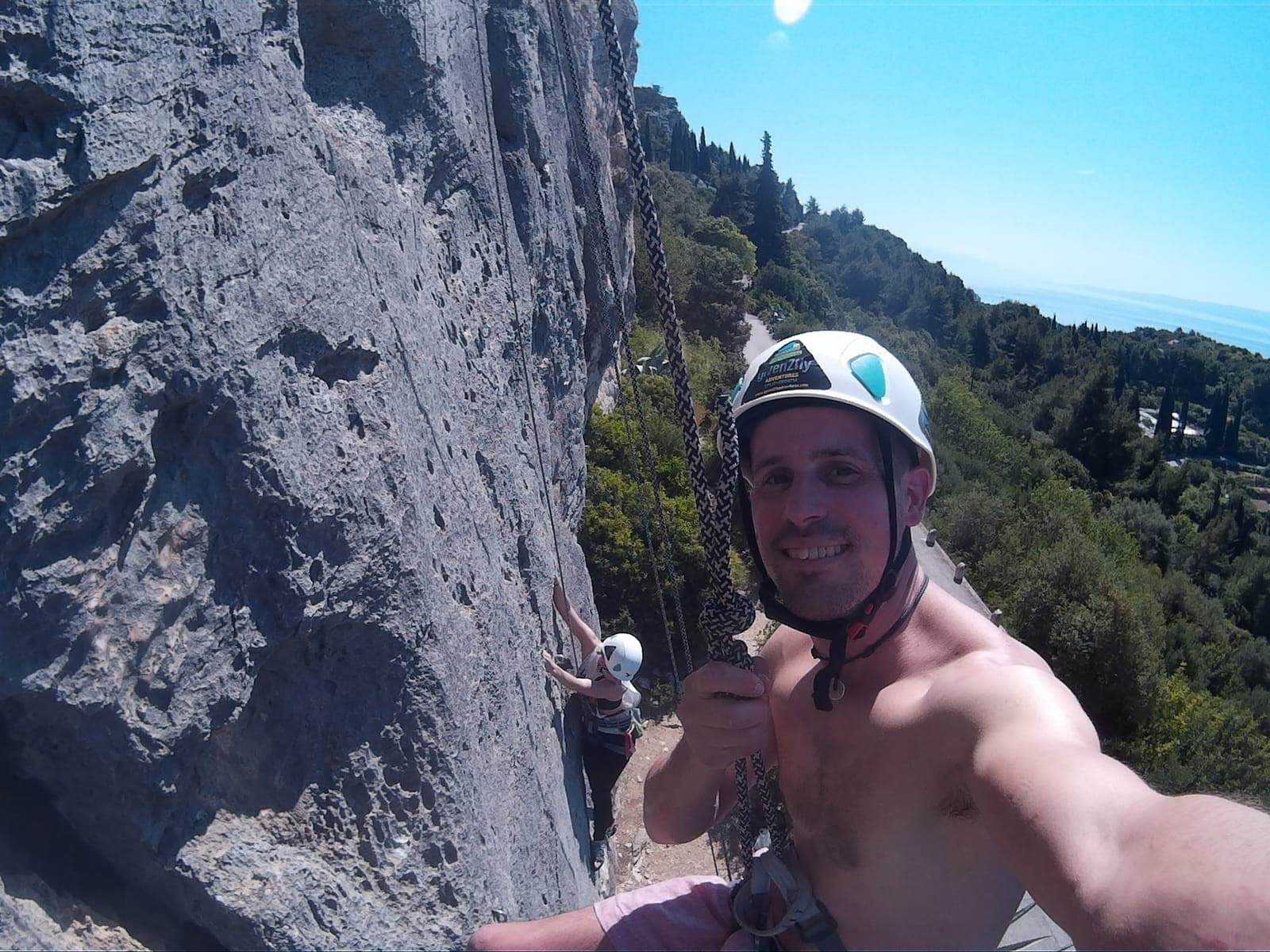
Bolted limestone routes on Marjan's south face, fifteen minutes from the old town, with the sea directly below. Guided beginner sessions run all year; the rock faces south so winter is often better than summer.
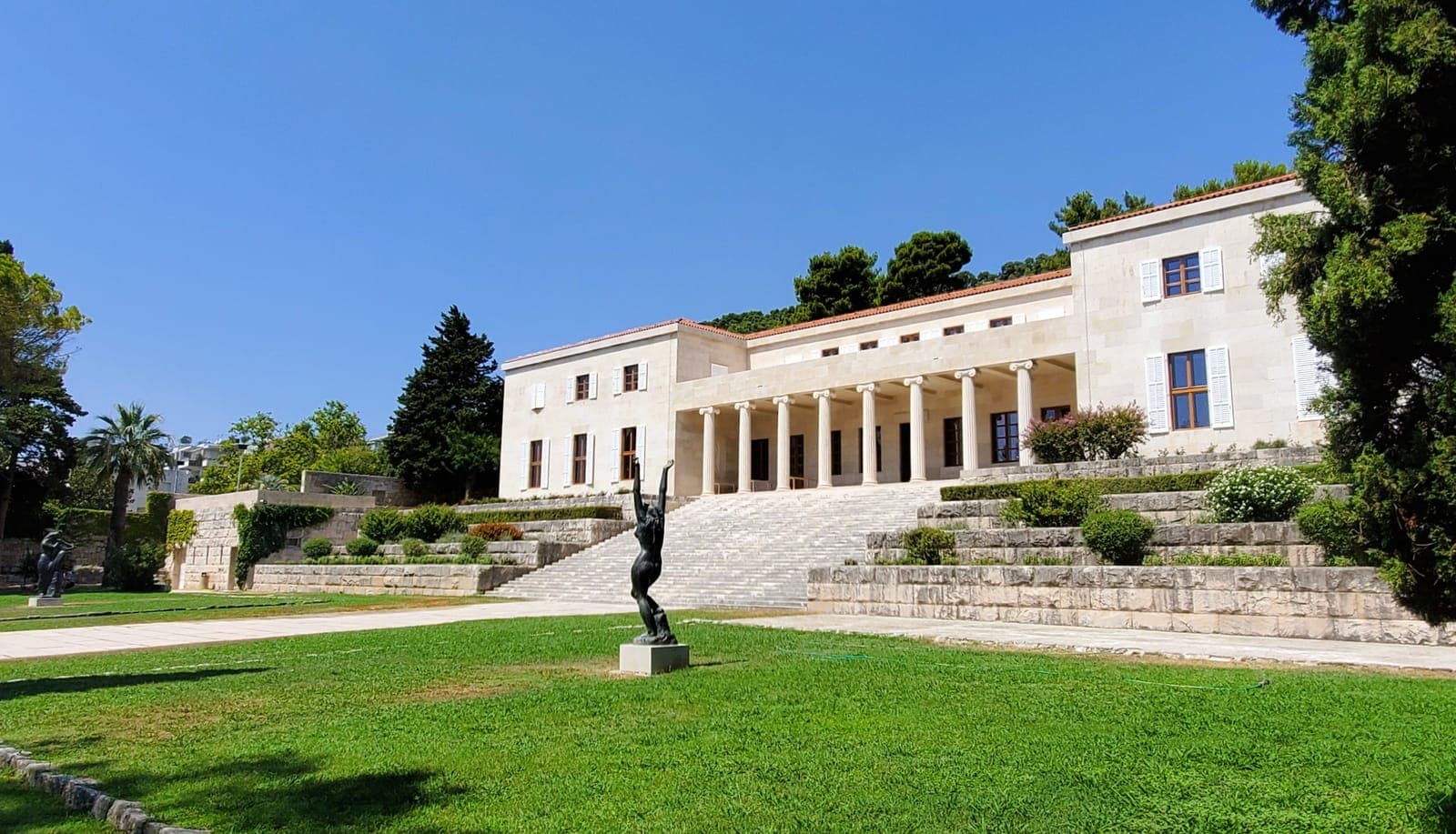
The villa Ivan Meštrović built for himself on Marjan's south slope, now the best museum in Split. Sculpture inside, a garden of bronzes with a sea view outside, and the Kaštelet chapel with his wooden reliefs five minutes down the road.
Split's city beach, and the only proper sand within walking distance of the palace. Shallow for fifty metres, which makes it excellent for small children and the reason picigin — Split's own barefoot ball game — was invented here.
On the north shore of Marjan, under dense pine, with concrete platforms and pebble coves, tennis courts, a running trail and a café. This is where Split actually swims — quieter than Bačvice, shadier than Kašjuni, and free.
The long, recently rebuilt beach strip east of the centre: wide promenade, sports courts, beach clubs, plenty of space and proper accessible entries into the water. Little shade, but the easiest beach in Split to spend a whole day at with children.
A small sandy bay just past Bačvice, in front of the tennis club where Goran Ivanišević learned to play. Shallow, calm and mostly families — the quieter alternative when Bačvice is a wall of people.
A small pebble beach below the Meštrović Gallery, dominated by a diving platform and a café under the pines. Deep water, no crowds and a strong neighbourhood feel — this one is genuinely local.