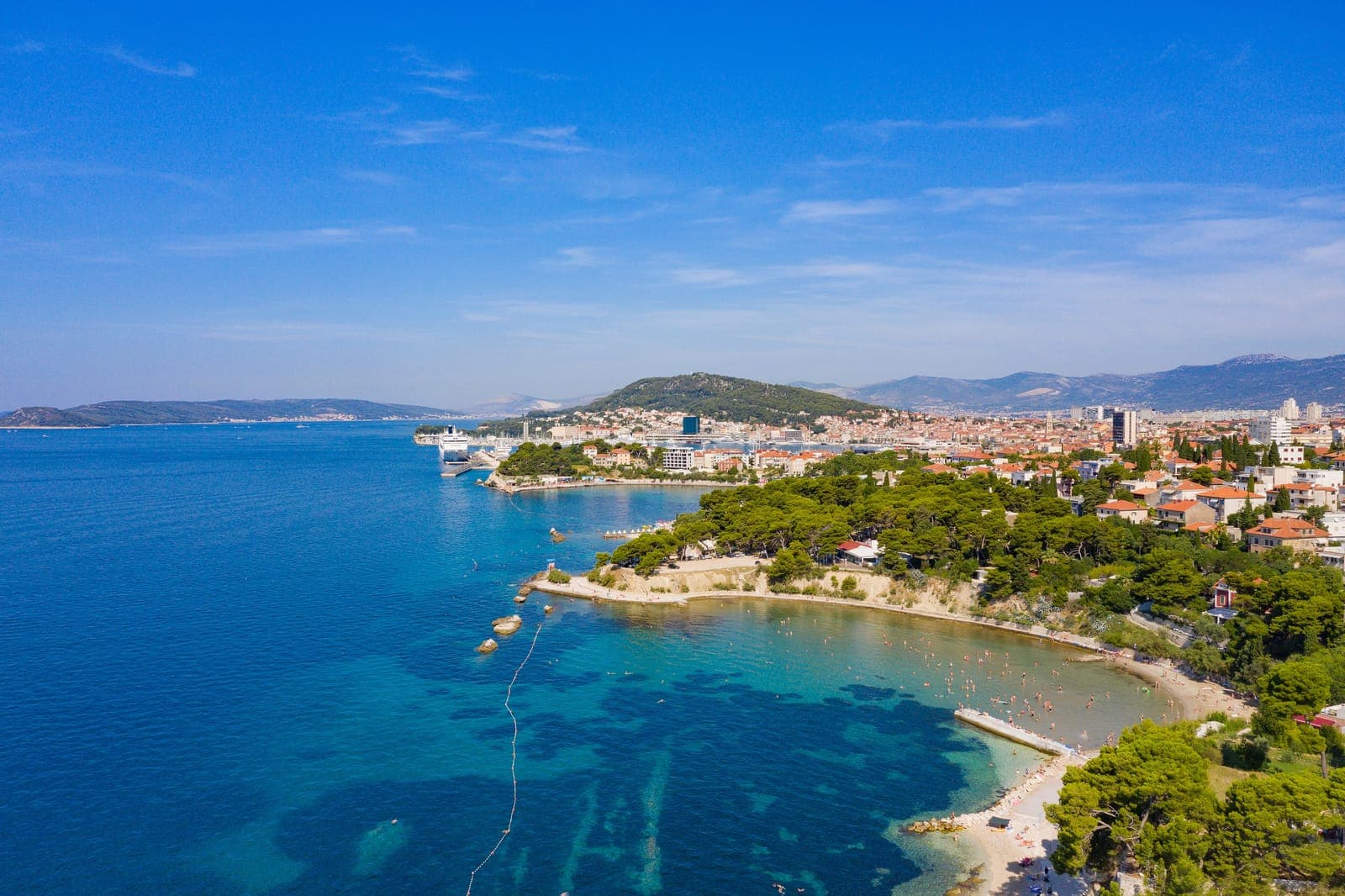
Split's best beaches are Kašjuni for clear water and pine shade, Bačvice for sand and shallow swimming ten minutes from the palace, Bene for shade all day, and Žnjan for space and accessibility. All are reachable on foot or by one bus.
Dalmatia is a pebble coast; Bačvice and Firule are the exceptions. Pebble beaches have clearer water and fewer people, and water shoes solve the only real drawback. If sand matters more than clarity, you have two options in Split and both are ten minutes east of the palace.
When to swim
The sea is comfortable from late May to mid-October and at its warmest, around 26 °C, in August. September is the local favourite: a whole summer of stored heat and half the crowd.
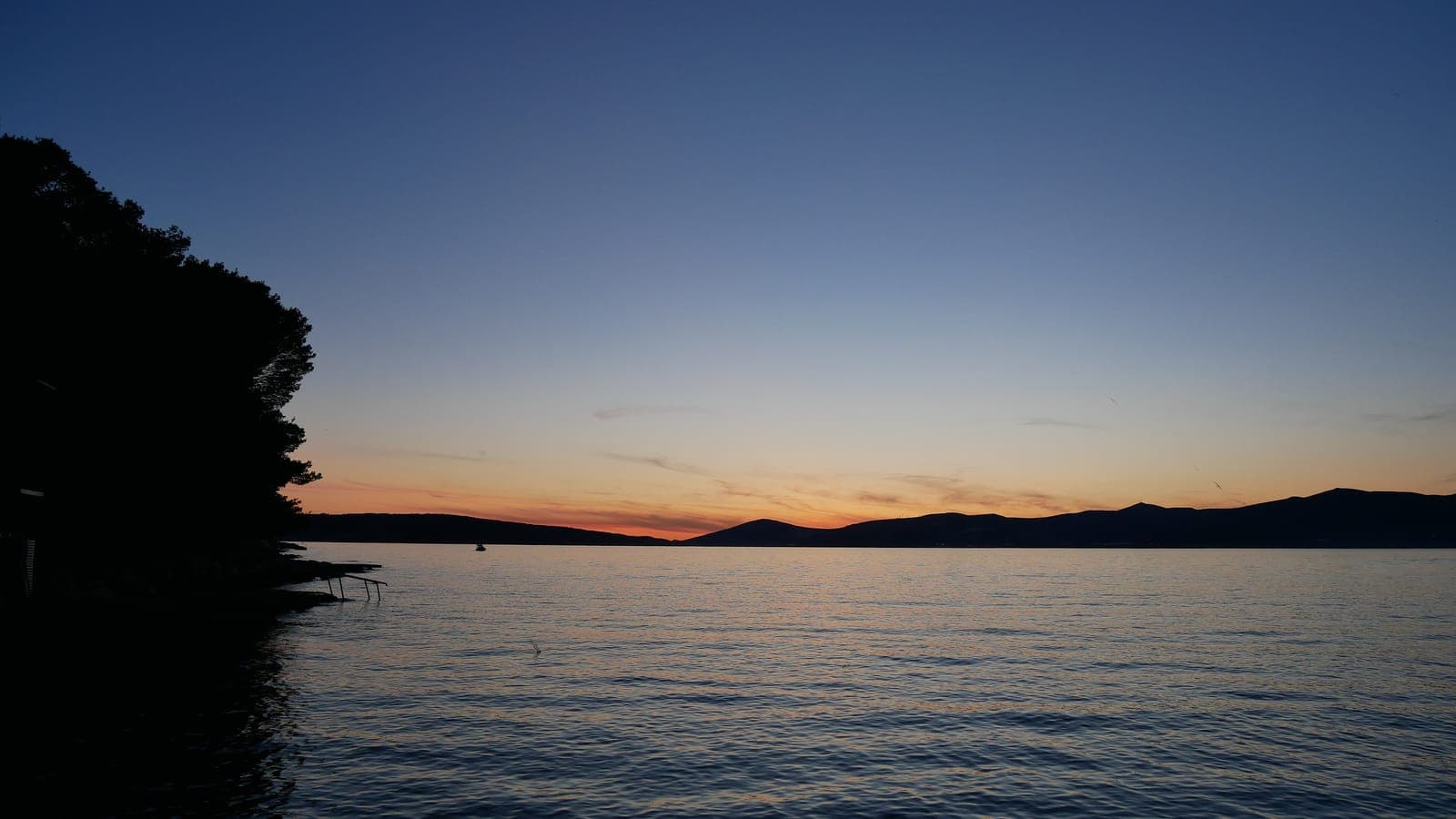
The best of them: white pebbles, deep clear water, pines, and a sunset facing west.
The best beach within reach of the city: white pebbles, clear deep water and pine shade on the south side of Marjan. A beach club at one end, empty rock at the other, and a sunset that faces exactly the right way.
The only real sand within walking distance, and the home of picigin.
Split's city beach, and the only proper sand within walking distance of the palace. Shallow for fifty metres, which makes it excellent for small children and the reason picigin — Split's own barefoot ball game — was invented here.
Shade all day under Marjan's pines. Where Split actually swims.
On the north shore of Marjan, under dense pine, with concrete platforms and pebble coves, tennis courts, a running trail and a café. This is where Split actually swims — quieter than Bačvice, shadier than Kašjuni, and free.
Space, a rebuilt promenade and the most accessible water entry in the city.
The long, recently rebuilt beach strip east of the centre: wide promenade, sports courts, beach clubs, plenty of space and proper accessible entries into the water. Little shade, but the easiest beach in Split to spend a whole day at with children.
Bačvice's quieter neighbour, and better with small children.
A small sandy bay just past Bačvice, in front of the tennis club where Goran Ivanišević learned to play. Shallow, calm and mostly families — the quieter alternative when Bačvice is a wall of people.
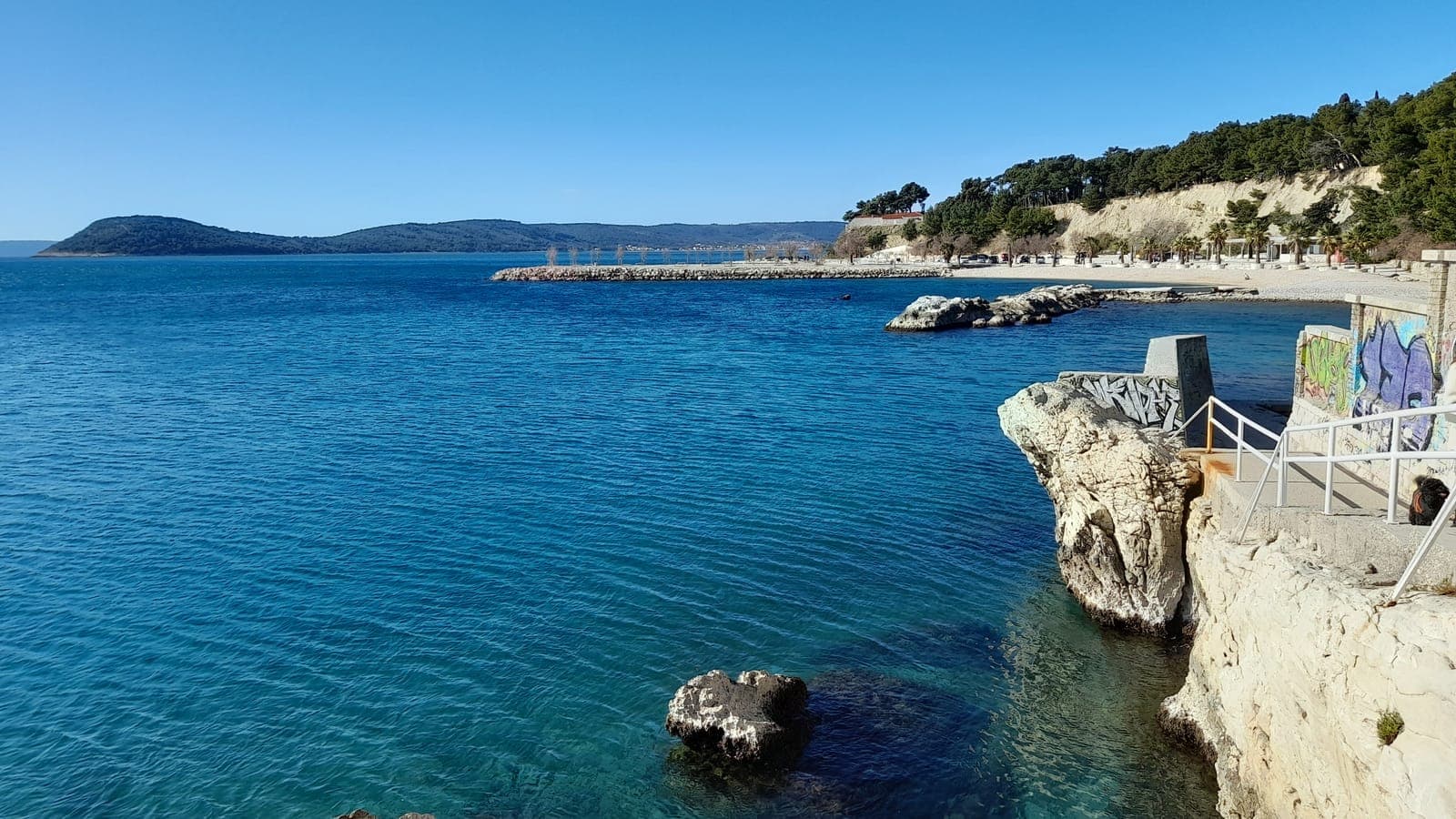
Small, steep and local, right below the Meštrović Gallery.
A small pebble beach below the Meštrović Gallery, dominated by a diving platform and a café under the pines. Deep water, no crowds and a strong neighbourhood feel — this one is genuinely local.
Kašjuni, on the south side of Marjan — clear deep water, white pebbles, pine shade and a west-facing sunset. Bačvice is the best sandy option and the closest to the old town.
Are there sandy beaches in Split?
Yes, but only two: Bačvice and Firule, both about ten to twenty minutes' walk east of the palace. Everything else along this coast is pebble.
When can you swim in Split?
Late May to mid-October comfortably. The sea peaks around 26 °C in August and is still about 21 °C in October.
Get out there
Tours that go here
Guided trips that include this stop, with live availability.
A full day on a fast twelve-seat boat: the Blue Cave on Biševo, the Monk Seal cave, Stiniva's famous cove, lunch on Vis and a swim off Budikovac's turquoise lagoon, finishing with a stop at Hvar town. Ten and a half hours, small group, no coach transfer.
Ninety minutes through the palace with a guide who lives inside it: the Golden Gate, the cellars, the Peristyle, the cathedral and the streets in between. Small group, no flag, and a proper explanation of why a Roman emperor retired to a cabbage patch in Dalmatia.
Five hours to Šolta and back on a ten-person boat: three swim stops in coves you cannot reach by road, an hour in Maslinica for dinner or a drink, and the run home across the channel as the sun goes down behind the island.