Sunset from Marjan, a small boat to Šolta as the light goes, dinner on a terrace over the harbour, and klapa singing under a Roman dome. Split is small, warm and made of stone — it does this without trying.
If you do a single thing on this list, make it a small-boat sunset trip. The city looks entirely different from the water, the light in the channel is extraordinary, and you are back in time for a late dinner. The Šolta cruise is the one — ten people, three empty coves, and the run home into the sunset.
The evening that costs nothing
Walk up Marjan for the last hour of light, come down the north side into Bene for a swim in the dark, and walk back along the shore road to Sustipan with a bottle from a shop. It is free, it is quiet, and it is the most romantic evening in Split that does not need a booking. The sunset from the Marjan ridge is the one you will remember, and it costs nothing.
Ten people, three empty coves and the run home into the sunset.
Five hours to Šolta and back on a ten-person boat: three swim stops in coves you cannot reach by road, an hour in Maslinica for dinner or a drink, and the run home across the channel as the sun goes down behind the island.
Walk up for the last hour of light; almost nobody is on the ridge.
The pine-covered hill on Split's western edge, a fifteen-minute walk from the Riva and the reason the city feels liveable in August. Free, open always, with viewpoints, hermit chapels, swimming coves at the bottom and a proper trail network on top.
Split's best-known fine-dining seafood restaurant, on the first floor of the ACI marina with the whole harbour in front of it. Expensive, precise, and the view genuinely earns part of the bill.
The western end, late in the afternoon, facing exactly the right way.
The best beach within reach of the city: white pebbles, clear deep water and pine shade on the south side of Marjan. A beach club at one end, empty rock at the other, and a sunset that faces exactly the right way.
A cellar, six Dalmatian wines and nowhere to be afterwards.
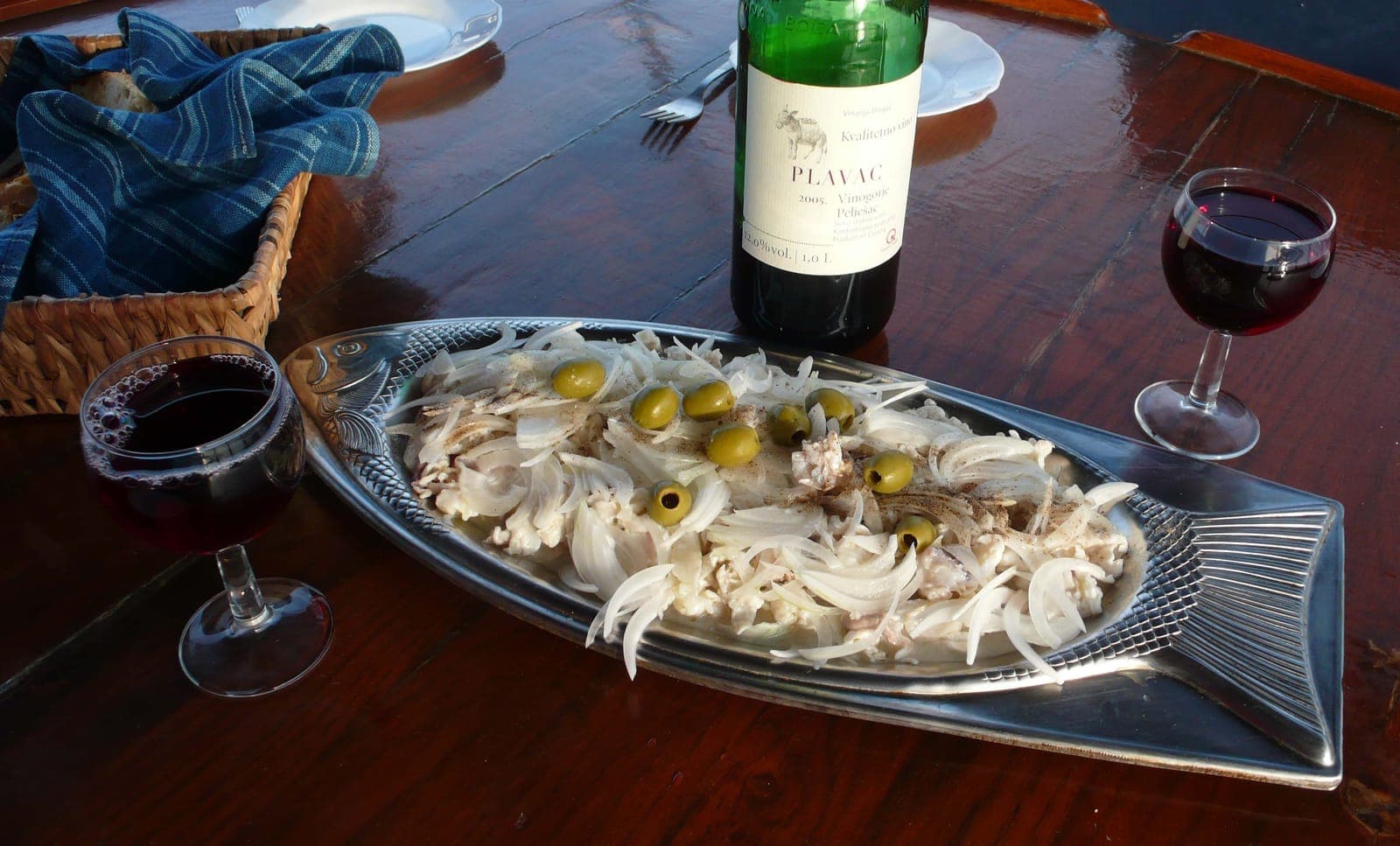
An hour and a half through Dalmatia's own grapes: plavac mali from Hvar and Pelješac, pošip and grk from Korčula, and the debit and maraština nobody exports. Most tastings run in palace cellars, which is a good place to be at three in the afternoon.
The nine-until-midnight part of a Split night, and the best of it. Small cellars and side rooms inside Diocletian's Palace pour Dalmatian wine by the glass with no music you have to shout over. Arrive before nine if you want a table, and leave around midnight when the lanes empty.
A high-ceilinged former shop turned bistro, doing modern Mediterranean plates and a serious wine list. The most reliable smart dinner in the centre, and the room is genuinely lovely.
The hour before the Riva. A pine-shaded headland fifteen minutes west of the harbour, on the site of an old cemetery, where you sit on the wall with a bottle from the shop and watch the sun drop behind Čiovo. Free, no bar, no music — then walk back down for dinner.
A small-boat sunset cruise out towards Šolta, followed by a late dinner in the old town. Walking up Marjan for the last hour of light is the free version.
Get out there
Tours that go here
Guided trips that include this stop, with live availability.
A full day on a fast twelve-seat boat: the Blue Cave on Biševo, the Monk Seal cave, Stiniva's famous cove, lunch on Vis and a swim off Budikovac's turquoise lagoon, finishing with a stop at Hvar town. Ten and a half hours, small group, no coach transfer.
Ninety minutes through the palace with a guide who lives inside it: the Golden Gate, the cellars, the Peristyle, the cathedral and the streets in between. Small group, no flag, and a proper explanation of why a Roman emperor retired to a cabbage patch in Dalmatia.
Five hours to Šolta and back on a ten-person boat: three swim stops in coves you cannot reach by road, an hour in Maslinica for dinner or a drink, and the run home across the channel as the sun goes down behind the island.